At this stage
What happens to your skin?
01
Oil glands are waking up
Oil glands that were almost silent in childhood start working as androgen hormones rise during puberty. Research shows that sebum (the skin's natural oil) begins to increase in mid-to-late childhood and peaks in late adolescence. That's why your T-zone gets shiny and your pores look more visible.
02
Acne is very common, and you're not alone
About 20% of young people have moderate or severe acne, and its severity tracks with pubertal development. Acne has a strong genetic link; if your mom or dad had it, yours may start early too. This isn't a flaw in how clean you are; it's hormone and oil gland biology.
03
Your skin's bacterial community is growing up too
In children followed through puberty, the skin's bacterial community shifted toward an adult type, and in girls, oil-loving bacteria and yeasts increased. This is a natural transition; it doesn't need to be suppressed with harsh antiseptics.
04
A strong barrier, but sensitive to harsh products
Cell renewal is fast in young skin; the outer layer renews itself in about 20 days. The barrier is usually strong, but while you fight breakouts, alcohol-based toners, harsh foaming cleansers and over-exfoliating can easily strain it. A stressed barrier may respond with even more oil and more redness.
05
Acne marks and sun memory
Pimples that are squeezed or inflamed can leave brown or pink marks behind. The sun darkens these marks. A significant share of the sun damage your skin collects over a lifetime builds up at a young age, so the best time to start using sunscreen is now.
From within
The effect of hormones
During puberty, the ovaries and adrenal glands increase hormones called androgens. Androgens enlarge the oil glands and speed up sebum production, while estrogen supports the skin's moisture and collagen. Breakouts on the chin and around the mouth in the second half of your cycle, a few days before your period, are related to these fluctuations. Swings in blood sugar and insulin can also strengthen the signals that stimulate oil glands; a controlled study showing that a low-glycemic-load diet reduced the number of pimples in young people supports this link.
If your periods are very irregular, you notice more hair growth on your face and body, and your breakouts are stubborn, especially along the jawline, this may be a sign of polycystic ovary syndrome (PCOS). PCOS affects about one in ten women of reproductive age and can begin in teenage girls too. If you notice these signs, talking to a gynecologist or an endocrinologist is also the best step for your skin.
Focus
Priorities at this age
01
Fewer products, the right ones
A gentle cleanser, a light moisturizer and sunscreen are enough at this age. Layering lots of products on top of each other confuses your skin and makes it harder to tell what's actually working.
02
The discipline of not touching pimples
Squeezing pushes inflammation deeper and raises the risk of scars and dark spots. Being patient with a pimple patch or a product your dermatologist recommends is the most effective way to avoid permanent marks.
03
The sunscreen habit
Use an oil-free, non-comedogenic (non-pore-clogging) sunscreen every morning. Today's habit determines how many dark spots and fine lines you'll have years from now.
04
Don't scrub your skin squeaky clean
Washing until your skin squeaks, alcohol-based toners and harsh foaming cleansers dry the skin and can increase redness and oiliness. A mildly acidic, gentle cleanser and a light moisturizer help your skin maintain its own balance.
05
Early support when needed
Painful, cystic breakouts that leave marks are not a wait-and-see situation. An approach your dermatologist starts early protects both your skin and your self-confidence.
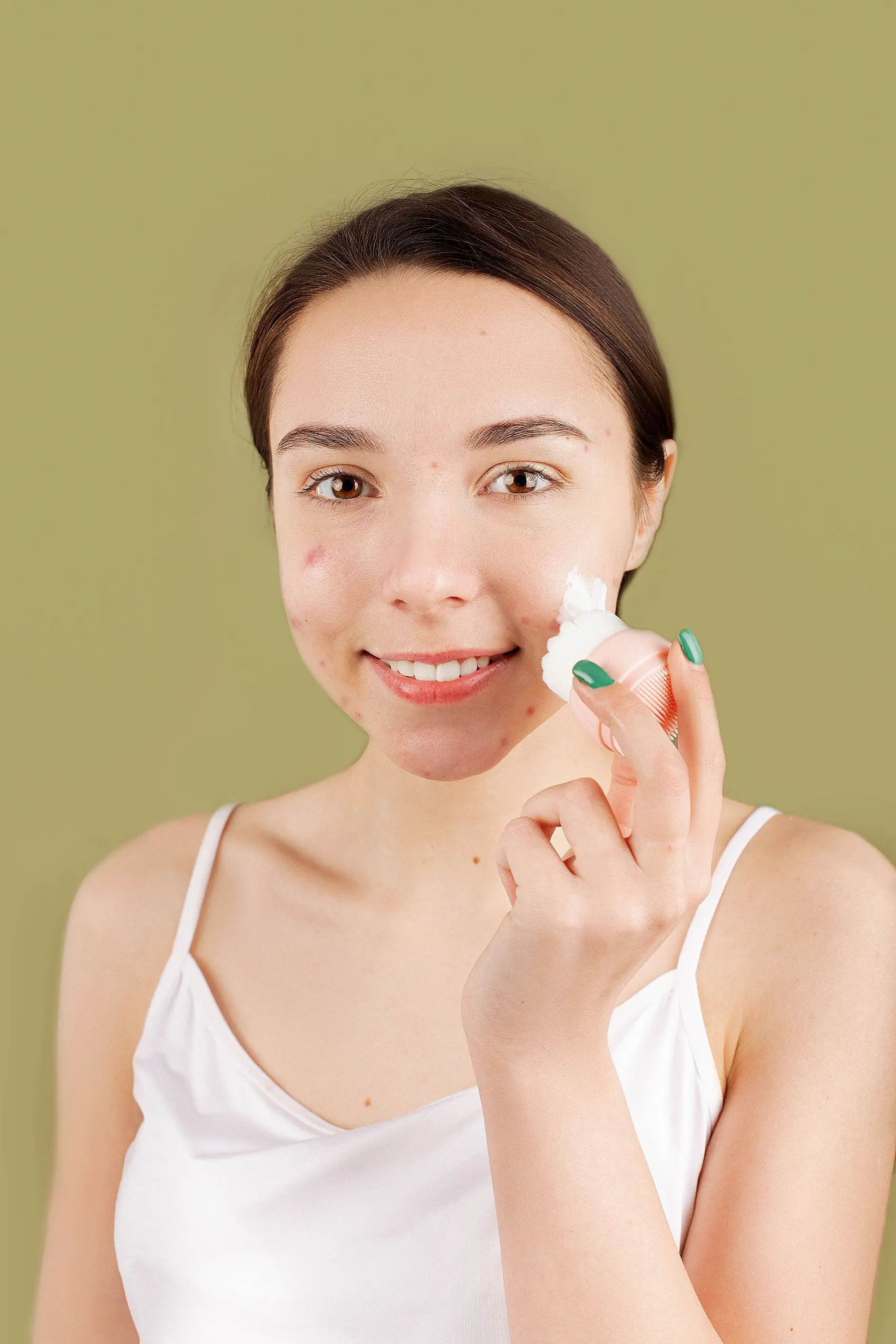
Teens · Ages 13–19 (puberty)
Your skin wakes up: learning balance as hormones turn up the volume
Step by step
Skin routine
- 1
Lukewarm water or a gentle cleanse
If your skin is oily, use a gel, soap-free, mildly acidic cleanser; if it's dry, lukewarm water alone may be enough in the morning. Hot water doesn't tire out your oil glands; it wears down your barrier.
- 2
Light moisturizer
Oily skin needs moisture too. A water-based, non-pore-clogging gel cream with glycerin or hyaluronic acid supports the barrier and won't trigger excess oil production.
- 3
Targeted care (if needed)
If you're prone to breakouts, a serum with low-strength salicylic acid or niacinamide can help balance oil and keep pores clear. Start every other day for the first few weeks.
- 4
Sunscreen
Choose a broad-spectrum SPF 30 or higher labeled for acne-prone skin. On school days or days you spend a lot of time outdoors, don't forget to reapply at midday.
What you can add to your routine
Your skin's new team
During puberty, the skin microbiome shifts toward oil-loving species. This is a natural transition; the goal isn't to wipe out this team but to keep it in balance.
Balance instead of antiseptics
Using antibacterial soap or alcohol-based toner every day also reduces beneficial bacteria and can weaken the barrier. Mildly acidic, gentle cleansers support the microbiome.
Care you can use in your routine
EcoProbiotic care range ↗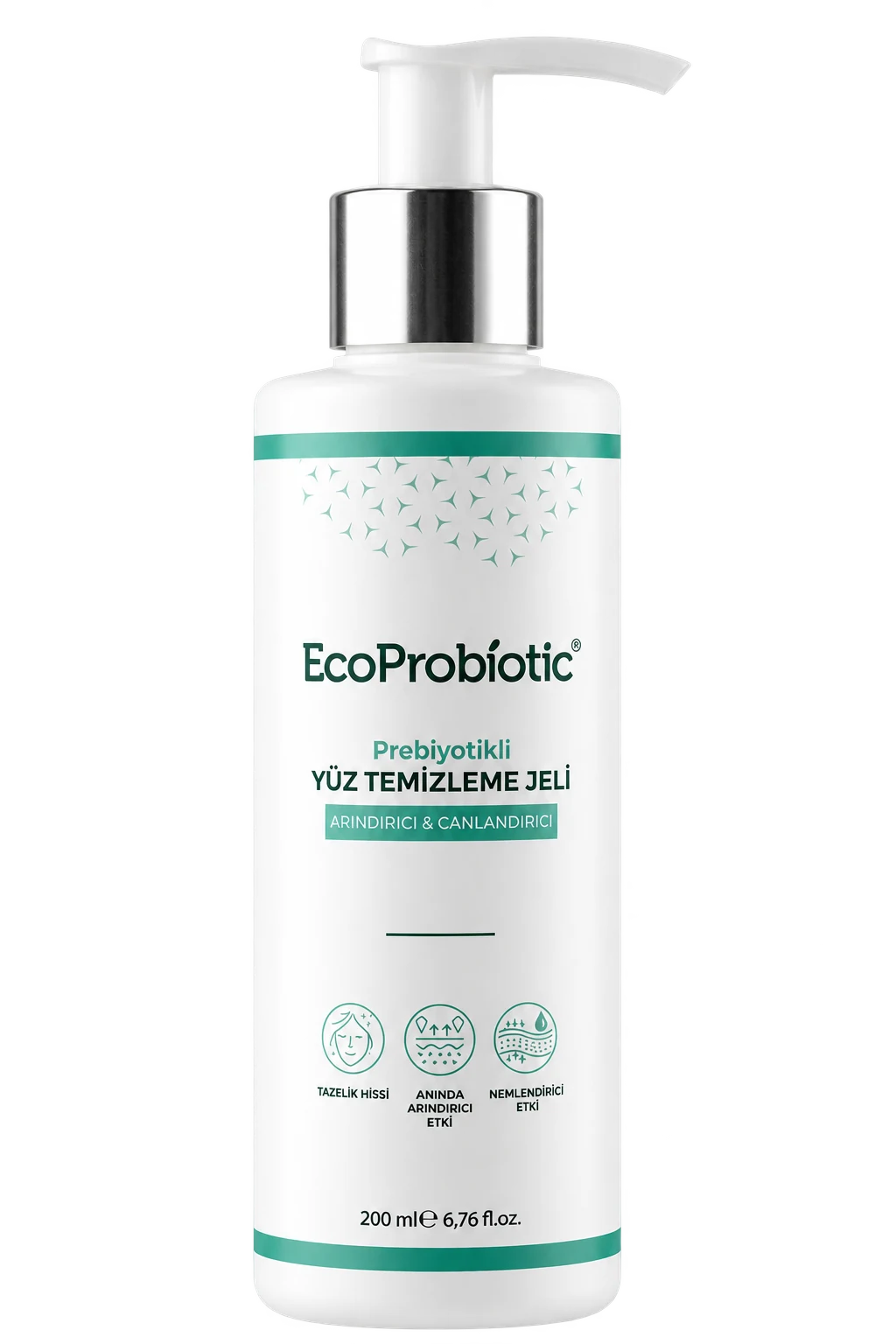 CleansingPrebiotic Face Cleansing GelRemoves make-up and the day’s grime with a gentle foam, supporting the skin barrier as it cleanses. Morning and evening.View ↗
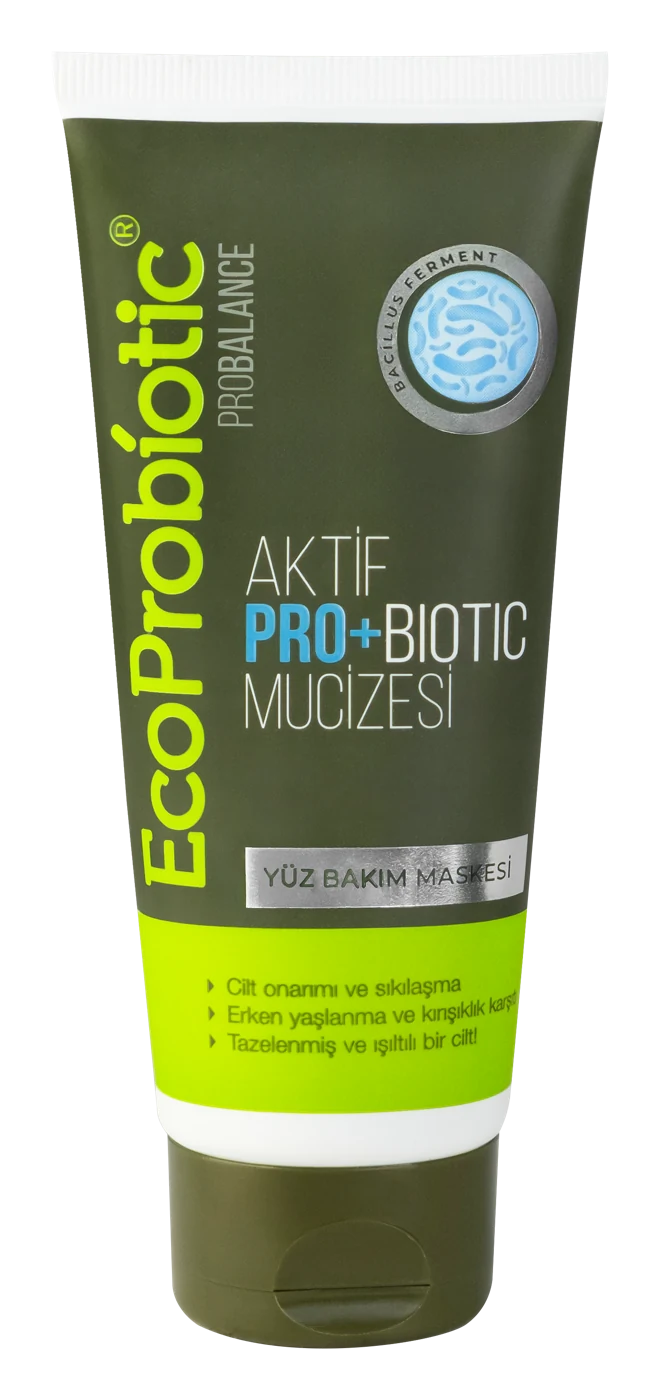 Weekly carePrebiotic Volcanic Clay MaskAbsorbs excess oil and dirt from the surface, purifying while supporting the barrier. Once or twice a week, for ten minutes.View ↗
Hair and scalp
Hair routine
- 1
Your scalp gets oilier too
The oil glands on your scalp also speed up during puberty. If your hair gets greasy quickly, washing it daily or every other day with a mild shampoo is completely normal; apply shampoo to your scalp and conditioner to your ends.
- 2
Meet dandruff
Extra oil makes it easier for yeasts on the scalp to multiply, and dandruff can appear. If dandruff is stubborn, shampoos with zinc or ketoconazole can be tried a few times a week.
- 3
Go easy on heat and chemicals
Flat irons, curling irons and frequent coloring damage young hair too. If you use heat, apply a heat protectant, keep the temperature medium and limit it to a few days a week.
- 4
Take a break from tight hairstyles
A very tight ponytail or braid every day can cause traction hair loss along the hairline. Change how you wear your hair up and use soft hair ties.
- 5
Watch for forehead and back breakouts
Oily residue from hair products can trigger breakouts along the hairline and on your back. After rinsing out conditioner, wash your face and back last.
Most common
Common concerns
Acne
The most common skin problem of puberty. It shows up as blackheads, whiteheads and inflamed pimples; if it's leaving marks, there's no need to wait before seeing a dermatologist.
Read in the atlas →Seborrheic dermatitis
Red, oily flaking between the eyebrows, along the sides of the nose and on the scalp. It may appear for the first time in this period, when the oil glands wake up.
Read in the atlas →Dandruff
Fine white flakes on the scalp. It's linked to increased sebum and an imbalance in the scalp microbiome.
Read in the atlas →Keratosis pilaris
A "chicken skin" look on the backs of the arms and the thighs. It's harmless; moisturizers with gentle exfoliants soften its appearance.
Read in the atlas →PCOS and skin
If irregular periods, excess hair growth and stubborn jawline breakouts occur together, a hormonal evaluation may be needed.
Read in the atlas →Atopic dermatitis (eczema)
Eczema that starts in childhood can continue in puberty on the face, neck and inner arms. Barrier repair is the foundation of care for this skin.
Read in the atlas →Daily life
Lifestyle
Sleep is your skincare hour
8–10 hours of sleep a night supports hormone balance and skin repair during your growing years. Poor sleep has been shown to slow barrier recovery in adults too.
Keep your blood sugar steady
Choosing whole grains, legumes, yogurt and vegetables over sugary drinks, white flour and packaged snacks may help reduce breakouts. The link with dairy isn't clear yet; if you notice an obvious connection, observe your own skin.
Making peace with stress
It's no coincidence that breakouts increase during exam season; stress hormones stimulate the oil glands. Walking, dancing and breathing exercises are good for your skin too.
Be smart in the sun
Stay in the shade at midday and wear a hat and sunglasses. Tanning beds are especially risky for young people.
Social media's filtered skin
Most of the poreless skin you see on screens is a filter or a trick of the light. Real skin has pores, texture and the occasional pimple; that's completely normal.
Popular searches
Most asked about Teens
Your questions
Frequently asked questions
Am I breaking out because I don't wash my face?+
No. Acne is about hormones, oil glands, clogged pores and inflammation, not dirt. In fact, washing too often and too harshly can make breakouts worse. Gentle cleansing twice a day is enough.
Should I use moisturizer if I have oily skin?+
Yes. When skin lacks moisture, the barrier gets stressed and sometimes produces even more oil. A water-based, non-pore-clogging, lightweight gel cream is ideal for oily skin.
At what age should I start using sunscreen?+
Now. Sunscreen is recommended from childhood on. It helps reduce the darkening of acne marks and slows the buildup of dark spots and wrinkles years later.
Does toothpaste dry out pimples?+
Toothpaste isn't made for skin; it can irritate and leave redness and dark marks. A hydrocolloid pimple patch or a spot treatment recommended by your dermatologist is much safer.
When should I see a dermatologist?+
If your pimples are painful and deep, leave scars or dark marks, don't improve after 2–3 months of consistent care, or upset you and affect your self-confidence, see a dermatologist without waiting.
When does teenage acne go away?+
For most teens, breakouts decrease toward the end of puberty. However, research shows that acne can continue into the 20s in about 64% of people and into the 30s in 43%. Instead of waiting for it to go away on its own, you can lower the risk of scars and dark spots now with consistent care and, if needed, support from a dermatologist.
What helps teenage acne?+
The basic steps are gentle cleansing twice a day, a light non-pore-clogging moisturizer, sunscreen every morning and not touching your pimples. Products with salicylic acid, niacinamide, benzoyl peroxide or azelaic acid can help. A low-glycemic-load diet that cuts back on sugary and processed foods has also been shown to reduce the number of pimples in young people.
What should skin care look like at 13–15?+
Three steps are enough at this age: a soap-free, gentle cleanser, a light moisturizer and sunscreen in the morning. You don't need adult products like retinol, strong acids or anti-aging treatments. If your breakouts are noticeable, choose your products together with a dermatologist.
Scientific basis
Sources
- 1.Epidemiology of acne vulgaris.
Bhate K, Williams HC · British Journal of Dermatology · 2013 · doi:10.1111/bjd.12149
Reported that about 20% of young people have moderate-to-severe acne, and that acne persists into the 20s in about 64% of individuals and into the 30s in 43%.
- 2.Shifts in the Skin Bacterial and Fungal Communities of Healthy Children Transitioning through Puberty.
Park J, Schwardt NH, Jo JH, Zhang Z, et al. · Journal of Investigative Dermatology · 2022 · doi:10.1016/j.jid.2021.04.034
Showed that children's skin microbiome shifts toward an adult type during puberty; in girls, oil-loving bacteria and yeasts increased, and this was linked to sex hormones.
- 3.Age-related changes in sebaceous gland activity.
Pochi PE, Strauss JS, Downing DT · Journal of Investigative Dermatology · 1979 · doi:10.1111/1523-1747.ep12532792
Showed that sebum production rises with androgens at puberty, peaks in late adolescence and, in women, gradually declines after menopause.
- 4.A low-glycemic-load diet improves symptoms in acne vulgaris patients: a randomized controlled trial.
Smith RN, Mann NJ, Braue A, Mäkeläinen H, Varigos GA · American Journal of Clinical Nutrition · 2007 · doi:10.1093/ajcn/86.1.107
Showed that in young people aged 15–25, a 12-week low-glycemic-load diet reduced the number of acne lesions more than in the control group.
- 5.The prevalence and phenotypic features of polycystic ovary syndrome: a systematic review and meta-analysis.
Bozdag G, Mumusoglu S, Zengin D, Karabulut E, Yildiz BO · Human Reproduction · 2016 · doi:10.1093/humrep/dew218
Estimated that, by the Rotterdam criteria, about 10% of women of reproductive age have PCOS, and that excess hair growth occurs in 13%.
- 6.The human skin microbiome.
Byrd AL, Belkaid Y, Segre JA · Nature Reviews Microbiology · 2018 · doi:10.1038/nrmicro.2017.157
Reviewed how the skin microbiome varies by site (oily, moist, dry) and helps maintain the barrier through constant communication with the immune system.
- 7.The Gut Microbiome as a Major Regulator of the Gut-Skin Axis.
Salem I, Ramser A, Isham N, Ghannoum MA · Frontiers in Microbiology · 2018 · doi:10.3389/fmicb.2018.01459
Reviewed how the gut microbiome can influence skin renewal and immune responses through immune and inflammatory signals (the gut-skin axis).