
Definition
What is Atopic dermatitis?
Atopic dermatitis (commonly called eczema) is a chronic, inflammatory skin disease marked by recurring itchy, red patches of eczema. It often starts in childhood but can occur at any age, and it can appear for the first time in adulthood. The disease swings between 'flare-ups' and 'calm periods.' Its most defining feature is intense itching: scratching damages the skin further, and damaged skin itches even more.
At the heart of the disease are three elements: genetic predisposition, a disrupted skin barrier and an overreactive immune system. Some people have changes in the gene for a protein called filaggrin, which helps form the skin's protective layer; this reduces the skin's ability to hold moisture and protect itself. Water escapes easily from skin with a weak barrier, allergens and irritants get in easily, and the immune system responds with inflammation.
During flare-ups, staph bacteria (Staphylococcus aureus) also gain the upper hand on the skin and can make patches prone to infection. There's no definitive cure for eczema today; however, it is possible to keep the disease under control by moisturizing every day, avoiding triggers, using the creams your dermatologist recommends correctly during flare-ups and, when needed, using newer targeted treatments.
Check yourself
How do you recognise it?
- ✓Intense itching that gets worse especially at night
- ✓Generally dry, rough and tight skin
- ✓Red, inflamed patches that sometimes ooze and crust over
- ✓Common spots in adults: the inner elbows and backs of the knees, neck, hands, eyelids and face
- ✓Thickened skin with deep lines in areas that have been scratched for a long time
- ✓Scratch marks and small sores from scratching
- ✓In people with darker skin, patches that look brown, purple or gray instead of red
- ✓Lighter or darker color changes in areas that are healing
- ✓Poor sleep and the fatigue that comes with it
Why it happens
Main causes
01
Genetic predisposition
Atopic dermatitis is more common in people with a family history of eczema, asthma or hay fever. Filaggrin gene changes are the best-known genetic factor.
02
Barrier dysfunction
Deficiencies in the skin's lipid and protein structure increase water loss and reduce protection against outside factors.
03
An overreactive immune system
In atopic dermatitis, an immune pathway called 'type 2' is mainly overactive; however, there is growing evidence that other immune pathways also play a role.
04
Shifts in skin bacteria
During flare-ups, staph bacteria gaining the upper hand on the skin can fuel inflammation and raise the risk of infection.
05
Environmental and lifestyle factors
Factors such as a dry climate, hard water, frequent washing, air pollution and stress play a role in the onset and flare-ups of the disease.
In daily life
Triggers that cause flare-ups
Medical approach
Treatment options
01
Regular moisturizing (emollients)
The foundation of atopic dermatitis treatment is using plenty of moisturizer every day, even during calm periods. Current guidelines recommend moisturizers at every step of treatment.
02
Topical corticosteroids
These are the core medications used to quickly reduce inflammation and itching during flare-ups. They come in different strengths; your dermatologist decides which strength to use, where and for how long. When used correctly, they are safe.
03
Topical calcineurin inhibitors
These cortisone-free creams are used after your dermatologist's assessment, especially on sensitive areas such as the face, eyelids and skin folds, and for long-term control.
04
Newer topical options
Current guidelines also consider newer creams for adults, such as topical JAK inhibitors and PDE-4 inhibitors. Your dermatologist decides whether these options are right for you.
05
Light therapy and systemic treatments
For moderate to severe atopic dermatitis that can't be controlled with creams, narrowband UVB light therapy, immune-modulating medications and targeted biologic treatments can be used under a dermatologist's supervision.
06
Managing infection
If patches are oozing, forming yellow crusts or becoming painful, an infection may have developed. In that case, your dermatologist will plan the appropriate antimicrobial treatment.
Did you know? · Atopic dermatitis
15th · Among all non-fatal diseases, atopic dermatitis ranks 15th for its impact on quality of life, and it carries the highest burden of all skin diseases.
Step by step
Care routine for Atopic dermatitis
- 1
Just water, if that's enough
If your skin is clean in the morning, rinsing with lukewarm water is enough. If you need a cleanser, choose a soap-free, fragrance-free, creamy one.
- 2
Treatment cream
If you're having a flare-up, apply the cream your dermatologist recommended only to the affected area, as often as directed.
- 3
Plenty of moisturizer
Generously apply a fragrance-free moisturizer with ceramides and prebiotics to your face and body. Reapply to dry areas during the day.
- 4
Sunscreen
Use a fragrance-free sunscreen with mineral filters made for sensitive skin.
- 5
The right clothing
Choose soft cotton fabrics for clothes that touch your skin; don't let wool touch your skin directly.
Care you can use in your routine
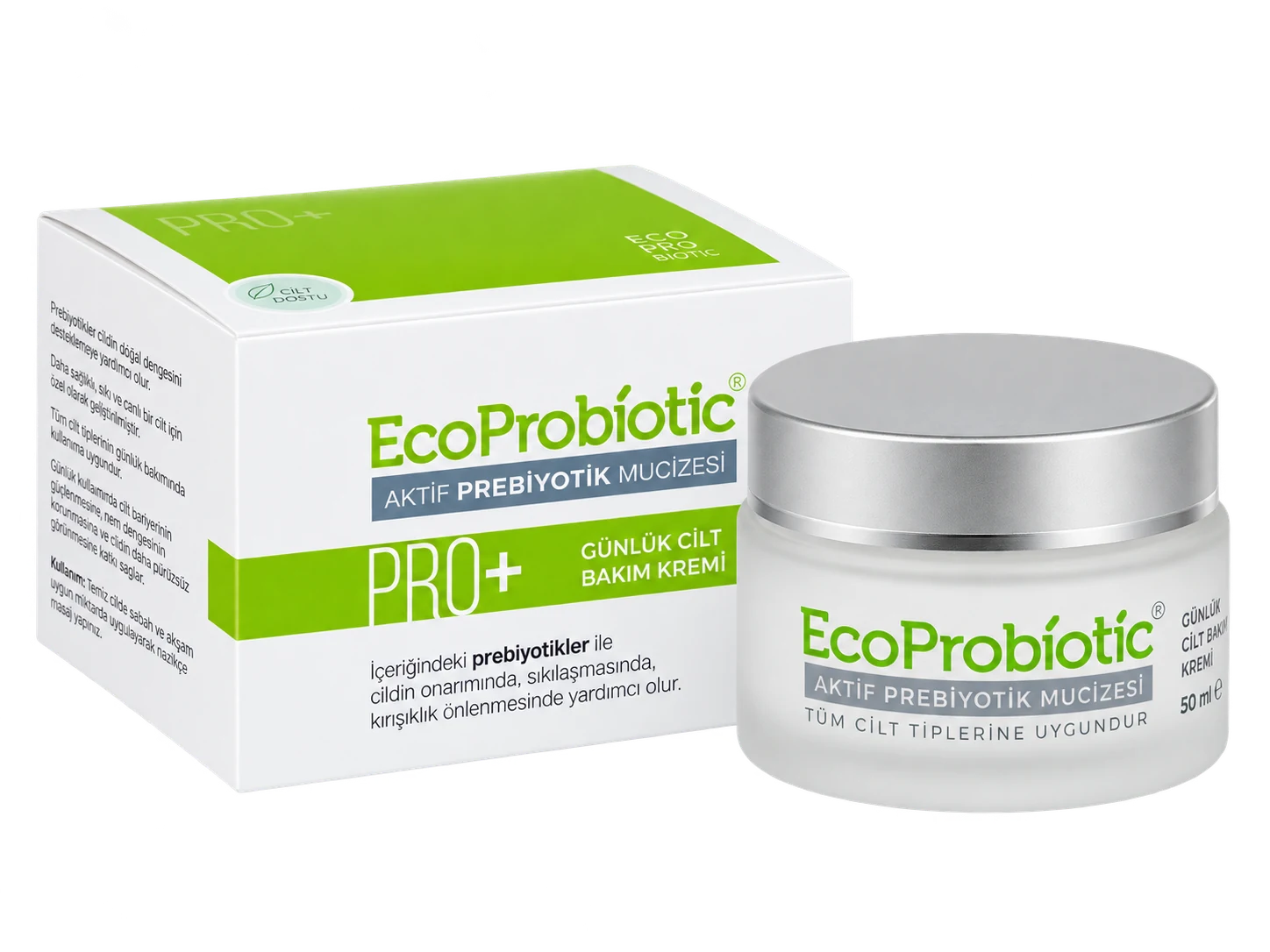
EcoProbiotic care range ↗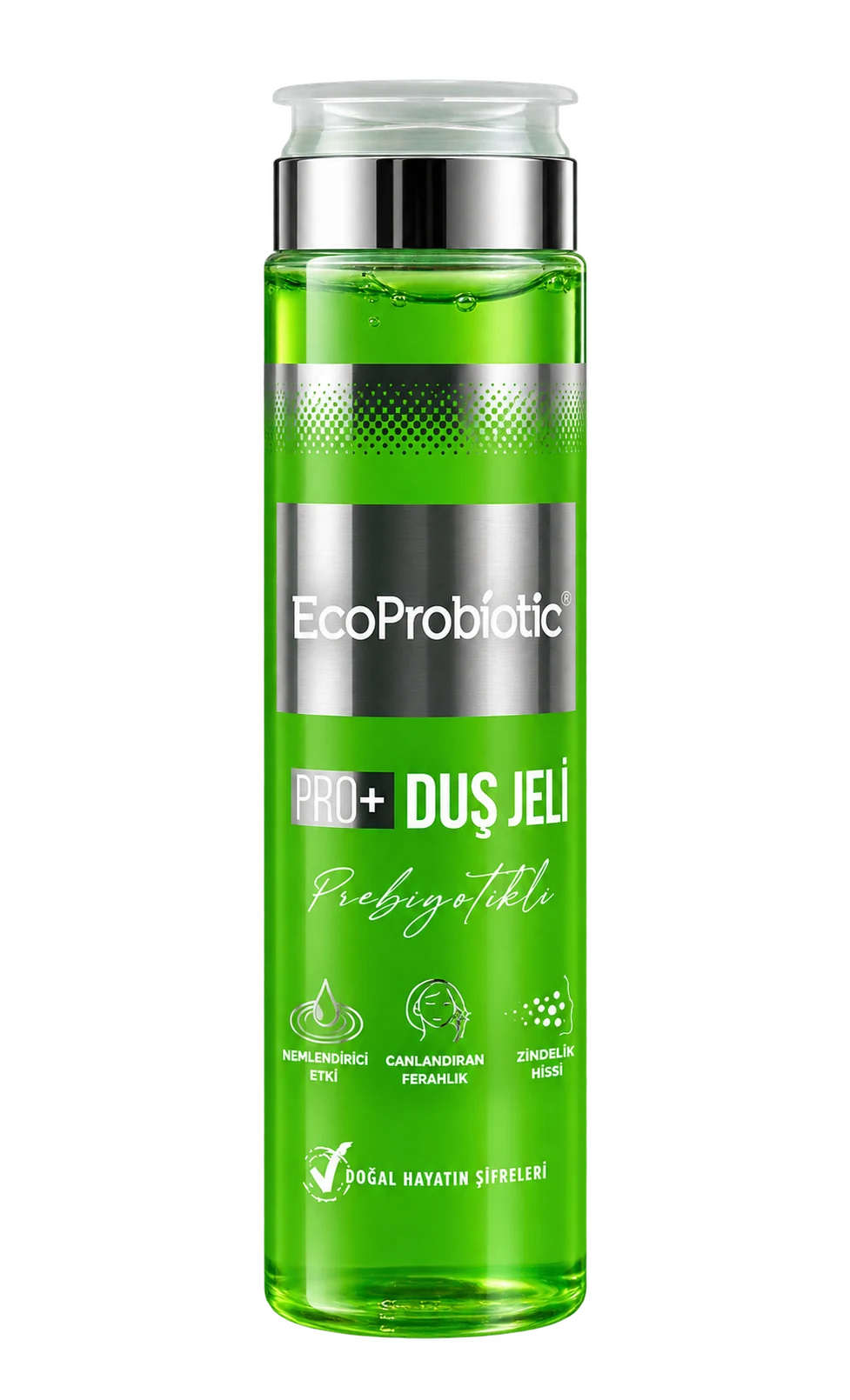
Caution
What to avoid, and when to see a doctor?
Avoid these
- ✕Soap, foaming shower gels and fragranced products
- ✕Long, hot showers and baths
- ✕Exfoliating mitts, loofahs and gritty scrubs
- ✕Scratching; instead, apply a cold compress or press on the area
- ✕Wool and synthetic fabrics touching your skin directly
- ✕Using cortisone creams on your own for long periods, or, the opposite, being afraid to use them at all
- ✕Going on strict diets without a doctor's advice
- ✕Stopping moisturizer during calm periods
See a dermatologist
- →If itching is disrupting your sleep and daily life
- →If patches are oozing, forming yellow crusts, becoming painful or come with a fever
- →If small, painful, fluid-filled blisters appear on your skin (this needs urgent evaluation)
- →If moisturizer and the recommended creams haven't helped within two weeks
- →If eczema has settled on your face, eyelids or genital area
- →If you're having a flare-up during pregnancy
Common misconceptions
Myth or fact?
Myth
Atopic dermatitis is a food allergy; cut out the right food and it will go away.
Fact
Food allergy can accompany atopic dermatitis in some people, but it isn't the cause of the disease. Restrictive diets without a doctor's assessment can do more harm than good.
Myth
Cortisone creams thin the skin and should never be used.
Fact
When used at the strength, on the area and for the length of time your dermatologist recommends, topical corticosteroids are safe and effective. Side effects are usually linked to uncontrolled, long-term use.
Myth
Eczema is contagious.
Fact
Atopic dermatitis isn't contagious. However, if patches become infected, the infection needs to be treated.
Popular searches
Most asked about Atopic dermatitis
Your questions
Frequently asked questions
Can you get atopic dermatitis for the first time as an adult?+
Yes. Although atopic dermatitis usually starts in childhood, it can appear for the first time in adulthood. Global data show a second rise in how often the disease occurs in middle age and later.
Which moisturizer should I choose?+
Fragrance-free, dye-free formulas with humectants like ceramides and glycerin and barrier-supporting lipids are a good start. For very dry areas, a cream or ointment is more effective than a lotion.
Should I take a probiotic supplement?+
Research results are mixed: some studies found a slight reduction in disease severity, while a comprehensive Cochrane review found no meaningful difference in symptoms reported by patients. If you're considering a supplement, talk to your doctor first.
What can I do to prevent eczema in my baby?+
In a study of high-risk newborns, applying moisturizer to the whole body every day from birth was associated with a 50% relative reduction in atopic dermatitis by 6 months. The researchers noted that this result needs to be confirmed by larger studies; talk to your pediatrician about your baby.
Does stress really affect my eczema?+
Yes, stress can increase itching and flare-ups; itching, in turn, disrupts sleep and mood and adds to stress. Managing stress is an important part of treatment.
Is eczema contagious?+
No, eczema (atopic dermatitis) isn't contagious; it doesn't pass to others through contact or shared items. Only if patches ooze, form yellow crusts or become painful does the infection that has developed need to be treated.
What helps eczema itching?+
Applying a cold, damp compress to the itchy area, pressing instead of scratching, reapplying moisturizer often throughout the day and keeping your nails short all bring relief. If itching is disrupting your sleep, your dermatologist can plan a treatment to calm the flare-up quickly.
What is used as an eczema cream?+
The basic 'cream' is a fragrance-free moisturizer applied generously every day. During flare-ups, your dermatologist may recommend medicated creams such as cortisone creams or cortisone-free calcineurin inhibitors; it's important not to choose their strength, area or duration on your own.
How do you treat eczema on your hands?+
With hand eczema, frequent handwashing, detergents and sanitizers are the biggest triggers. Washing your hands with lukewarm water and a soap-free cleanser, applying moisturizer after every wash and wearing gloves while doing dishes or cleaning all help; if it doesn't improve within a few weeks, see a dermatologist.
Scientific basis
Sources
- 1.Atopic dermatitis
Langan SM, Irvine AD, Weidinger S · The Lancet · 2020 · doi:10.1016/S0140-6736(20)31286-1
Summarized that atopic dermatitis is a combination of genetic predisposition, epidermal dysfunction and T cell–driven inflammation, and that it leads the global burden caused by skin diseases.
- 2.The global burden of atopic dermatitis: lessons from the Global Burden of Disease Study 1990-2017
Laughter MR, Maymone MBC, Mashayekhi S, ve ark. · British Journal of Dermatology · 2021 · doi:10.1111/bjd.19580
Reported that atopic dermatitis ranks 15th among non-fatal diseases, carries the highest burden of all skin diseases and shows two separate peaks in frequency, in early childhood and in middle age.
- 3.Common loss-of-function variants of the epidermal barrier protein filaggrin are a major predisposing factor for atopic dermatitis
Palmer CNA, Irvine AD, Terron-Kwiatkowski A, ve ark. · Nature Genetics · 2006 · doi:10.1038/ng1767
Showed that two gene changes that impair the function of the barrier protein filaggrin are a very strong predisposing factor for atopic dermatitis and are found in about 9% of people of European descent.
- 4.Temporal shifts in the skin microbiome associated with disease flares and treatment in children with atopic dermatitis
Kong HH, Oh J, Deming C, ve ark. · Genome Research · 2012 · doi:10.1101/gr.131029.111
Showed that the proportion of staph rises during flare-ups and is linked to disease severity, and that skin bacterial diversity increases again with treatment.
- 5.Antimicrobials from human skin commensal bacteria protect against Staphylococcus aureus and are deficient in atopic dermatitis
Nakatsuji T, Chen TH, Narala S, ve ark. · Science Translational Medicine · 2017 · doi:10.1126/scitranslmed.aah4680
Showed that beneficial bacteria on healthy skin produce substances that selectively suppress staph, that these bacteria are scarce in atopic dermatitis and that reapplying them reduced the staph load.
- 6.Guidelines of care for the management of atopic dermatitis in adults with topical therapies
Sidbury R, Alikhan A, Bercovitch L, ve ark. · Journal of the American Academy of Dermatology · 2023 · doi:10.1016/j.jaad.2022.12.029
Provided evidence-based recommendations for moisturizers, topical corticosteroids, calcineurin inhibitors, and JAK and PDE-4 inhibitors in adult atopic dermatitis.
- 7.Emollient enhancement of the skin barrier from birth offers effective atopic dermatitis prevention
Simpson EL, Chalmers JR, Hanifin JM, ve ark. · Journal of Allergy and Clinical Immunology · 2014 · doi:10.1016/j.jaci.2014.08.005
Reported that in 124 high-risk newborns, daily moisturizer application from birth was associated with a 50% relative reduction in atopic dermatitis at 6 months.
- 8.Effects of probiotics for the treatment of atopic dermatitis: a meta-analysis of randomized controlled trials
Kim SO, Ah YM, Yu YM, ve ark. · Annals of Allergy, Asthma & Immunology · 2014 · doi:10.1016/j.anai.2014.05.021
Across 25 randomized trials, found that probiotics were associated with lower disease severity scores in children and adults, but showed no benefit in infants.
- 9.Probiotics for treating eczema
Makrgeorgou A, Leonardi-Bee J, Bath-Hextall FJ, ve ark. · Cochrane Database of Systematic Reviews · 2018 · doi:10.1002/14651858.CD006135.pub3
After evaluating 39 studies, concluded that currently available oral probiotics probably make little or no difference to eczema symptoms reported by patients.
- 10.Atopic eczema
NHS · NHS (UK National Health Service) · 2024
Summarizes the symptoms and triggers of atopic eczema, how to use moisturizers and when to see a doctor in a patient-friendly way.