
Definition
What is Dryness and barrier damage?
The skin barrier is the outermost layer of the skin, often compared to a 'brick and mortar' structure. The bricks are dead but still functional cells; the mortar is the lipid layer that fills the spaces between them, made up of ceramides, cholesterol and free fatty acids. This structure keeps the body's water in on one hand and keeps microbes, allergens and irritants out on the other. The skin's natural moisturizing factors and acidic pH also contribute to this protection.
Dryness (medically called xerosis) is the loss of the skin's ability to hold water when this structure wears down. Dryness increases with age as lipid production and natural moisturizing factors decline; during menopause, falling estrogen also makes the skin drier and thinner. But today there's another very common cause of barrier damage: overdoing skincare. Frequent exfoliation, many acids and retinoids used at the same time, harsh cleansers and long hot showers erode the 'mortar.'
The signs of a damaged skin barrier are familiar: your skin feels tight, flakes, looks dull, shows fine lines more and may sting or burn with even the mildest product. As paradoxical as it may seem, it can be both dry and oily and prone to breakouts. The good news: the barrier is a structure that can renew itself. With the right 'simplify, repair, protect' approach, most women can get noticeable relief within a few weeks.
Check yourself
How do you recognise it?
- ✓A noticeable tight feeling after washing your face
- ✓Flaking, scaling and a rough texture
- ✓Stinging or burning from products you used to tolerate easily
- ✓Redness and a warm feeling
- ✓Skin that looks both dry and oily: shiny but tight
- ✓Dullness and more noticeable fine lines
- ✓Itching on the body, especially in winter and after showers
- ✓Fine lines on the legs and arms that look like cracked earth
- ✓Breakouts and irritation that happen more easily
- ✓Cracked, red hands
Why it happens
Main causes
01
Over-exfoliation
Using frequent peels, high-strength acids, retinoids and gritty products together thins the barrier's outer layer faster than it should.
02
Harsh cleansing habits
Soap, heavily foaming cleansers, washing more than twice a day and hot water dissolve the lipid layer.
03
Age and hormones
Lipid production and natural moisturizing factors decline with age. The drop in estrogen during menopause reduces the skin's ability to hold moisture.
04
Environmental factors
Cold, wind, dry air from central heating radiators, air-conditioned spaces and sun wear down the barrier. Outdoor temperature has been shown to be among the determining factors for dry skin.
05
Health conditions and medications
Atopic dermatitis, thyroid diseases, diabetes, kidney diseases, diuretics, cholesterol medications and some cancer treatments can increase dryness.
06
Lifestyle
Smoking, insufficient sleep and stress slow down the barrier's renewal.
In daily life
Triggers that cause flare-ups
Medical approach
Treatment options
01
The three components of moisturizers
An effective moisturizer usually contains three types of ingredients: humectants that draw in water (glycerin, hyaluronic acid, urea), emollients that soften the skin and fill in gaps (ceramides, fatty acids) and occlusives that reduce water loss (petrolatum, certain oils). For a dry, damaged barrier, formulas with a balance of all three are preferred.
02
Repair close to physiological lipid ratios
Barrier-repair creams containing ceramides, cholesterol and free fatty acids in ratios similar to the skin's own structure may help rebuild the barrier.
03
Products with urea and lactic acid
For marked dryness and flaking on the body, creams with low to moderate concentrations of urea or lactic acid can be used on your dermatologist's recommendation. Be careful with damaged facial skin, as these ingredients can sting.
04
Medical support during inflammation
If dryness comes with redness, itching and eczema-like patches, short-term anti-inflammatory creams may be used after your dermatologist's assessment.
05
Looking for an underlying cause
If dryness is widespread, stubborn and itchy, a doctor's evaluation for conditions such as thyroid disease, kidney disease or diabetes, or for medications you're taking, is important.
06
A break from strong actives
Temporarily pausing retinoids, acids and peels while your barrier is damaged is the most important step in the repair process. If you're using a prescription treatment, talk to your dermatologist before pausing it.
Did you know? · Dryness and barrier damage
60% · In a population study of 5,547 middle-aged and older people, a doctor's examination found dry skin in 60% of participants; being female was one of the determining factors.
Step by step
Care routine for Dryness and barrier damage
- 1
Cleanser-free mornings
During the repair period, just rinsing with lukewarm water in the morning gives your barrier a break.
- 2
Humectant layer
While your skin is still slightly damp, apply a fragrance-free hydrating serum with glycerin or hyaluronic acid.
- 3
Barrier cream
Lock in moisture with a barrier cream containing ceramides, cholesterol, fatty acids and prebiotics.
- 4
Sunscreen
A damaged barrier is more vulnerable to the sun. Use a fragrance-free, broad-spectrum sunscreen.
- 5
For your body
Apply body cream to dry areas in the morning too; especially in winter, always keep hand cream in your bag.
Care you can use in your routine
EcoProbiotic care range ↗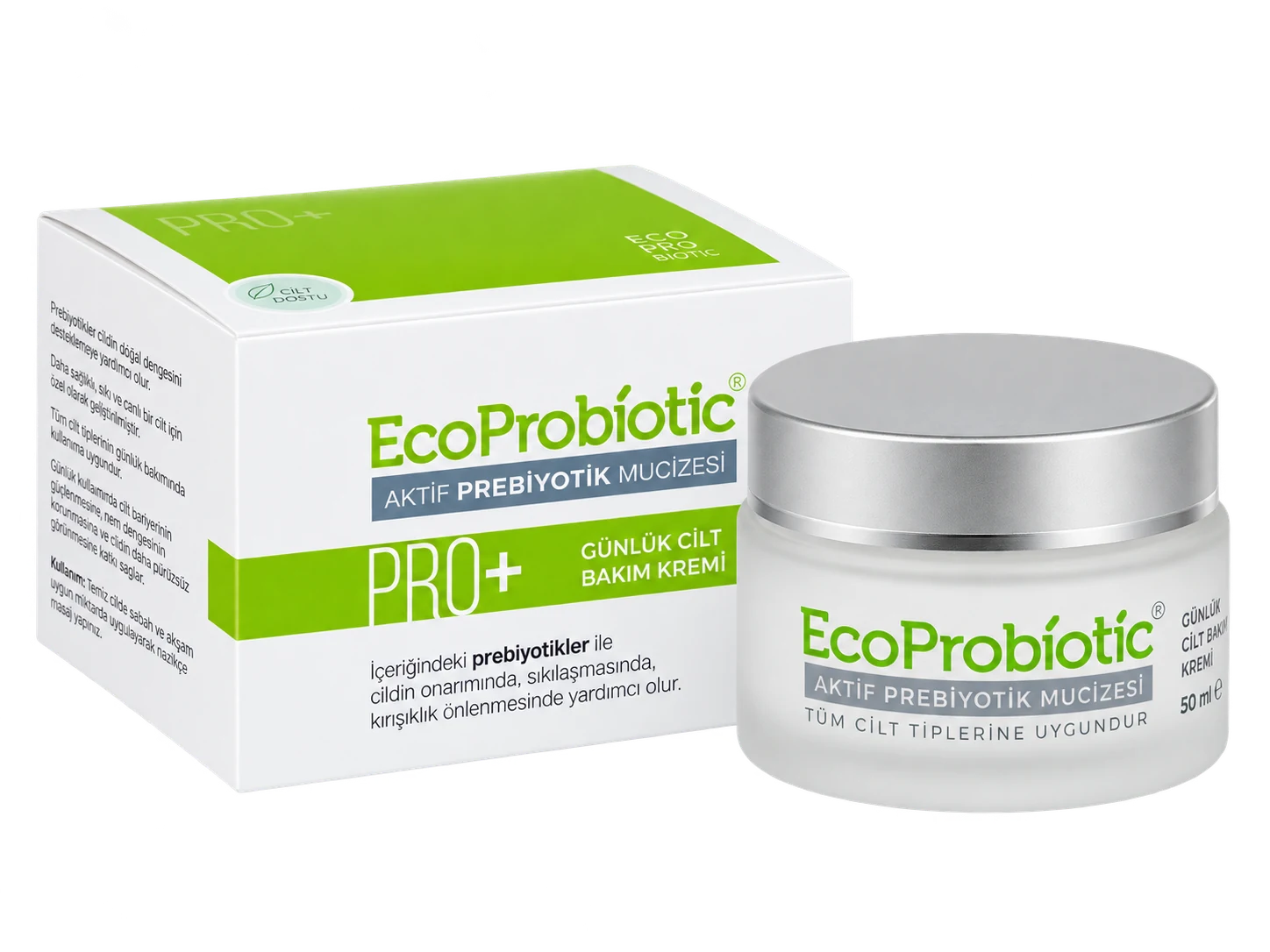 MoisturisingPrebiotic Skin CreamMoisturises the skin and helps repair the barrier. Available in three formulas: for all, dry and oily skin.View ↗
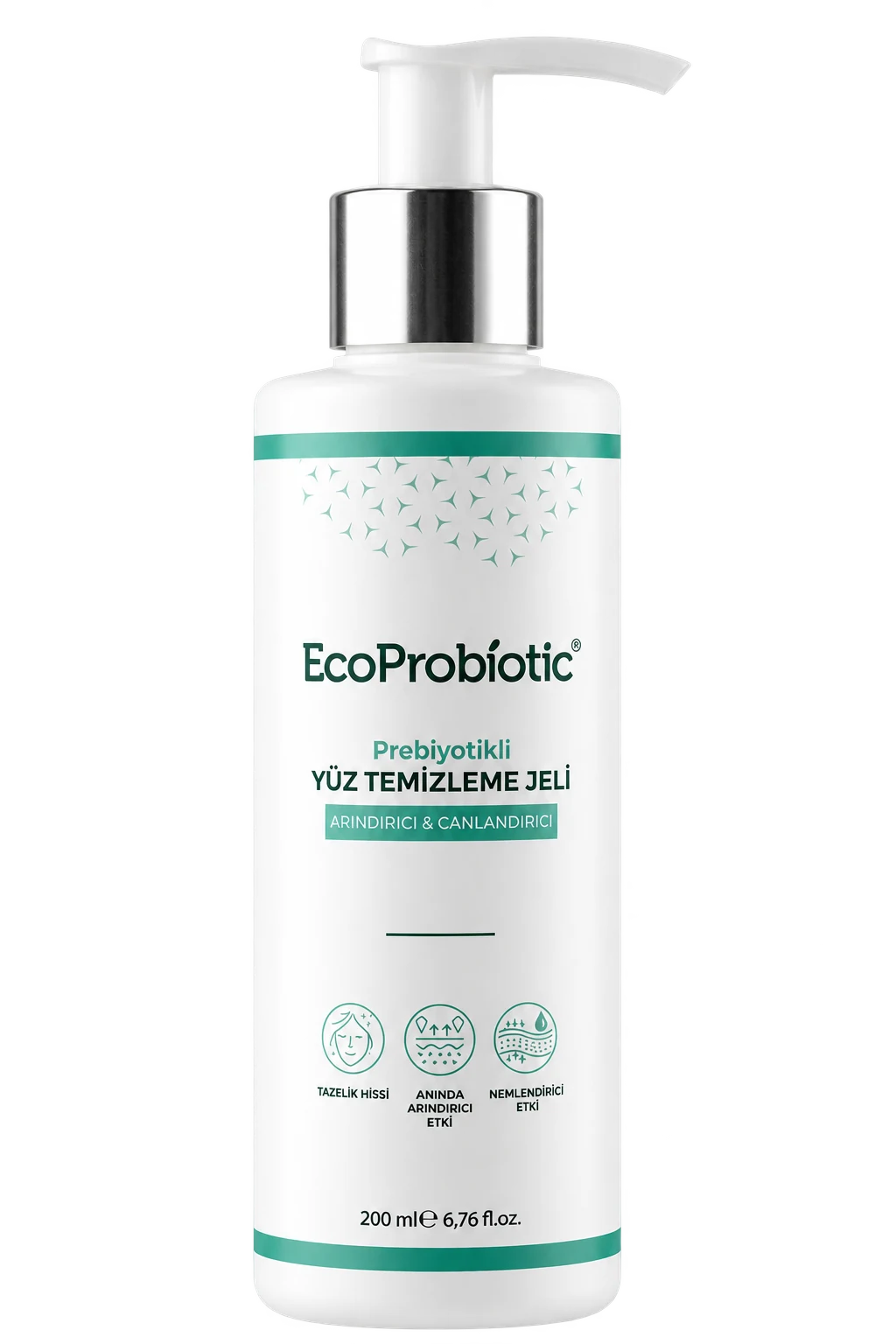 CleansingPrebiotic Face Cleansing GelRemoves make-up and the day’s grime with a gentle foam, supporting the skin barrier as it cleanses. Morning and evening.View ↗
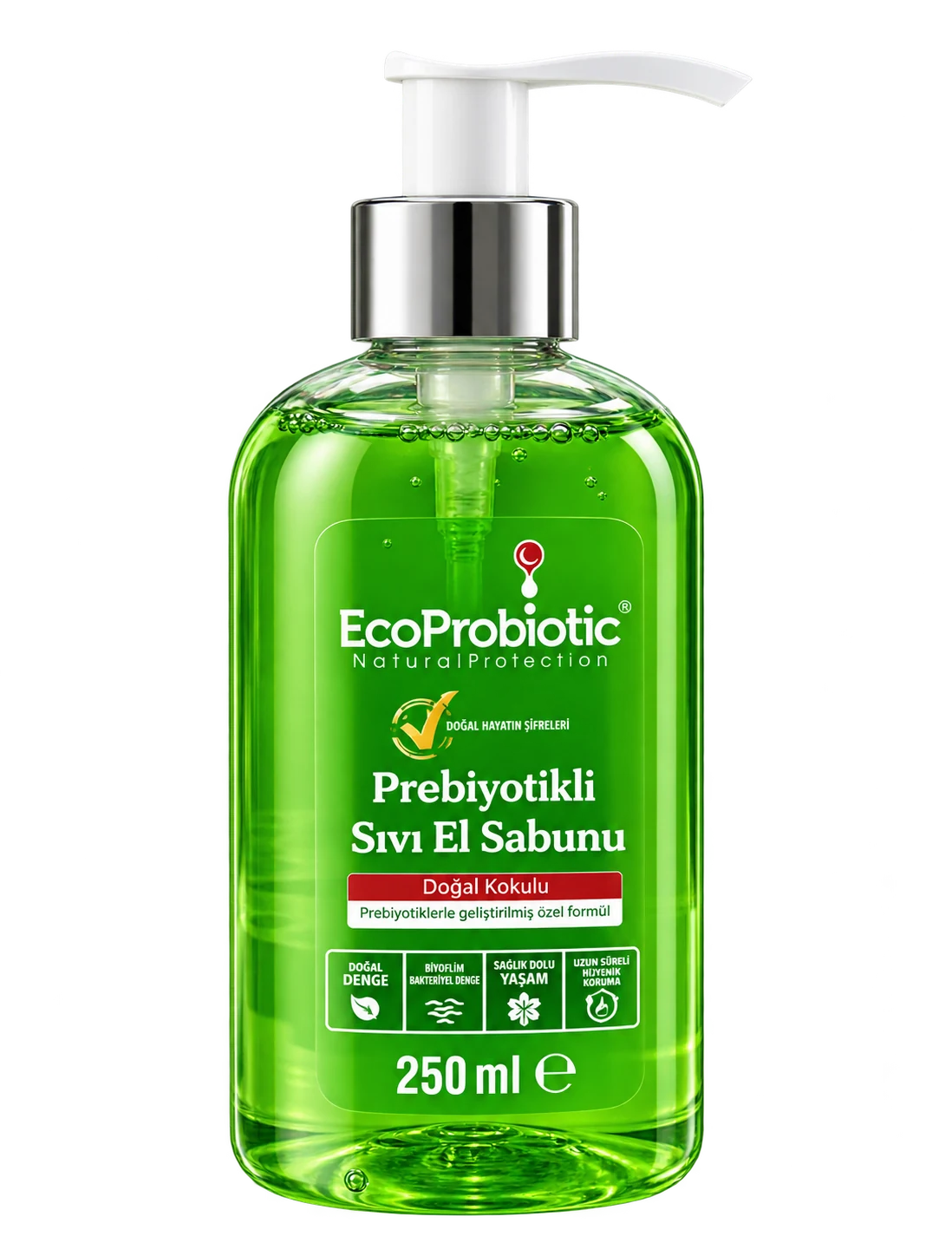 HandsPrebiotic Liquid Hand SoapCleanses frequently washed hands while supporting their barrier; for the whole family.View ↗
Caution
What to avoid, and when to see a doctor?
Avoid these
- ✕Exfoliating more than once a week
- ✕Layering acids, retinoids and vitamin C in the same routine
- ✕Soap and heavily foaming cleansers
- ✕Long, hot showers and baths
- ✕Exfoliating mitts, loofahs, cleansing brushes and gritty scrubs
- ✕Alcohol-based toners and fragranced products
- ✕Continuing to use a product that stings, thinking your skin will 'get used to it'
- ✕Trying new active ingredients before your barrier is repaired
See a dermatologist
- →If dryness comes with intense itching that disrupts your sleep
- →If you have cracks, bleeding, oozing or signs of infection on your skin
- →If red, flaky, eczema-like patches have formed
- →If there's no improvement within a few weeks despite using moisturizer
- →If dryness comes with other symptoms such as fatigue, weight changes or frequent urination
- →If marked dryness started after beginning a new medication
Common misconceptions
Myth or fact?
Myth
The more often you exfoliate, the brighter and smoother your skin gets.
Fact
Over-exfoliation thins the barrier's outer layer too much; the result isn't glow but tightness, redness and sensitivity. For most skin, even one gentle exfoliation a week is enough.
Myth
A tight feeling means your skin is really clean.
Fact
Tightness after washing is a sign that the cleanser has damaged your skin's proteins and lipids. The right cleanser leaves your skin comfortable, not tight.
Myth
Oily skin doesn't get barrier damage.
Fact
Oily skin can have a damaged barrier too, especially from harsh, drying products. In that case, your skin can be oily and also tight and sensitive.
Popular searches
Most asked about Dryness and barrier damage
Your questions
Frequently asked questions
How do I know if my skin barrier is damaged?+
If products you normally use comfortably have started to sting, your skin feels tight after washing, redness and flaking are increasing and your skin feels both dry and oily, your barrier may be worn down.
How long does it take to repair the barrier?+
The skin's outer layer renews itself in a cycle of about a few weeks. With a simplified routine, most people feel noticeable relief within 2–4 weeks; with deeper damage, it may take longer.
What ingredients should I look for when repairing my barrier?+
Barrier-friendly ingredients such as ceramides, cholesterol, fatty acids, glycerin, panthenol and niacinamide, plus prebiotics that feed beneficial microbiota, are a good start. Choose fragrance-free formulas with short ingredient lists.
Why did my skin get so dry during menopause?+
Declining estrogen affects your skin's lipid production, its ability to hold moisture and its thickness. During this time, switching to richer, barrier-repairing creams and reviewing your shower habits can help.
Do occlusive products like petroleum jelly clog pores?+
Pure occlusives usually don't clog pores and are very effective at reducing water loss. On acne-prone facial skin, though, it's better to apply a thin layer only to very dry areas.
How does prebiotic skincare help with barrier repair?+
Prebiotics feed the beneficial microbiota on your skin. Since the microbiota is known to play a role in forming and repairing the barrier, prebiotic-supported care may help support microbiome balance and barrier repair.
What's the fastest way to repair your skin barrier?+
The fastest way is to stop everything that's wearing your skin down: take a 2–4 week break from peels, acids, retinoids and harsh cleansers, cleanse gently once a day and lock in moisture with a barrier cream containing ceramides, cholesterol and fatty acids. During this time, taking products away rather than adding more often gets faster results.
What helps dry skin on the face?+
Washing with lukewarm water and a soap-free cleanser, applying a hydrating serum with glycerin or hyaluronic acid while your skin is slightly damp followed by a ceramide cream, and humidifying the room while the heating is on are effective at reducing facial dryness. A thin layer of occlusive ointment can be added to very dry areas at night.
Can dry skin on the face be caused by a vitamin deficiency?+
Usually not. The most common causes of facial dryness are harsh cleansing, over-exfoliation, cold and dry air, and declining lipid production with age. If dryness comes with symptoms like fatigue, weight changes or hair loss, a doctor's evaluation for conditions like thyroid disease and nutritional deficiencies can be helpful.
Scientific basis
Sources
- 1.Prevalence and determinants for xerosis cutis in the middle-aged and elderly population: A cross-sectional study
Mekić S, Jacobs LC, Gunn DA, ve ark. · Journal of the American Academy of Dermatology · 2019 · doi:10.1016/j.jaad.2018.12.038
Dry skin was found in 60% of 5,547 middle-aged and older participants; age, female sex, outdoor temperature and eczema were determining factors, and daily cream use was associated with less dryness.
- 2.Prevalence and risk factors for xerosis in the elderly: a cross-sectional epidemiological study in primary care
Paul C, Maumus-Robert S, Mazereeuw-Hautier J, ve ark. · Dermatology · 2011 · doi:10.1159/000334631
Found a dryness prevalence of 55.6% in 756 people over 65; female sex, older age and a history of atopic dermatitis were significant risk factors.
- 3.The skin: an indispensable barrier
Proksch E, Brandner JM, Jensen JM · Experimental Dermatology · 2008 · doi:10.1111/j.1600-0625.2008.00786.x
Explained how the skin barrier is built from protein-rich cells and lipid layers made of ceramides, cholesterol and free fatty acids, and how its disruption sets the stage for disease.
- 4.Moisturization and skin barrier function
Rawlings AV, Harding CR · Dermatologic Therapy · 2004 · doi:10.1111/j.1396-0296.2004.04s1005.x
Summarized that the skin's optimal hydration depends on the organization of the lipid layers, the length of the path water travels and natural moisturizing factors.
- 5.Cleansing without compromise: the impact of cleansers on the skin barrier and the technology of mild cleansing
Ananthapadmanabhan KP, Moore DJ, Subramanyan K, ve ark. · Dermatologic Therapy · 2004 · doi:10.1111/j.1396-0296.2004.04S1002.x
Showed that harsh surfactants can damage skin proteins and lipids, leading to post-wash tightness, dryness, barrier damage, irritation and itching.
- 6.Natural skin surface pH is on average below 5, which is beneficial for its resident flora
Lambers H, Piessens S, Bloem A, Pronk H, Finkel P · International Journal of Cosmetic Science · 2006 · doi:10.1111/j.1467-2494.2006.00344.x
Showed that acidic skin pH helps beneficial bacteria adhere to the skin, while alkaline pH makes it easier for them to detach, and that soaps markedly raise pH.
- 7.Commensal microbiota regulates skin barrier function and repair via signaling through the aryl hydrocarbon receptor
Uberoi A, Bartow-McKenney C, Zheng Q, ve ark. · Cell Host & Microbe · 2021 · doi:10.1016/j.chom.2021.05.011
Showed in an experimental model that beneficial skin microbiota is necessary for the barrier to form and repair properly, and that this effect works through a receptor in skin cells.
- 8.Microbiota and maintenance of skin barrier function
Harris-Tryon TA, Grice EA · Science · 2022 · doi:10.1126/science.abo0693
Summarized that the skin microbiota is a fundamental part of barrier function by protecting against harmful microbes, regulating immune balance and strengthening the epithelium.
- 9.Impact of prebiotics and probiotics on skin health
Al-Ghazzewi FH, Tester RF · Beneficial Microbes · 2014 · doi:10.3920/BM2013.0040
Reviewed evidence that prebiotics and probiotics may have the capacity to maintain and rebalance the skin microbiota, and that topical applications may support the skin's natural defense barrier.
- 10.Role of topical emollients and moisturizers in the treatment of dry skin barrier disorders
Lodén M · American Journal of Clinical Dermatology · 2003 · doi:10.2165/00128071-200304110-00005
Comprehensively evaluated the role of emollients and moisturizers in dry skin and barrier disorders, and the effects of their ingredients on the barrier.