At this stage
What happens to your skin?
01
Collagen is at its peak, but spending begins
Young fibroblasts (the cells that make collagen) produce markedly more collagen than older ones: production in cells from people aged 18–29 was about 46% higher than in those over 80. Skin collagen starts to decline with age and is slightly lower in women than in men at every age.
02
The sun is the biggest ager
A study of women aged 30–78 showed that about 80% of visible facial aging signs were associated with UV rays. The sun damage you can't see in your 20s surfaces as dark spots and fine lines in your 30s.
03
Adult acne is surprisingly common
In a survey of more than a thousand people, 50.9% of women aged 20–29 reported having acne. Breakouts in this period appear more along the jawline and around the mouth than on the forehead, and they fluctuate with your menstrual cycle.
04
Fast renewal, fast recovery
At this age, the outer layer of skin renews itself in about 20 days. That's why acne marks, sunburns and minor irritations fade faster. This speed can also create the illusion that your skin tolerates harsh products.
05
The barrier is sensitive to lifestyle
In women who sleep poorly, the barrier was shown to recover 30% more slowly after damage. Night shifts, exam periods and a busy social life can increase the skin's water loss.
06
Balance is sensitive to habits
The bacterial community of adult skin is now settled. Frequent antibiotic use, over-cleansing and too many active ingredients at once can disrupt this balance and your skin's comfort.
From within
The effect of hormones
In your 20s, estrogen and progesterone usually follow a regular cycle. Estrogen rises in the first half of the cycle, making skin look more hydrated and radiant; in the second half, as progesterone and the relative effect of androgens increase, oiliness and the tendency to break out can rise. If you notice your skin behaving differently in the week before your period, that's a natural reflection of this cycle.
Birth control pills, hormonal IUDs and the stress that's common in this period can affect your skin's hormone balance. Some pills may reduce breakouts, while others may increase the tendency toward dark patches (melasma). If irregular periods, excess hair growth and stubborn chin breakouts occur together, it's a good idea to be evaluated for PCOS; PCOS affects about 10% of women of reproductive age.
Focus
Priorities at this age
01
Sunscreen every day
A controlled study showed that skin aging progressed 24% less over 4.5 years in people who used sunscreen every day. This is the most valuable investment of the decade.
02
Antioxidant support
A morning vitamin C serum supports your skin as a second shield against free radicals alongside sunscreen and helps reduce uneven tone.
03
An introduction to evening renewal care
The second half of your 20s is a good time to get to know low-strength retinol or gentle acids. Start with 2–3 evenings a week and watch how your skin responds.
04
Fewer products, resilient skin
Rather than trying lots of active ingredients, keeping your skin strong with a good moisturizer containing ceramides and glycerin leads to more resilient, less sensitive skin in the long run.
05
Reading hormonal acne correctly
Know that cyclical breakouts along the jawline may be hormonal in origin; if topical care isn't enough, your dermatologist can consider hormonal approaches.
20s · Ages 20–29
Lay the foundation now: today's care, tomorrow's skin
Step by step
Skin routine
- 1
Gentle cleansing
Wash your face with a soap-free, mildly acidic cleanser suited to your skin type. For dry skin, water alone may be enough in the morning.
- 2
Vitamin C serum
A serum with ascorbic acid or its derivatives helps reduce the oxidative stress caused by UV and pollution and supports an even tone.
- 3
Moisturizer
Choose a gel for oily skin, a lotion for normal skin and a richer cream for dry skin. Formulas with prebiotics can help support your skin's microbiome.
- 4
Broad-spectrum sunscreen
Apply an SPF 30–50 product with UVA protection to your face, neck and chest, using about two finger-lengths. If you're outdoors, reapply every 2–3 hours.
What you can add to your routine
Fewer products, more balanced skin
Using many active ingredients at once tires out the barrier and the microbiome. One renewing product, one antioxidant and a good moisturizer are usually enough.
Feed the good bacteria with prebiotics
Skincare products with prebiotics can help support microbiome diversity and barrier defense by feeding your skin's friendly bacteria.
Care you can use in your routine
EcoProbiotic care range ↗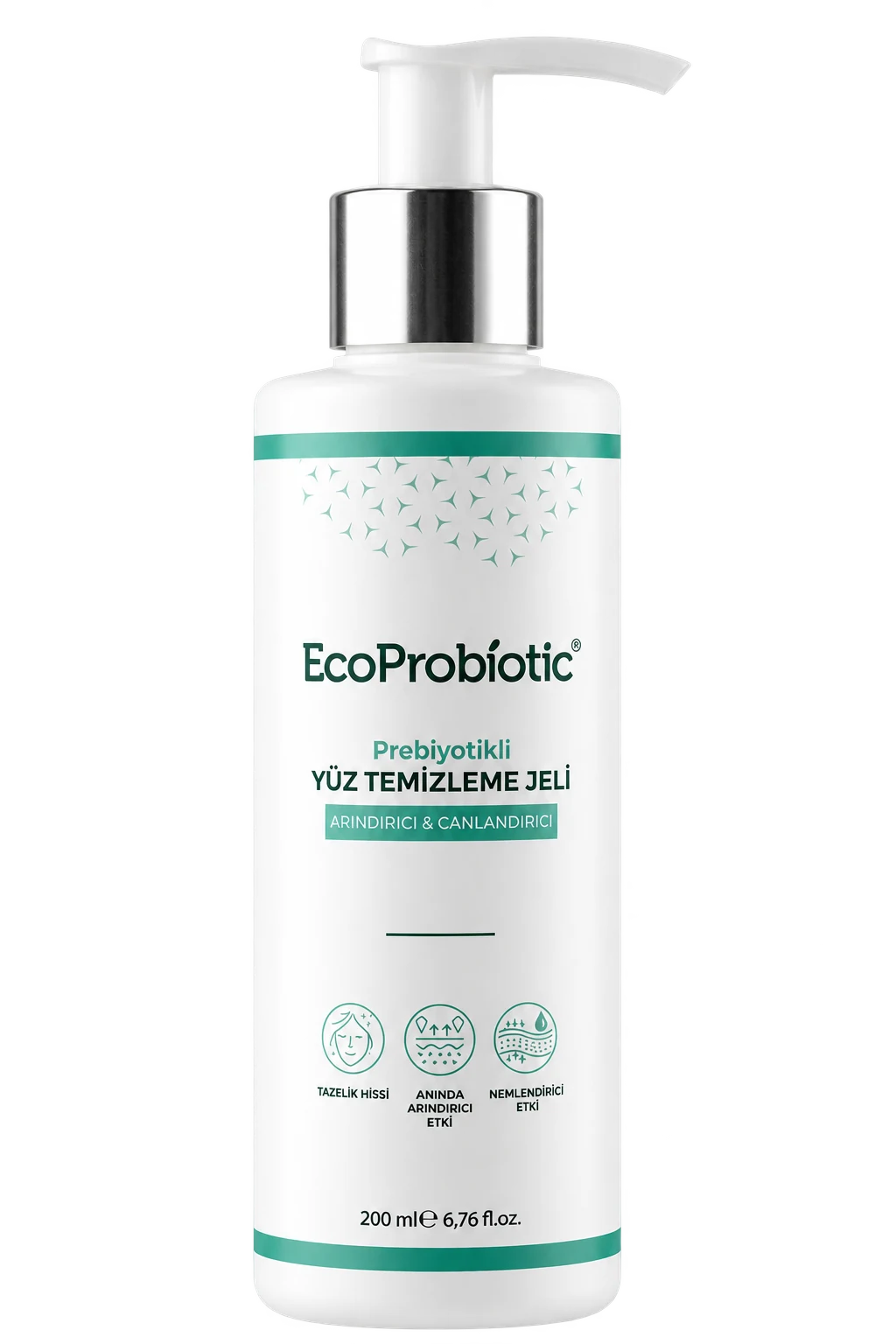 CleansingPrebiotic Face Cleansing GelRemoves make-up and the day’s grime with a gentle foam, supporting the skin barrier as it cleanses. Morning and evening.View ↗
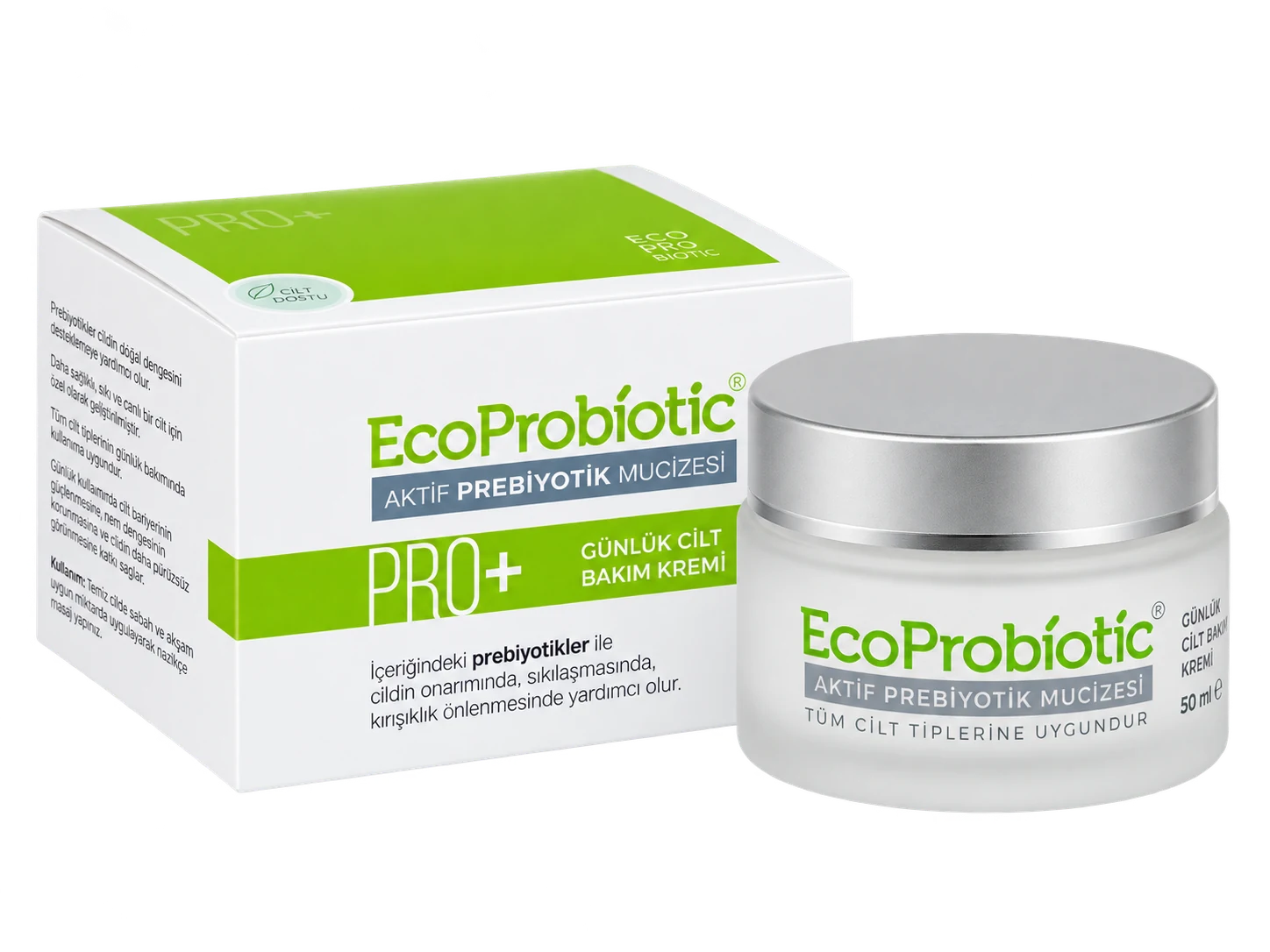 MoisturisingPrebiotic Skin CreamMoisturises the skin and helps repair the barrier. Available in three formulas: for all, dry and oily skin.View ↗
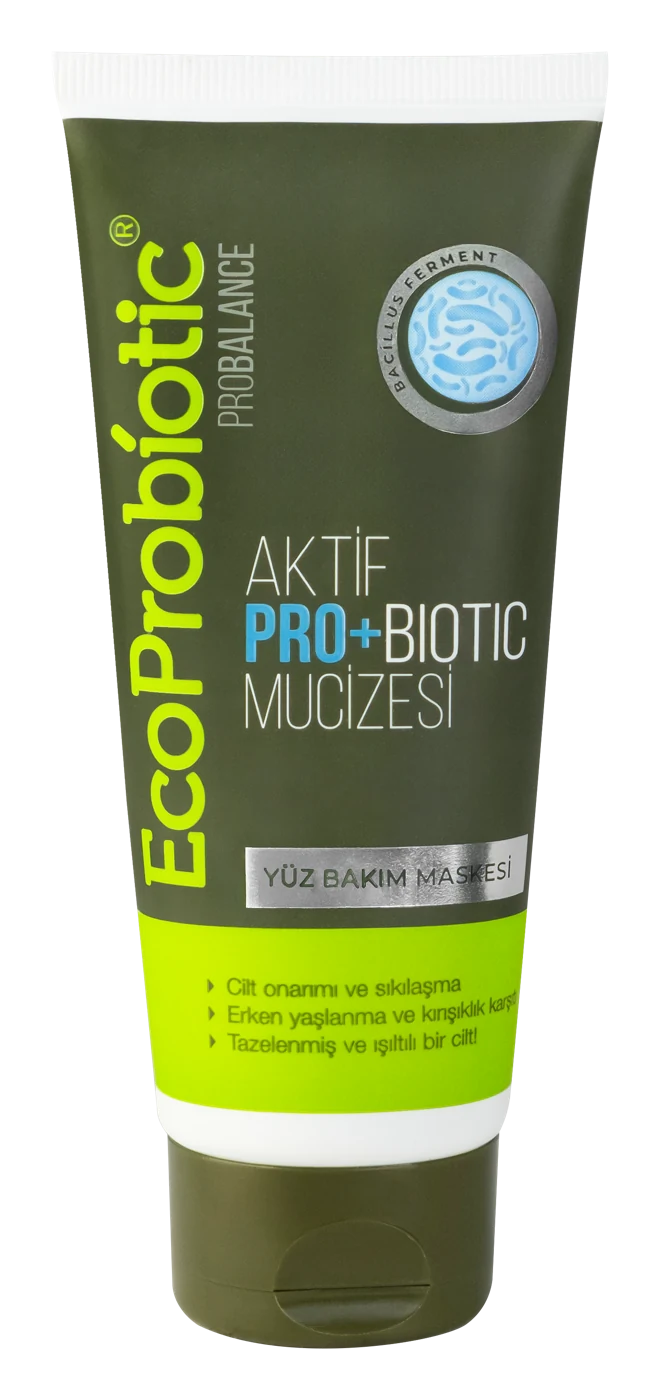 Weekly carePrebiotic Volcanic Clay MaskAbsorbs excess oil and dirt from the surface, purifying while supporting the barrier. Once or twice a week, for ten minutes.View ↗
Hair and scalp
Hair routine
- 1
Think of your scalp as skin
Like the skin on your face, your scalp has a barrier and a microbiome. Apply a gentle, low-sulfate shampoo to your scalp and conditioner or a mask to your ends.
- 2
Make friends with heat
If you use a blow dryer, flat iron or curling iron, always apply a heat protectant and keep the temperature below 180°C (356°F). A hair strand can't repair itself; protecting is easier than repairing.
- 3
Pace your coloring and bleaching
Leave at least 6–8 weeks between bleaching sessions and use bond-building treatments. If your scalp burns or itches, be alert for contact dermatitis.
- 4
Recognize stress shedding
Widespread shedding that begins 2–3 months after a serious illness, rapid weight loss or intense stress is usually telogen effluvium, and it often resolves on its own.
- 5
Iron and protein
Heavy periods or restrictive diets can lower your iron stores and contribute to hair loss. If shedding continues, talk to your doctor about your ferritin and thyroid levels.
Most common
Common concerns
Adult acne
It affects about half of women in their 20s; it appears along the jawline and around the mouth and fluctuates with the menstrual cycle.
Read in the atlas →Perioral dermatitis
Small red bumps around the mouth and nose. It can be triggered by heavy creams and steroid products; simplifying your routine is the first step.
Read in the atlas →Melasma
Symmetrical facial dark patches caused by hormones and sun together. It can begin while taking birth control pills.
Read in the atlas →Telogen effluvium
Widespread hair shedding after stress, dieting or illness. Once the trigger is gone, it usually recovers within months.
Read in the atlas →Contact dermatitis
Redness and itching in response to a new product, fragrance, hair dye or jewelry. It's common in this period, when many products are being tried.
Read in the atlas →PCOS and skin
If irregular periods, excess hair growth, stubborn breakouts and thinning hair occur together, a hormonal evaluation is important.
Read in the atlas →Daily life
Lifestyle
The cost of putting off sleep
In women who chronically slept 5 hours or less, signs of intrinsic aging were more pronounced and barrier recovery was slower. 7–9 hours of sleep is the cheapest skincare product there is.
Color on your plate
Protein, healthy fats (olive oil, fish, walnuts), colorful vegetables and fiber-rich foods support collagen production and the microbiome. Sugary and processed foods can increase the tendency to break out.
Smoking and alcohol
Smoking reduces blood flow to the skin and collagen production; alcohol dries the skin and can increase redness. Every habit you quit in this period gives your skin years.
Screens and nighttime light
Staying in front of a screen late into the night lowers sleep quality. Putting your screen away an hour before bed is indirect but powerful support for your skin.
Movement
Regular exercise boosts circulation and reduces stress. Washing your face after a workout reduces the buildup of sweat and oil in your pores.
Popular searches
Most asked about 20s
Your questions
Frequently asked questions
At what age should I start retinol?+
There's no specific age requirement; the mid-20s is a good starting point for many women. If you're prone to breakouts or dark spots, you can start even earlier. Begin with a low strength on 2–3 evenings a week, and always use sunscreen.
Do I need sunscreen on cloudy days?+
Yes. UVA rays pass through clouds and glass, and they're responsible for a large share of aging and dark spots. Applying sunscreen every morning is the most effective habit.
Why do I break out before my period?+
In the second half of the cycle, hormone balance shifts and oil glands become more active. During this time, gentle cleansing, light moisturizing and ingredients like azelaic acid or niacinamide can help.
Does the birth control pill affect my skin?+
It can. Some pills may reduce breakouts, while others may increase the tendency toward melasma. If you notice a significant change in your skin, evaluate it together with your gynecologist and dermatologist.
Are expensive products more effective?+
No. Effectiveness is determined by ingredients, concentration and consistent use, not price. A simple routine of gentle cleanser, moisturizer and sunscreen does more than an expensive but inconsistent one.
Can you get wrinkles at 20?+
Permanent wrinkles are rare in your 20s; the lines you see are mostly from facial expressions or dryness. Since most visible facial aging is linked to the sun, the most effective wrinkle prevention is a broad-spectrum sunscreen applied every day. In a 4.5-year study, skin aging progressed 24% less in regular users.
What should a skincare routine look like in your 20s?+
Morning: gentle cleanser, optional vitamin C serum, moisturizer and SPF 30–50 sunscreen. Evening: double cleansing, retinol or a gentle acid 2–3 nights a week, and a barrier cream. Keep the number of products low and add new ones one at a time so you can see what your skin reacts to.
What causes adult acne, and how do you get rid of it?+
Breakouts in your 20s (adult acne) are usually linked to hormonal fluctuations, stress, lack of sleep and pore-clogging products; they concentrate along the jawline and around the mouth. Gentle cleansing, azelaic acid or niacinamide and regular sunscreen are the first steps. For stubborn breakouts or ones that leave marks, prescription options come into play after your dermatologist's evaluation.
Scientific basis
Sources
- 1.Decreased collagen production in chronologically aged skin: roles of age-dependent alteration in fibroblast function and defective mechanical stimulation.
Varani J, Dame MK, Rittie L, Fligiel SE, et al. · American Journal of Pathology · 2006 · doi:10.2353/ajpath.2006.051302
Showed that fibroblasts from people aged 18–29 produced markedly more type I procollagen than those from people over 80 (82 vs. 56 ng/ml).
- 2.The influence of age and sex on skin thickness, skin collagen and density.
Shuster S, Black MM, McVitie E · British Journal of Dermatology · 1975 · doi:10.1111/j.1365-2133.1975.tb05113.x
Showed that skin collagen decreases with age and is lower in women than in men at every age, and that the amount of collagen is directly related to dermal thickness.
- 3.Effect of the sun on visible clinical signs of aging in Caucasian skin.
Flament F, Bazin R, Laquieze S, Rubert V, et al. · Clinical, Cosmetic and Investigational Dermatology · 2013 · doi:10.2147/CCID.S44686
Reported that in 298 women aged 30–78, about 80% of visible facial aging signs were associated with UV rays, and that dark spots in particular were linked to sun exposure.
- 4.The prevalence of acne in adults 20 years and older.
Collier CN, Harper JC, Cafardi JA, Cantrell WC, et al. · Journal of the American Academy of Dermatology · 2008 · doi:10.1016/j.jaad.2007.06.045
Showed that 50.9% of women reported acne in their 20s, 35.2% in their 30s, 26.3% in their 40s and 15.3% after 50, and that women were affected more often than men in every age group.
- 5.Sunscreen and prevention of skin aging: a randomized trial.
Hughes MC, Williams GM, Baker P, Green AC · Annals of Internal Medicine · 2013 · doi:10.7326/0003-4819-158-11-201306040-00002
Showed that after 4.5 years, skin aging progressed 24% less in people who used broad-spectrum sunscreen daily than in those who used it occasionally.
- 6.Does poor sleep quality affect skin ageing?
Oyetakin-White P, Suggs A, Koo B, Matsui MS, et al. · Clinical and Experimental Dermatology · 2015 · doi:10.1111/ced.12455
Showed that in women who slept well, the barrier recovered 30% better 72 hours after damage, and signs of intrinsic aging were lower.
- 7.The prevalence and phenotypic features of polycystic ovary syndrome: a systematic review and meta-analysis.
Bozdag G, Mumusoglu S, Zengin D, Karabulut E, Yildiz BO · Human Reproduction · 2016 · doi:10.1093/humrep/dew218
Estimated that, by the Rotterdam criteria, about 10% of women of reproductive age have PCOS, and that excess hair growth occurs in 13%.
- 8.The role of topical probiotics in skin conditions: A systematic review of animal and human studies and implications for future therapies.
Knackstedt R, Knackstedt T, Gatherwright J · Experimental Dermatology · 2020 · doi:10.1111/exd.14032
Reviewed animal and human studies of probiotics applied to the skin; highlighted promising results in supporting microbiome balance and the need for more research.