Definition
What is Dandruff and itchy scalp?
Dandruff happens when cells in the top layer of the scalp renew faster than normal and shed as visible white or yellowish flakes. Itching often comes with it. There is no obvious redness with dandruff; if there is redness, greasy yellow scales and spreading to areas such as the hairline, between the eyebrows and the sides of the nose, the condition is called seborrheic dermatitis. Scientists see dandruff and seborrheic dermatitis as the mild and severe ends of the same spectrum.
Three factors come together to cause dandruff: oil on the scalp (sebum), a type of yeast that naturally lives on the skin (Malassezia), and how sensitive your barrier is to this yeast and the substances it produces. This yeast is also found on a healthy scalp, so it is not the cause of dandruff on its own. The problem appears when the scalp reacts sensitively to the substances the yeast produces while breaking down oils.
Dandruff is not contagious, isn't caused by being dirty and does not directly cause hair loss. But itching and scratching irritate the scalp and make the discomfort worse. With the right shampoo, regular washing and gentle scalp care, dandruff is easily brought under control in most women. The short answer to “what helps dandruff?”: a medicated shampoo, the right contact time and consistency.
Check yourself
How do you recognise it?
- ✓White or yellowish flakes at the hair roots, on the shoulders and on dark clothes
- ✓Itching that gets worse especially in the days before washing your hair
- ✓A tight, dry or, on the contrary, oily feeling on the scalp
- ✓Flakes reappearing 1–2 days after washing
- ✓Symptoms getting worse in winter, during stressful periods and with hot-cold changes
- ✓Small scratches and tenderness from scratching
- ✓In severe cases, redness and flaking along the hairline, on the eyebrows and the sides of the nose
- ✓A slight odor or greasy feeling on the scalp
Why it happens
Main causes
01
Natural yeast and bacteria ratio
A change in the ratio of yeast and certain bacteria that naturally live on the scalp is one of the factors involved in dandruff.
02
A weak scalp barrier
When barrier lipids decrease, the scalp both loses moisture and becomes more sensitive to irritating substances.
03
Oil production
Because the yeast feeds on oil, dandruff is more common after puberty when oil production increases, during hormonal changes and in oily scalp types.
04
Personal sensitivity
Of two people with the same amount of yeast, one may get dandruff while the other isn't affected at all. This difference has to do with barrier structure, immune response and genetic predisposition.
05
Washing habits
Washing your hair too rarely increases the buildup of oil and flakes; washing too often with very harsh products damages the barrier. Both extremes can feed dandruff.
06
Stress and season
Stress, lack of sleep and the dry air of winter can increase dandruff by affecting the immune response and the barrier.
In daily life
Triggers that cause flare-ups
Medical approach
Treatment options
01
Antifungal shampoos
Based on your dermatologist's assessment, shampoos that act on the yeast, such as ketoconazole or ciclopirox, may be recommended. These shampoos work better when left on the scalp for a few minutes. Once symptoms ease, use is usually continued with the frequency reduced to once a week.
02
Zinc pyrithione and selenium sulfide
Shampoos with zinc pyrithione and selenium sulfide help both reduce the growth of the yeast and ease flaking. Selenium sulfide should be used with care on color-treated hair because it can change the color.
03
Scale softeners
Scale-loosening ingredients such as salicylic acid and coal tar help lift thick, stuck-on flakes. Because these ingredients can be drying, they should be paired with a moisturizing conditioner.
04
Rotating shampoos
Some dermatologists recommend rotating shampoos with different active ingredients. The aim is to avoid getting used to a single active and to keep the scalp from drying out.
05
If there's redness and inflammation
In cases that have progressed to seborrheic dermatitis, with redness and itching, your dermatologist may recommend short-term mild cortisone lotions or similar anti-inflammatory treatments. These products are used under a doctor's supervision and for a short time.
Did you know? · Dandruff and itchy scalp
50% · Dandruff, which causes flaking and itching of the scalp, affects up to half of the world's post-pubertal population.
Step by step
Care routine for Dandruff and itchy scalp
- 1
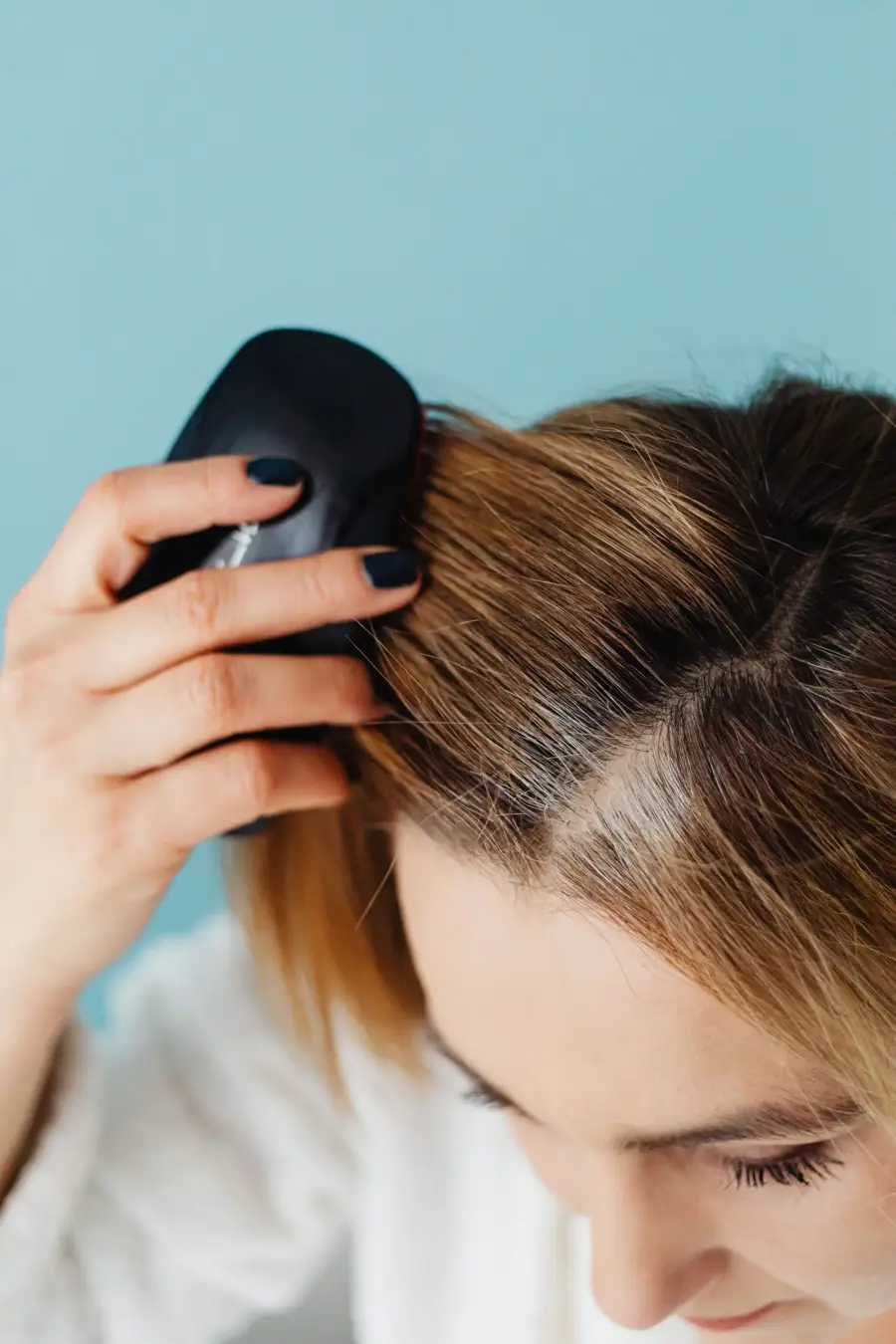
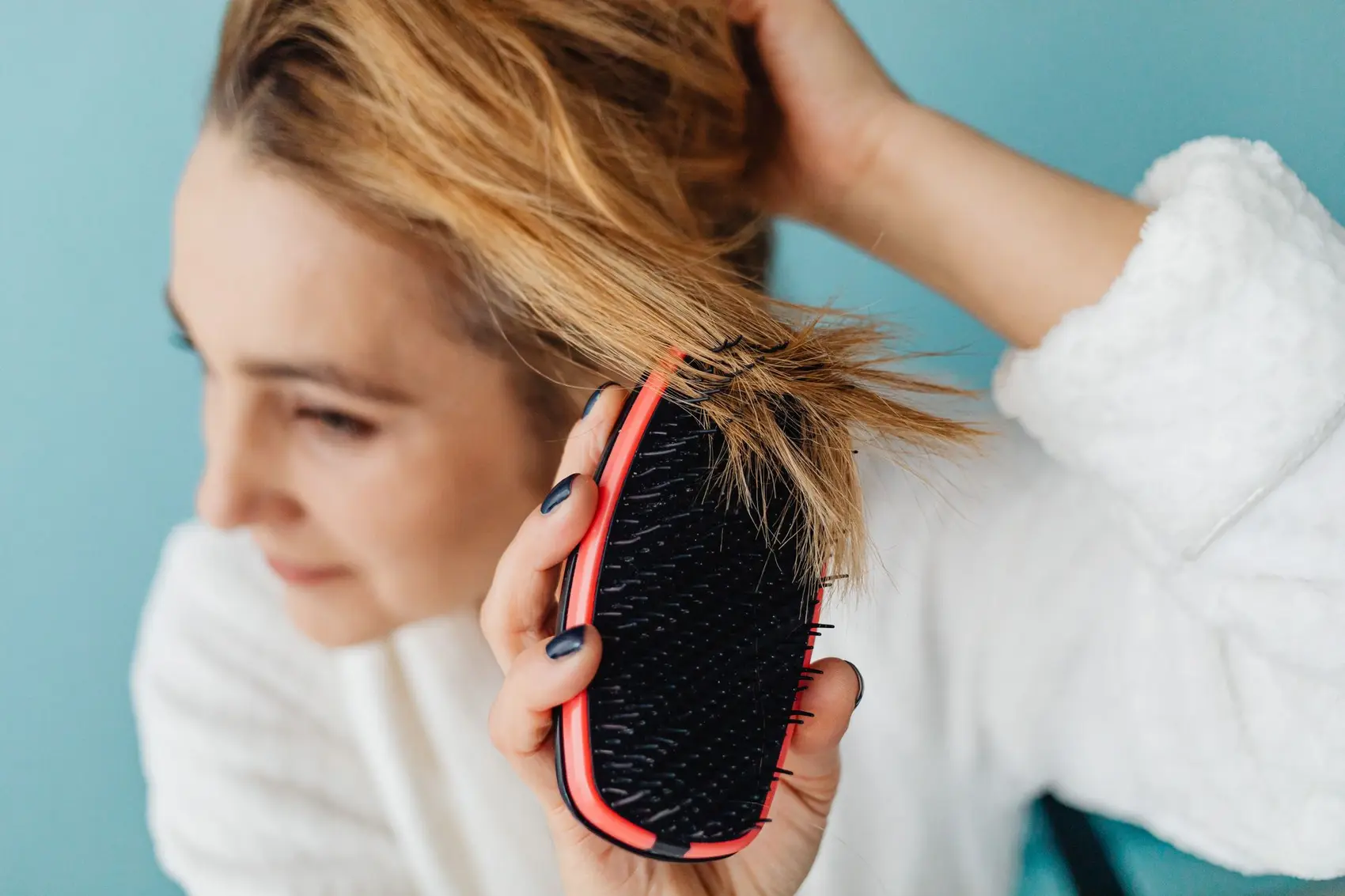
Gentle brushing
Brush your hair from roots to ends with a soft-tipped brush. Don't scrape your scalp with your nails; forcing flakes off damages the barrier.
- 2
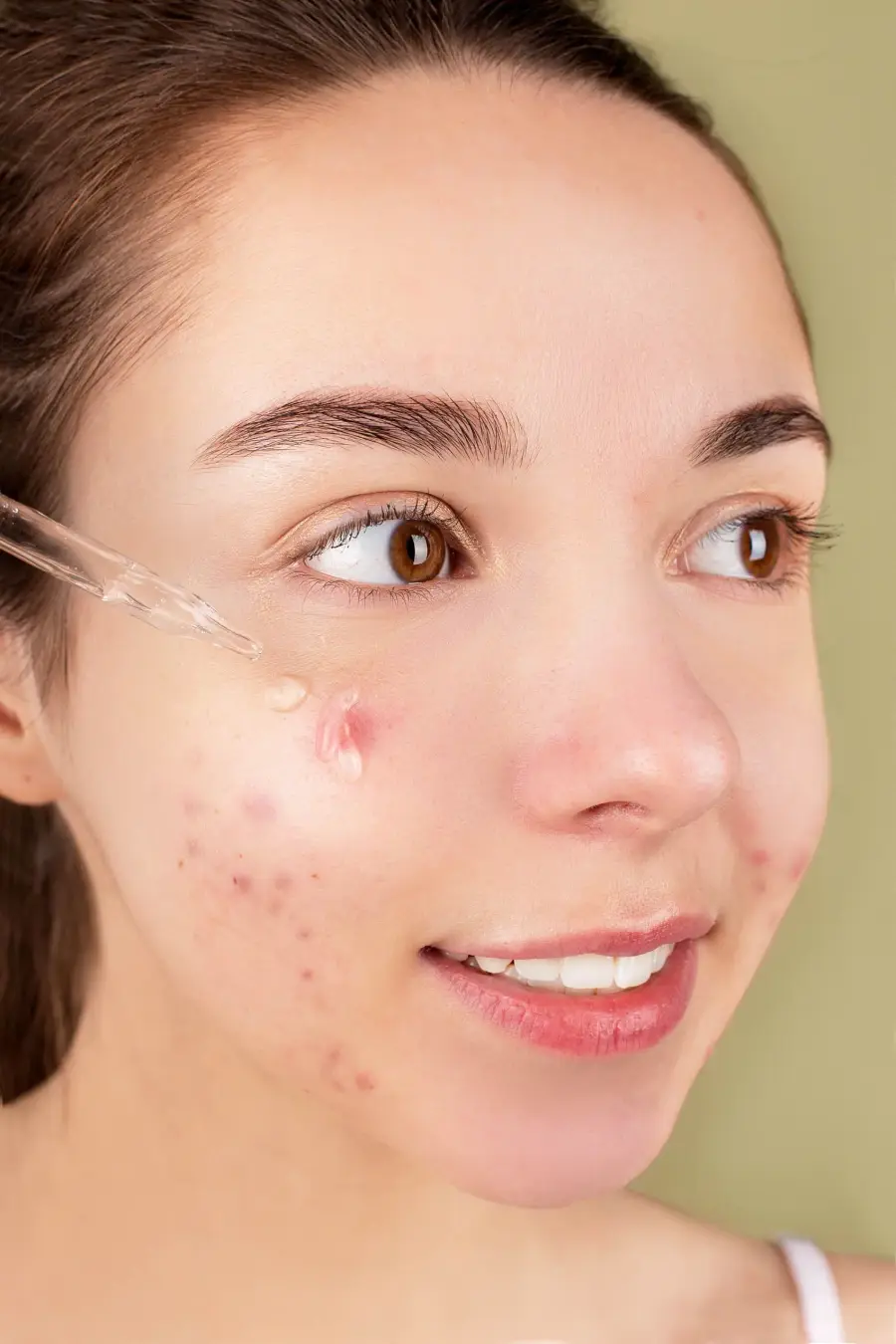
Soothing scalp tonic
If you're itchy, a light, alcohol-free scalp tonic with prebiotics or panthenol can be dropped onto the roots.
- 3
Light styling
Apply styling products to the hair strands, not the scalp. Heavy oils and creams can feed the yeast.
- 4
Protection outdoors
If you wear caps or hats, choose clean, breathable fabrics; don't stay in a sweaty cap for long.
Caution
What to avoid, and when to see a doctor?
Avoid these
- ✕Scraping your scalp with your nails and picking off flakes
- ✕Washing with very hot water and holding a hot blow-dryer to your scalp
- ✕Applying heavy oils and thick creams to your scalp
- ✕Spraying fragranced, alcohol-based hairsprays at the roots
- ✕Lathering shampoo and rinsing right away without giving the active ingredient time to work
- ✕Not washing your hair for days out of fear of dandruff
- ✕Washing more than once a day with harsh, high-foaming shampoos
- ✕Trying a shampoo for a few days and constantly switching products when you don't see results
See a dermatologist
- →If dandruff doesn't improve after 4–6 weeks of regular shampoo use
- →If there's obvious redness, burning, oozing or thick, stuck-on scales on your scalp
- →If flaking spreads to your face, eyebrows, behind your ears or your chest
- →If the itching is severe enough to disturb your sleep
- →If you have silvery, thick, well-defined plaques on your scalp; this may be a sign of psoriasis
- →If you notice hair loss or bald patches along with the flaking
Common misconceptions
Myth or fact?
Myth
Dandruff comes from being dirty.
Fact
Dandruff isn't a hygiene problem; it's related to scalp oil, a natural yeast and personal sensitivity. Someone who washes their hair every day can also get dandruff.
Myth
Dandruff comes from a dry scalp, so applying oil helps.
Fact
The yeast linked to dandruff feeds on oil. Applying heavy oils to the scalp can increase flaking and itching.
Myth
Once dandruff shampoo works, you can stop using it for good.
Fact
Dandruff tends to come back. After symptoms ease, using the medicated shampoo occasionally and keeping up a balance-maintaining routine helps reduce recurrence.
Popular searches
Most asked about Dandruff and itchy scalp
Your questions
Frequently asked questions
Does dandruff cause hair loss?+
Dandruff doesn't directly cause hair loss. But severe itching and inflammation make the scalp uncomfortable, and scratching can break hair strands. Keeping your scalp healthy helps your hair look better.
Is dandruff contagious?+
No. The yeast linked to dandruff is naturally found on everyone's scalp. Sharing a comb doesn't spread dandruff; still, using your own comb is good for personal hygiene.
How long should I leave dandruff shampoo on?+
Leaving the shampoo on your scalp for 3–5 minutes is recommended so the active ingredient can work. You can wash your body during that time, then rinse your hair thoroughly.
What's the difference between dandruff and seborrheic dermatitis?+
Dandruff is flaking and itching without redness. Seborrheic dermatitis involves redness, greasy yellow scales and spreading to areas such as the eyebrows, sides of the nose and behind the ears. They are different ends of the same spectrum.
Which shampoo should I use on color-treated hair?+
Selenium sulfide can change the color of some dyed hair. For color-treated hair, a different antifungal shampoo recommended by your dermatologist or products with zinc pyrithione may be preferred.
Does prebiotic shampoo help with dandruff?+
Shampoos with prebiotics and probiotic lysate can help support the scalp's barrier and microbiome balance. They can be used alongside the treatment your dermatologist recommends during active dandruff, and to maintain balance during calm periods.
Which shampoo should I use for dandruff?+
Dandruff is treated with shampoos containing active ingredients such as ketoconazole, ciclopirox, zinc pyrithione, selenium sulfide or salicylic acid. At first, it's recommended to use them 2–3 times a week, leaving the shampoo on your scalp for a few minutes. Your pharmacist or dermatologist can suggest which one suits you based on your hair type and whether your hair is color-treated.
How can I get rid of dandruff at home?+
Washing your hair regularly with lukewarm water, using a medicated shampoo with the right contact time and not scraping your scalp with your nails are the most effective steps you can take at home. Applying heavy oils to your scalp or treatments such as vinegar or lemon can increase irritation and flaking. If there's no improvement in 4–6 weeks, see a dermatologist.
What kind of doctor treats dandruff?+
For dandruff and an itchy scalp, you should see a dermatologist. Especially if there's redness, thick yellow scales, spreading to the eyebrows and sides of the nose, or bleeding sores, conditions such as seborrheic dermatitis or psoriasis need to be ruled out.
Why does my dandruff keep coming back?+
Because the yeast linked to dandruff lives naturally on the scalp, it can't be eliminated completely; that's why dandruff tends to come back. After symptoms clear, continuing to use the medicated shampoo occasionally, for example once a week, helps reduce recurrence. Knowing that mild flare-ups can happen in stressful periods and in winter also makes things easier.
Scientific basis
Sources
- 1.Stratum corneum dysfunction in dandruff
Turner GA, Hoptroff M, Harding CR · International Journal of Cosmetic Science · 2012 · doi:10.1111/j.1468-2494.2012.00723.x
Showed that dandruff affects up to half of the world's post-pubertal population, and that barrier lipids are reduced and water loss increased on a scalp with dandruff.
- 2.Seborrheic Dermatitis and Dandruff: A Comprehensive Review
Borda LJ, Wikramanayake TC · Journal of Clinical and Investigative Dermatology · 2015 · doi:10.13188/2373-1044.1000019
Reviewed how dandruff and seborrheic dermatitis are different ends of the same condition, with oil, yeast and personal sensitivity acting together.
- 3.A comprehensive pathophysiology of dandruff and seborrheic dermatitis - towards a more precise definition of scalp health
Schwartz JR, Messenger AG, Tosti A, et al. · Acta Dermato-Venereologica · 2013 · doi:10.2340/00015555-1382
Showed that markers of inflammation, rapid cell turnover and barrier function are disrupted in dandruff and improve with treatment.
- 4.Dandruff is associated with disequilibrium in the proportion of the major bacterial and fungal populations colonizing the scalp
Clavaud C, Jourdain R, Bar-Hen A, et al. · PLoS One · 2013 · doi:10.1371/journal.pone.0058203
Showed for the first time with molecular methods that dandruff is linked to a disrupted balance between yeast and bacterial communities on the scalp.
- 5.Characterization of the major bacterial-fungal populations colonizing dandruff scalps in Shanghai, China, shows microbial disequilibrium
Wang L, Clavaud C, Bar-Hen A, et al. · Experimental Dermatology · 2015 · doi:10.1111/exd.12684
Confirmed the presence of microbial imbalance on scalps with dandruff in a different population as well.
- 6.Comparison of Healthy and Dandruff Scalp Microbiome Reveals the Role of Commensals in Scalp Health
Saxena R, Mittal P, Clavaud C, et al. · Frontiers in Cellular and Infection Microbiology · 2018 · doi:10.3389/fcimb.2018.00346
In 140 women, showed that healthy scalp bacteria carry rich pathways linked to biotin and B vitamin production and may contribute to the scalp's nutrient balance.
- 7.The role of the microbiome in scalp hair follicle biology and disease
Polak-Witka K, Rudnicka L, Blume-Peytavi U, Vogt A · Experimental Dermatology · 2020 · doi:10.1111/exd.13935
Reviewed how the microbiome of the scalp and hair follicles interacts with the immune system and its possible role in inflammatory scalp diseases.
- 8.The human skin microbiome
Byrd AL, Belkaid Y, Segre JA · Nature Reviews Microbiology · 2018 · doi:10.1038/nrmicro.2017.157
Comprehensively summarized the distribution of yeasts and bacteria in oily skin areas and their roles in skin health.