Definition
What is Female pattern hair loss?
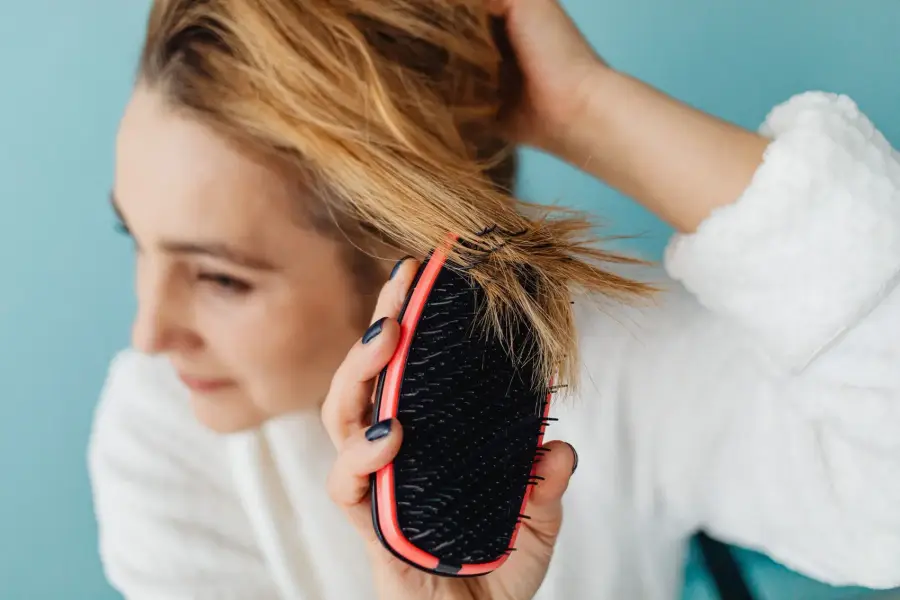
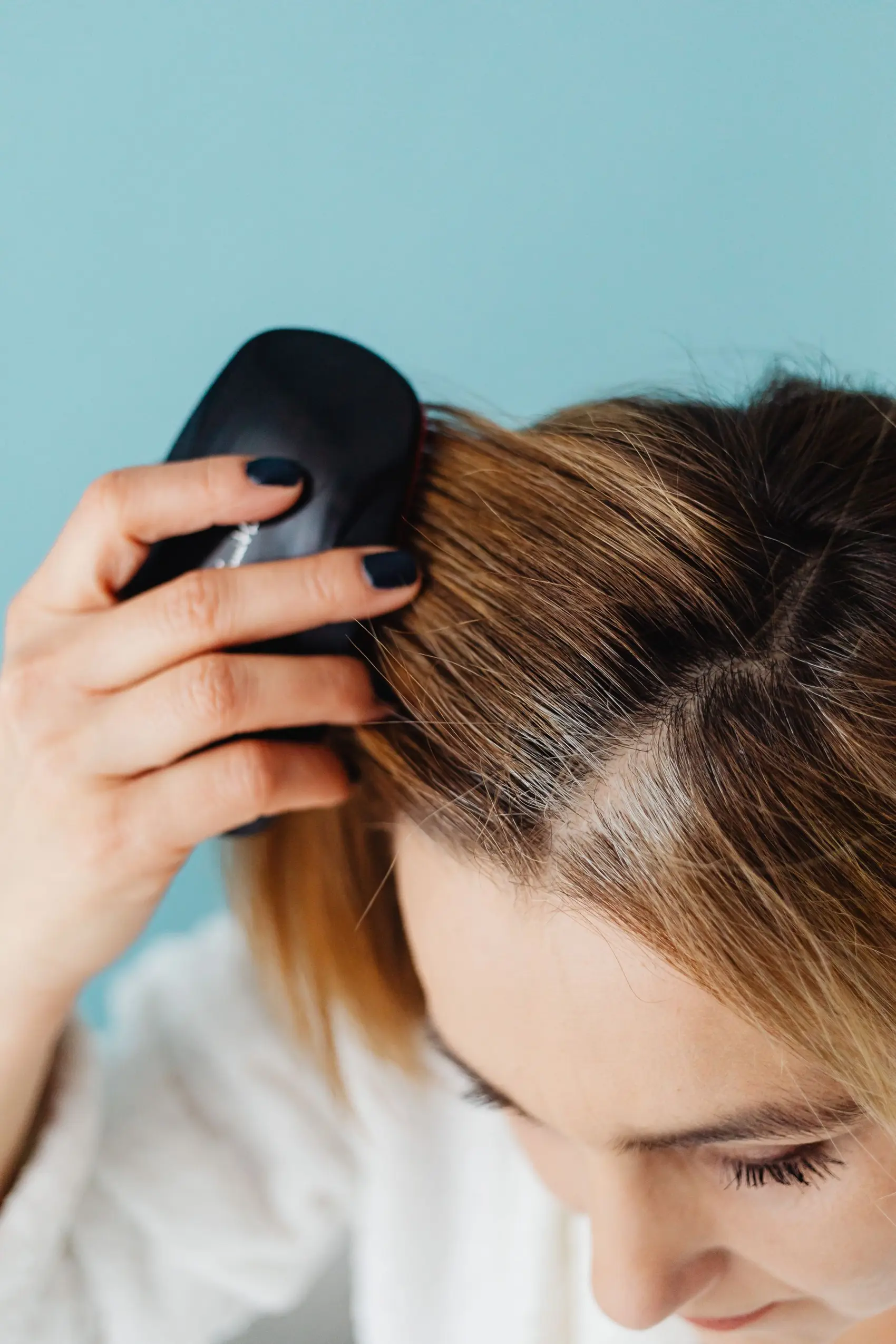
Female pattern hair loss is the most common cause of hair loss in adult women. Instead of a receding hairline or a bald spot on the crown as in men, women's hair usually thins diffusely over the crown and along the part. The front hairline is often preserved. That's why women usually notice the problem as “my part has gotten wider,” “my hair isn't as full as it used to be” or “my ponytail is thinner.”
At the root of this condition is the gradual shrinking of hair follicles. With each cycle the follicle gets a little smaller, and the hair it produces is thinner, shorter and lighter in color. The hair doesn't actually disappear completely, but density decreases and the scalp becomes easier to see. Genetic predisposition, hormones and age all play a role in this process; in many women hormone levels are completely normal.
Female pattern hair loss is a slowly progressing, chronic condition, and treatments are usually more successful at preserving existing hair and stopping the thinning than at growing new hair. That's why seeking help early is the biggest advantage. Keeping the scalp calm and well cared for is also a supportive part of this plan. The most reliable answer to “what helps hair loss in women?” is the right diagnosis and regular treatment planned with your dermatologist.
Check yourself
How do you recognise it?
- ✓A part that keeps getting wider, especially on the crown
- ✓The scalp on the crown being easier to see under light
- ✓A ponytail that's noticeably thinner than before
- ✓New hairs growing in thin, short and light-colored
- ✓The front hairline usually preserved, with diffuse thinning behind it
- ✓Hair strands looking like they have different thicknesses
- ✓Mild thinning at the temples
- ✓In some women, noticing loss of density more than shedding
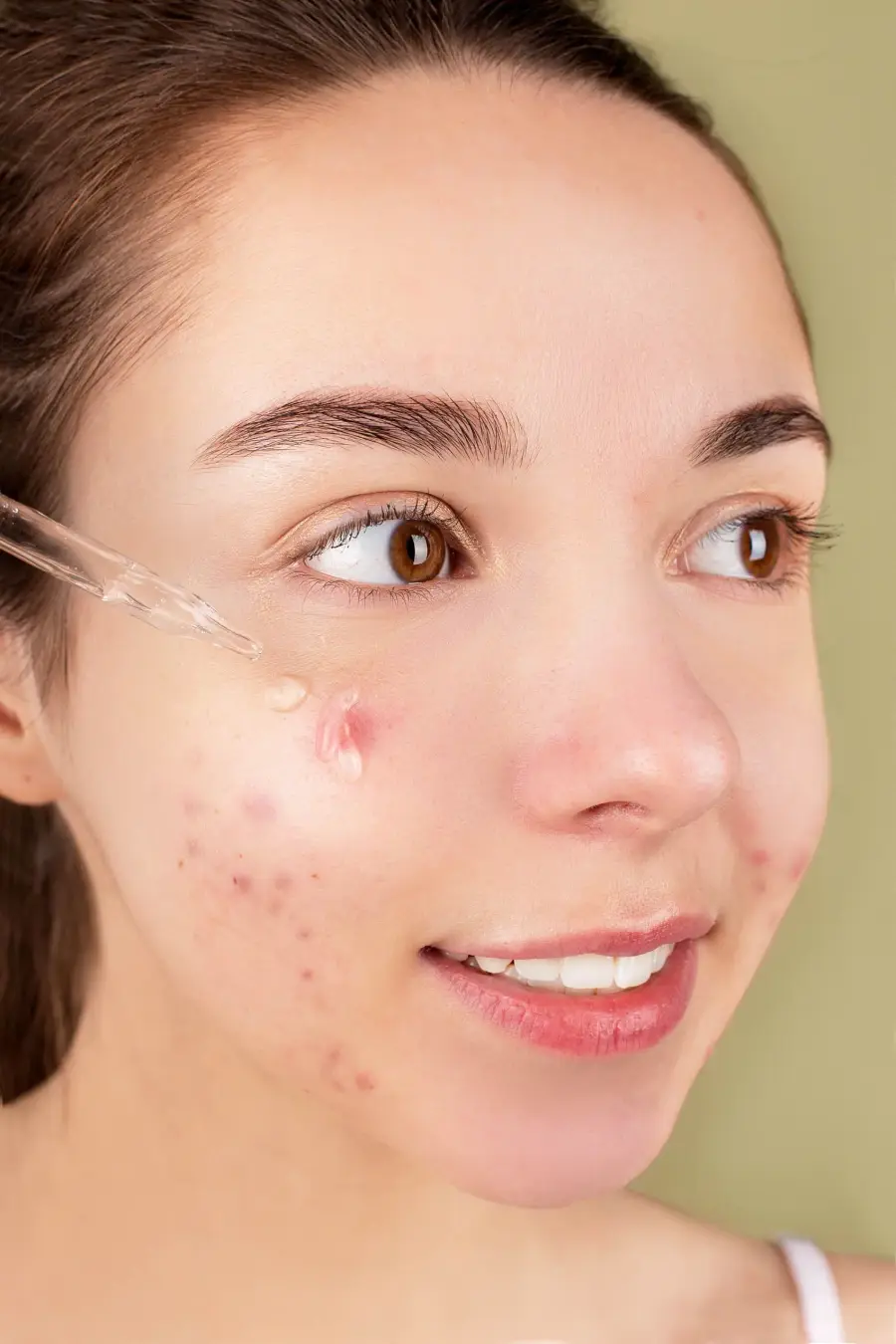
- ✓If there is androgen excess: acne, irregular periods and increased facial and body hair
Why it happens
Main causes
01
Genetic predisposition
The risk is higher in women with hair thinning in the family, on either the mother's or father's side. How sensitive hair follicles are to hormones is largely inherited.
02
Androgen sensitivity
Androgens, known as male hormones, are also present at low levels in women. In some women hair follicles are more sensitive to these hormones, and the shrinking process can start even when hormone levels are normal.
03
Hormonal disorders
In conditions that cause androgen excess, such as polycystic ovary syndrome, hair thinning may start earlier and be more noticeable. In this case irregular periods, acne and increased hair growth may also come along.
04
Menopause and age
The drop in estrogen with menopause can shorten the growth phase of the hair cycle. Female pattern hair loss becomes more common with age.
05
Contributing factors
Iron deficiency, thyroid problems, rapid weight loss and stress can each cause a different type of shedding on their own; when they accompany female pattern hair loss, they can make it more noticeable.
In daily life
Triggers that cause flare-ups
Medical approach
Treatment options
01
The right diagnosis
A dermatologist determines the type of hair loss through examination and scalp imaging. If needed, iron, thyroid and hormone levels are checked. In women with signs of androgen excess, ovarian and adrenal gland problems are also investigated.
02
Minoxidil
Based on your dermatologist's assessment, minoxidil applied to the scalp may be recommended. A Cochrane review showed that minoxidil provided a significant increase in hair count compared with placebo in female pattern hair loss. Its effect appears over a few months, and the hair gained may be lost over time if you stop using it; there may be a temporary increase in shedding at the start.
03
Anti-androgen treatments
In women with androgen excess or when considered suitable, a dermatologist and a gynecologist together may consider oral treatments that reduce the effect of androgens. Because these medications can't be used during pregnancy, they require effective birth control.
04
Supportive procedures
In some women, methods such as low-level light therapy or platelet-rich plasma may be considered as supportive options. The effectiveness of these methods varies from person to person, and the decision should be made together with your dermatologist.
05
Correcting deficiencies
If iron, vitamin D or other deficiencies are found, correcting them is recommended. Taking random high-dose supplements when there's no deficiency doesn't help; in fact, too much of some supplements can lead to hair loss.
06
Cosmetic solutions and surgery
In advanced cases, hair systems, camouflage powders or, in suitable candidates, hair transplants may be considered. Women who seek help early can usually preserve their hair density without needing these options.
Did you know? · Female pattern hair loss
57% · In a population study in Australia, thinning in the front-central area of the scalp was found in 57% of women aged 80 and over; the rate increased with age.
Step by step
Care routine for Female pattern hair loss
- 1
Gentle detangling
Gently detangle your hair starting from the ends with a wide-tooth comb or a soft brush. Combing wet hair roughly breaks the strands.
- 2
The treatment your dermatologist recommends
If you use a treatment such as minoxidil, apply the amount your doctor described to a dry scalp and let it dry.
- 3
Loose hairstyles
Instead of tight buns and ponytails, choose loose braids, clips or wearing your hair down. Constant pulling puts extra strain on the roots.
- 4
Limit heat
Limit your flat iron and curling iron to a few times a week, and apply heat protectant every time.

Caution
What to avoid, and when to see a doctor?
Avoid these
- ✕Trying a treatment for a few weeks and stopping when you don't see results
- ✕Taking high-dose vitamin and mineral supplements without a confirmed deficiency
- ✕Constantly loading the roots with tight buns, ponytails and heavy hair extensions
- ✕Scraping your scalp with hard brushes and your nails
- ✕Frequent bleaching, perms and straightening treatments
- ✕Rapid, overly restrictive diets
- ✕Relying on unproven “miracle” hair tonics and putting off seeing a doctor
See a dermatologist
- →If your part is noticeably widening or your ponytail getting thinner
- →If hair loss comes with irregular periods, acne or increased facial hair
- →If there is redness, burning, pain, flaking or shiny, hairless areas on your scalp
- →If hair loss started very quickly within a few weeks
- →If you have symptoms that suggest iron deficiency or a thyroid problem, such as weakness, tiring easily or feeling cold
- →If you developed irritation on your scalp from a treatment you're using
Common misconceptions
Myth or fact?
Myth
Washing your hair often increases hair loss.
Fact
The hairs that fall out while washing are strands that were already ready to shed. Washing less often just lets them build up, so it looks like more hair is falling out at the next wash.
Myth
Female pattern hair loss only starts at menopause.
Fact
Female pattern hair loss can also start in your 20s and 30s. Noticing it early and getting help is the biggest advantage for preserving hair density.
Myth
Hair vitamins stop hair loss for everyone.
Fact
Supplements only help if there is a real deficiency. High doses taken without a deficiency don't work, and too much of some supplements can even cause shedding.
Popular searches
Most asked about Female pattern hair loss
Your questions
Frequently asked questions
Can female pattern hair loss be reversed?+
In most women, treatments help stop the thinning and preserve hair density; in mild and moderate cases some fullness can also be regained. Treatments started early are more successful.
When does minoxidil start working?+
Its effect is usually noticed within a few months. A temporary increase in shedding may be seen in the first weeks; this is related to the start of a new growth cycle. Follow your dermatologist's advice on use and duration.
My hormone levels are normal, but my hair is still thinning. Why?+
In female pattern hair loss, many women have completely normal hormone levels. The problem is usually that the hair follicles are genetically more sensitive to these hormones.
How can I tell telogen effluvium apart from female pattern hair loss?+
Telogen effluvium is usually a sudden, diffuse shedding that starts 2–4 months after a trigger. Female pattern hair loss is thinning that progresses slowly over years. Because the two can occur together, a dermatologist should make the distinction.
Does scalp care help with hair loss?+
Scalp care alone doesn't stop hair loss; but a balanced scalp with little flaking, itching and inflammation helps treatment go more comfortably and lets hair follicles work in a healthy environment.
Does prebiotic shampoo grow hair?+
No, there is no evidence that shampoos with prebiotics or probiotic lysate grow hair. These products can help support the scalp's barrier and microbiome balance; for treating hair loss, you should see your dermatologist.
What are the stages of female pattern hair loss?+
Dermatologists usually grade female pattern hair loss with scales such as Ludwig or Sinclair. In the first stage the part widens slightly; in later stages the scalp on the crown becomes more visible. The front hairline is preserved in most women. The earlier the stage at which you seek help, the better the response to treatment.
What helps hair loss in women?+
The option with the best-known effectiveness in female pattern hair loss is minoxidil, which your dermatologist may recommend. In suitable women, oral treatments that reduce the effect of androgens, low-level light therapy or platelet-rich plasma may also be considered. If there is iron or vitamin D deficiency or a thyroid problem, correcting it is also important; plant oils and shampoos alone don't stop thinning.
What vitamin deficiency causes thinning hair?+
Iron deficiency and low vitamin D can contribute to hair thinning and shedding; thyroid problems are also among the common causes. However, female pattern hair loss often develops with no deficiency at all, through inherited predisposition. Taking random vitamins when there's no deficiency won't thicken your hair; decide with your doctor based on your blood test results.
What kind of doctor should women see for hair loss?+
The first specialist to see for hair loss and thinning is a dermatologist. The dermatologist examines your scalp and orders blood tests if needed. If you have hormonal signs such as irregular periods, acne or increased hair growth, the assessment may be done together with a gynecologist or endocrinologist.
Scientific basis
Sources
- 1.Prevalence of male and female pattern hair loss in Maryborough
Gan DC, Sinclair RD · Journal of Investigative Dermatology Symposium Proceedings · 2005 · doi:10.1111/j.1087-0024.2005.10102.x
Showed that thinning in the front-central area of the scalp increases with age and affects 57% of women over 80.
- 2.Female pattern hair loss: A clinical, pathophysiologic, and therapeutic review
Fabbrocini G, Cantelli M, Masarà A, Annunziata MC, Marasca C, Cacciapuoti S · International Journal of Women's Dermatology · 2018 · doi:10.1016/j.ijwd.2018.05.001
Stressed that female pattern hair loss is the most common cause of hair loss in women, and that early diagnosis matters because treatments are more effective at stopping progression than at growing new hair.
- 3.Female Pattern Hair Loss: a clinical and pathophysiological review
Ramos PM, Miot HA · Anais Brasileiros de Dermatologia · 2015 · doi:10.1590/abd1806-4841.20153370
Summarized how diffuse, non-scarring hair thinning develops through the gradual shrinking of hair follicles, with genetic, hormonal and environmental factors acting together.
- 4.Interventions for female pattern hair loss
van Zuuren EJ, Fedorowicz Z, Schoones J · Cochrane Database of Systematic Reviews · 2016 · doi:10.1002/14651858.CD007628.pub4
Showed that minoxidil applied to the scalp significantly increased hair count compared with placebo in female pattern hair loss.
- 5.The role of the microbiome in scalp hair follicle biology and disease
Polak-Witka K, Rudnicka L, Blume-Peytavi U, Vogt A · Experimental Dermatology · 2020 · doi:10.1111/exd.13935
Reviewed how microorganisms living in hair follicles may affect scalp health by interacting with the immune system.
- 6.The Potential Relevance of the Microbiome to Hair Physiology and Regeneration: The Emerging Role of Metagenomics
Constantinou A, Kanti V, Polak-Witka K, Blume-Peytavi U, Spyrou GM, Vogt A · Biomedicines · 2021 · doi:10.3390/biomedicines9030236
Showed that research on the link between the scalp microbiome and hair physiology is promising but still at an early stage.
- 7.The Role of Vitamins and Minerals in Hair Loss: A Review
Almohanna HM, Ahmed AA, Tsatalis JP, Tosti A · Dermatology and Therapy · 2019 · doi:10.1007/s13555-018-0278-6
Noted that vitamin and mineral deficiencies may be a modifiable risk factor in hair loss, but that large studies are needed to clarify the effect of supplements.
- 8.Nutritional factors and hair loss
Rushton DH · Clinical and Experimental Dermatology · 2002 · doi:10.1046/j.1365-2230.2002.01076.x
Highlighted the link between iron stores and hair loss in women and noted that excessive supplementation without a proven deficiency can lead to hair loss.