
Self-test
Is this type you?
- ◎Blotting paper test: Wash your face, pat it dry and don't apply anything for 1 hour. If all the tissues you press onto your forehead, nose, cheeks and chin, cheeks included, show a clear oil spot, your skin is oily.
- ◎The face you washed in the morning is shiny all over by midday; tissues or blotting papers are constantly in your hand.
- ◎Pores on your nose, forehead and cheeks are visible even without looking up close.
- ◎Blackheads and whiteheads are frequent; breakouts aren't limited to the days before your period.
- ◎Your makeup slides off within a few hours, and foundation settles into your pores.
- ◎You don't feel tight after washing; if you do, your product may be too harsh.
- ◎Fine lines appear later and are less noticeable than in women your age.
In depth
The science of your skin
In oily skin, the oil glands are larger and more active. Sebum production is mainly controlled by androgen hormones; that's why puberty, the second half of the menstrual cycle and hormonal conditions like polycystic ovary syndrome can increase oiliness. Genetics, hot and humid climates, and stress also play a role. Sebum is actually a valuable substance: it softens the skin, reduces water loss and acts as an antioxidant and antimicrobial on the surface. The problem is when excess sebum mixes with dead cells, clogs the pore opening and forms comedones.
When sebum, dead cells and the bacteria that naturally live on the skin come together in a clogged pore, blackheads, whiteheads and inflamed pimples (acne) can appear. Interestingly, oily skin can also lose water: harsh cleansers and alcohol-based toners that strip away oil leave the skin dehydrated; the skin looks shiny on the surface but feels tight underneath, and can even get flaky in places. So if your face gets very oily, the answer isn't washing more often; it's gentle cleansing twice a day, light but regular moisturizing, salicylic acid for pores, and proven actives such as niacinamide or retinoids that help balance sebum.
Priorities
What does it need?
01
Balancing cleanse
Morning and evening, a sulfate-free gel cleanser with a skin-friendly pH removes oil without stripping the barrier.
02
Pore care
Salicylic acid (BHA) is oil-soluble, so it can get inside the pore and help clear clogs.
03
Sebum balance
Niacinamide and retinoids can help balance sebum production; in research, 2 percent niacinamide was observed to reduce sebum excretion.
04
Light, but always moisturize
An oil-free, non-comedogenic moisturizer in a gel or lotion texture protects the barrier.
05
Hands off your pimples
Squeezing pimples increases the risk of scars and dark marks. For inflamed, deep or scarring breakouts (acne), a treatment plan should be made with your dermatologist's assessment.
Oily skin
Balancing cleanse
Step by step
Oily skin routine
- 1
Gel cleanser
Wash with lukewarm water, massaging gently for 30–60 seconds. Hot water and harsh lather strain the barrier.
- 2
Niacinamide serum
2–5% niacinamide helps balance sebum and the look of pores and calms redness.
- 3
Light moisturizer
An oil-free, gel-textured moisturizer with hyaluronic acid is enough.
- 4
Matte-finish sunscreen
Choose a non-comedogenic product with SPF 30 or higher in a fluid or gel texture. You can touch it up during the day with a powder sunscreen.
What you can add to your routine
Bacteria aren't the enemy
Most of the bacteria living on oily skin are part of its balance. The problem is often a loss of diversity and a shift in balance in favor of certain species.
Balance with prebiotics
By feeding beneficial bacteria, prebiotics can help support a more balanced community on the surface.
Care you can use in your routine
EcoProbiotic care range ↗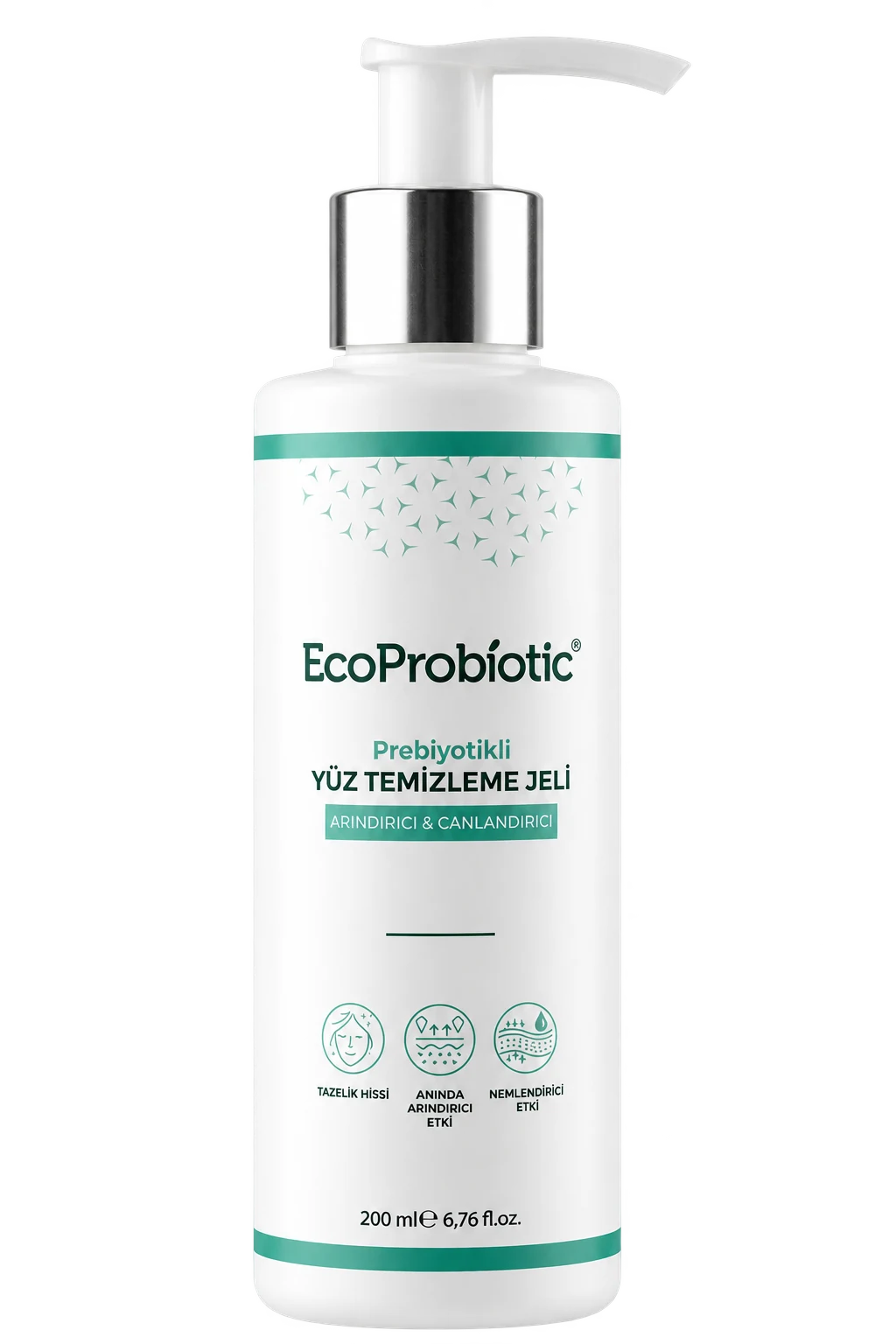 CleansingPrebiotic Face Cleansing GelRemoves make-up and the day’s grime with a gentle foam, supporting the skin barrier as it cleanses. Morning and evening.View ↗
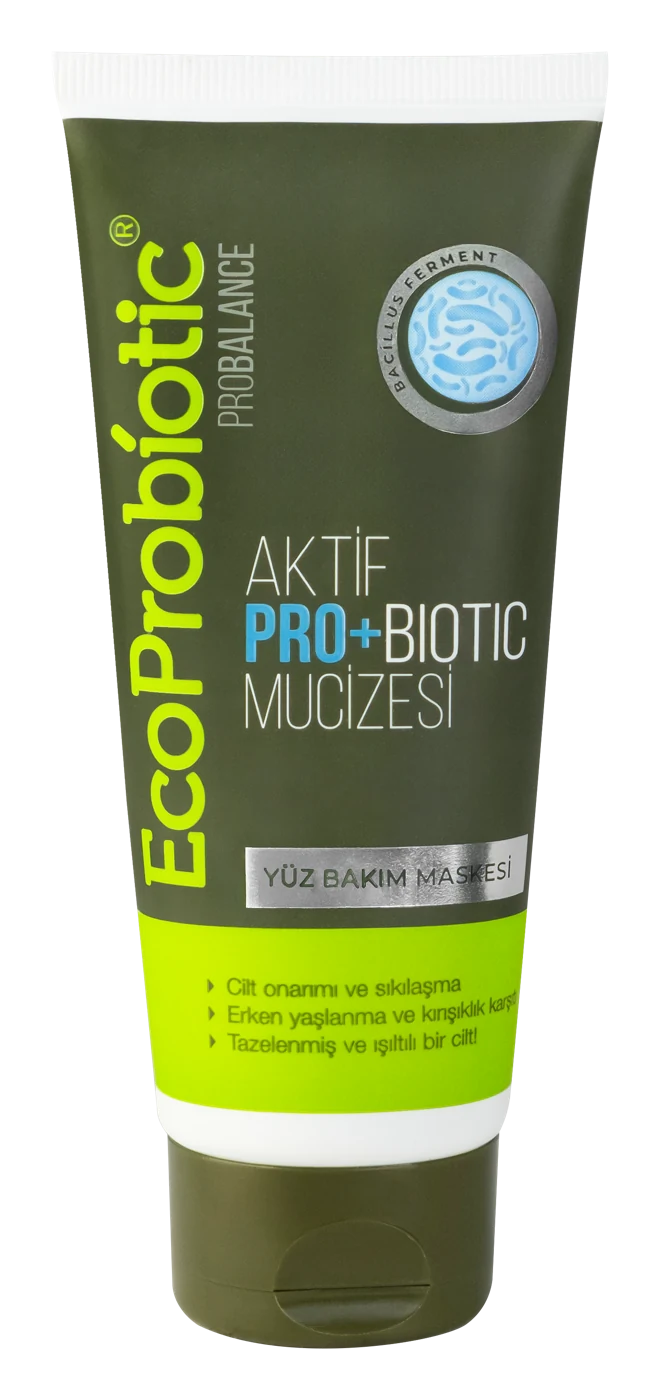 Weekly carePrebiotic Volcanic Clay MaskAbsorbs excess oil and dirt from the surface, purifying while supporting the barrier. Once or twice a week, for ten minutes.View ↗
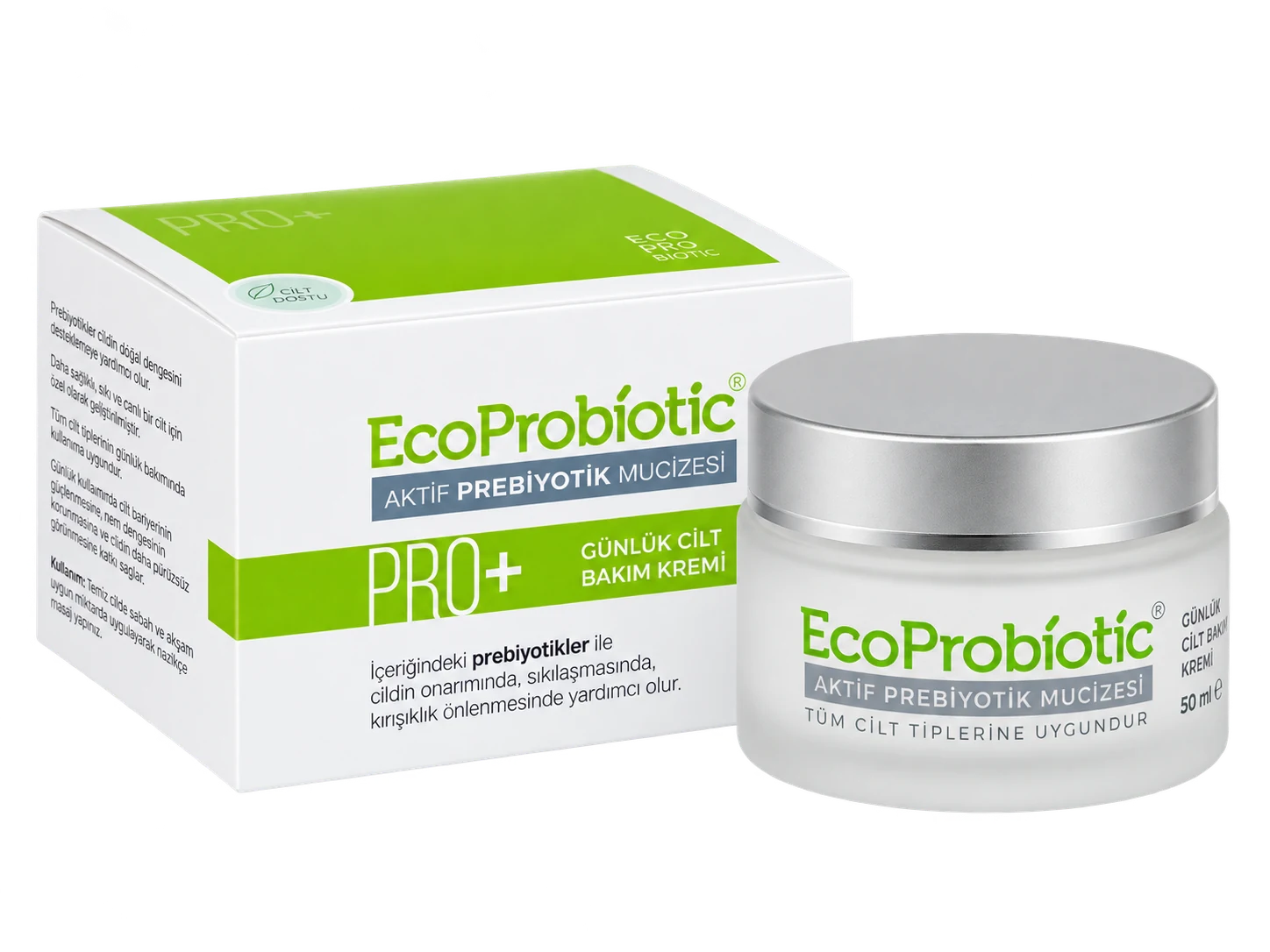 MoisturisingPrebiotic Skin CreamMoisturises the skin and helps repair the barrier. Available in three formulas: for all, dry and oily skin.View ↗
Reading labels
Ingredient guide
✓What helps
- Salicylic acid (BHA): oil-soluble, helps clean out the inside of pores.
- Niacinamide: for sebum, the look of pores and redness.
- Retinoids (retinol, retinal, adapalene): regulate cell turnover.
- Azelaic acid: helps with breakouts and post-acne marks, and is gentler on sensitive skin.
- Zinc (PCA or gluconate): can help balance sebum.
- Hyaluronic acid: hydrates without adding oil.
- Kaolin and bentonite clay: weekly oil-absorbing care.
- Ceramides and panthenol: protect the barrier while you use actives.
- Prebiotics: support the balance of beneficial bacteria.
!Be careful with
- Toners high in alcohol: give an instant matte feel but can damage the barrier in the long run.
- Heavy, occlusive oils (creams rich in mineral oil, cocoa butter): can clog pores.
- Harsh physical scrubs and brushes: can spread breakouts and cause irritation.
- Many acids and retinoids at once: the barrier breaks down, and oiliness and breakouts can increase.
- Antibacterial soaps: can affect beneficial bacteria too.
- Home remedies like toothpaste to dry out pimples: risk of irritation and dark marks.
All year round
By season
Summer
Sweat and sebum peak. Switch to a gel-textured moisturizer, use blotting papers during the day, and rinse your face with water if you've been sweaty. Choose an oil-free sunscreen.
Winter
Oily skin can also get dehydrated in winter: you may feel tightness underneath while the surface is oily. Make your moisturizer a bit richer and use acids less often.
Seasonal transitions
Don't change your routine all at once. Adjust your moisturizer first, then the other steps a few weeks later if needed.
Caution
Common mistakes
- ✕Skipping moisturizer because you think oily skin doesn't need it.
- ✕Washing your face 3–4 times a day or using harsh foaming cleansers.
- ✕Squeezing pimples; it increases the risk of scars, dark marks and spreading inflammation.
- ✕Starting several strong actives at once and expecting results within a week.
- ✕Skipping sunscreen because it makes you oily; post-acne marks darken with sun exposure.
- ✕Constantly touching your face during the day and not cleaning your phone.
- ✕Chasing an instant matte look with alcohol-based toners.
Popular searches
Most asked about Oily skin
Your questions
Frequently asked questions
Why does my oily skin get oily in winter but also feel tight?+
This is the picture of oily but dehydrated skin. Even though there's oil on the surface, you lose water because the barrier is weakened. Light but regular moisturizing and dropping harsh products usually bring back the balance.
Can I use salicylic acid every day?+
Some skin tolerates it, but starting every other day is safer. If you get dryness, stinging or flaking, use it less often.
Can I use niacinamide and vitamin C together?+
Yes. Although they were once thought to cancel each other out, using them together is generally not a problem with today's formulas. If you get sensitivity, use one in the morning and the other in the evening.
I started a retinoid and my breakouts got worse. Is that normal?+
Some people may get a temporary flare-up in the first 4–6 weeks. Improvement is expected after 8–12 weeks; if you have severe irritation, talk to your doctor.
When should I see a dermatologist?+
If you have inflamed, painful, deep pimples, if they leave scars, or if they come with hormonal signs such as irregular periods and excess hair growth, we recommend seeing a dermatologist.
My face gets very oily. What should I do?+
Wash your face twice a day with a gel cleanser that has a skin-friendly pH; washing more often can irritate your skin and increase oiliness. In the morning, use a niacinamide serum, an oil-free moisturizer and a matte-finish sunscreen; in the evening, add salicylic acid every other day. During the day, remove shine with blotting papers instead of washing your face again.
What causes oily skin?+
Oil gland activity is mainly controlled by androgen hormones; that's why puberty, the second half of the menstrual cycle and polycystic ovary syndrome can increase oiliness. Genetics, hot and humid weather, stress and harsh products that dry out the skin also play a part. If sudden, heavy oiliness comes with irregular periods or excess hair growth, see a doctor for a hormonal evaluation.
Does oily skin need moisturizer?+
Yes. Skipping moisturizer leaves skin dehydrated and sometimes leads to even more oil. An oil-free, non-comedogenic moisturizer with hyaluronic acid in a gel or light lotion texture is enough for oily skin without weighing it down.
How do I choose a sunscreen for oily skin?+
Choose an oil-free, non-comedogenic, matte-finish sunscreen with SPF 30 or higher in a gel or fluid texture. Skipping sunscreen makes post-acne marks darker; powder sunscreens are handy for touch-ups during the day.
Scientific basis
Sources
- 1.Oily skin: an overview.
Sakuma TH, Maibach HI · Skin Pharmacology and Physiology · 2012 · doi:10.1159/000338978
Summarized that sebum production is influenced by hormones, genetics, age and climate, and that oily skin is associated with enlarged pores and a tendency toward acne.
- 2.Oily Skin: A review of Treatment Options.
Endly DC, Miller RA · Journal of Clinical and Aesthetic Dermatology · 2017
Reviewed the evidence for topical retinoids, niacinamide and other options aimed at balancing sebum in oily skin.
- 3.Regulation of human sebaceous glands.
Thiboutot D · Journal of Investigative Dermatology · 2004 · doi:10.1111/j.1523-1747.2004.t01-2-.x
Explained how oil glands are regulated by hormones, androgens above all.
- 4.The effect of 2% niacinamide on facial sebum production.
Draelos ZD, Matsubara A, Smiles K · Journal of Cosmetic and Laser Therapy · 2006 · doi:10.1080/14764170600717704
A moisturizer containing 2 percent niacinamide was observed to reduce the facial sebum excretion rate over four weeks of use.
- 5.Potential Role of the Microbiome in Acne: A Comprehensive Review.
Lee YB, Byun EJ, Kim HS · Journal of Clinical Medicine · 2019 · doi:10.3390/jcm8070987
Reviewed evidence that in acne, the decisive factor is not a single bacterium but a loss of diversity and balance in the skin microbiome.
- 6.The role of topical probiotics in skin conditions: A systematic review of animal and human studies and implications for future therapies.
Knackstedt R, Knackstedt T, Gatherwright J · Experimental Dermatology · 2020 · doi:10.1111/exd.14032
Screened animal and human studies on probiotics applied to the skin and found promising but still limited evidence.
- 7.Cleansing without compromise: the impact of cleansers on the skin barrier and the technology of mild cleansing.
Ananthapadmanabhan KP, Moore DJ, Subramanyan K, Misra M, Meyer F · Dermatologic Therapy · 2004 · doi:10.1111/j.1396-0296.2004.04s1002.x
Showed that harsh surfactants can damage barrier proteins and lipids, and that mild cleansing technologies reduce this effect.