
Self-test
Is this type you?
- ◎Blotting paper test: Wash your face, pat it dry and don't apply anything for 1 hour. If none of the tissues you press onto your forehead, nose, cheeks and chin show any trace of oil, and your face felt tight during that time, your skin tends to be dry.
- ◎A few minutes after washing you feel a distinct pulling sensation, especially on your cheeks, and you need to apply cream right away.
- ◎Foundation gets flaky around the sides of your nose, your eyebrows or under your chin, clinging to dry patches.
- ◎Your skin looks matte and dull; it hardly gets shiny at all during the day.
- ◎Your pores are barely visible, but fine lines, especially around the eyes, look more pronounced when your skin is dry.
- ◎When you lightly scratch your skin with a fingernail, it leaves a white mark.
- ◎In winter or in air-conditioned rooms, you get redness, itching or tiny cracks on your face.
In depth
The science of your skin
Dry skin usually involves two problems at once: the oil glands produce less sebum, and the ceramides, cholesterol and free fatty acids that form the mortar of the stratum corneum decrease. The small water-binding molecules inside the cells, known as natural moisturizing factor (NMF), also run low; a large part of NMF comes from the breakdown of a protein called filaggrin. When the mortar thins, transepidermal water loss (TEWL) rises and the skin can't hold on to water; dead cells also fail to shed properly and pile up on the surface, causing flaking and dullness. It's a vicious cycle: skin that dries out loses more water, and skin that loses more water dries out more.
The answer to what causes dry skin is usually a combination of factors: genetic predisposition, sebum that decreases with age, cold and windy weather, indoor air dried out by central heating radiators or air conditioning, frequent hot showers, soap-based cleansers and alcohol-based toners. These factors can also raise the skin surface's mildly acidic pH; when pH rises, the enzymes involved in repair slow down and dryness lingers. So the core of what to do about dry skin comes down to three steps: gentler cleansing, replenishing lipids, and drawing moisture into the skin and locking it in. If itching keeps you up at night or you have red, cracked patches, see a dermatologist to check for eczema (atopic dermatitis).
Priorities
What does it need?
01
Replenish lipids
Creams that contain ceramides, cholesterol and fatty acids together help complete the barrier's mortar.
02
Draw water in and lock it in
First, humectants such as hyaluronic acid, glycerin or urea draw in water; then emollients like squalane and shea butter and occlusives like petrolatum keep it inside.
03
Make cleansing gentler
Instead of foamy soaps, cream or milk cleansers protect the already scarce oil in dry skin.
04
Think about indoor humidity
Central heating and air conditioning dry out the air. A humidifier in the bedroom, or short, lukewarm showers, make a difference.
05
Change your shower habits
A 5–10 minute lukewarm shower, patting your face dry instead of rubbing, and applying moisturizer within 3 minutes afterward noticeably reduce dryness.
Dry skin
Replenish lipids
Step by step
Dry skin routine
- 1
Just water or a cream cleanser
Dry skin often doesn't need a cleanser in the morning; lukewarm water is enough. If you do use one, choose a milky, non-foaming cleanser.
- 2
Humectant serum on damp skin
Apply a serum with hyaluronic acid or glycerin while your face is still slightly damp; humectants draw water from the surroundings into the skin.
- 3
Rich moisturizer
A creamy moisturizer with ceramides and cholesterol locks in the moisture from the serum.
- 4
Face oil (optional)
If you're very dry, you can add 1–2 drops of a light oil such as squalane on top of your moisturizer.
- 5
Moisturizing sunscreen
A creamy, broad-spectrum sunscreen with SPF 30 or higher gives dry skin extra nourishment.
What you can add to your routine
The acid mantle is the microbiome's home
In dry skin, pH rises easily. Products with a pH between 4.5 and 5.5 help maintain the mildly acidic environment that beneficial bacteria love.
Prebiotics
Prebiotics, which are food for beneficial bacteria, can help support a balanced community on the skin's surface; this can in turn help keep the barrier more resilient.
Care you can use in your routine
EcoProbiotic care range ↗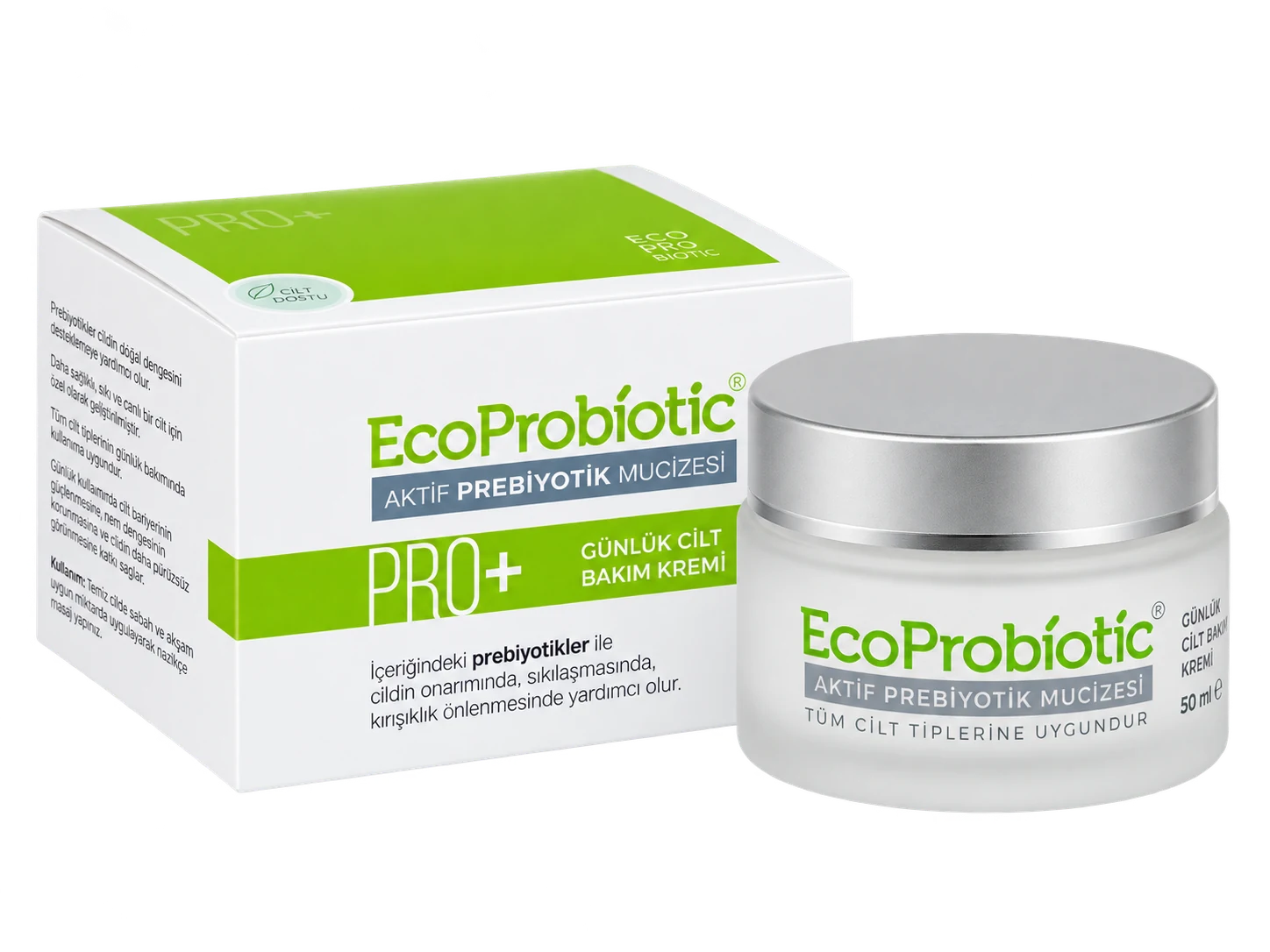 MoisturisingPrebiotic Skin CreamMoisturises the skin and helps repair the barrier. Available in three formulas: for all, dry and oily skin.View ↗
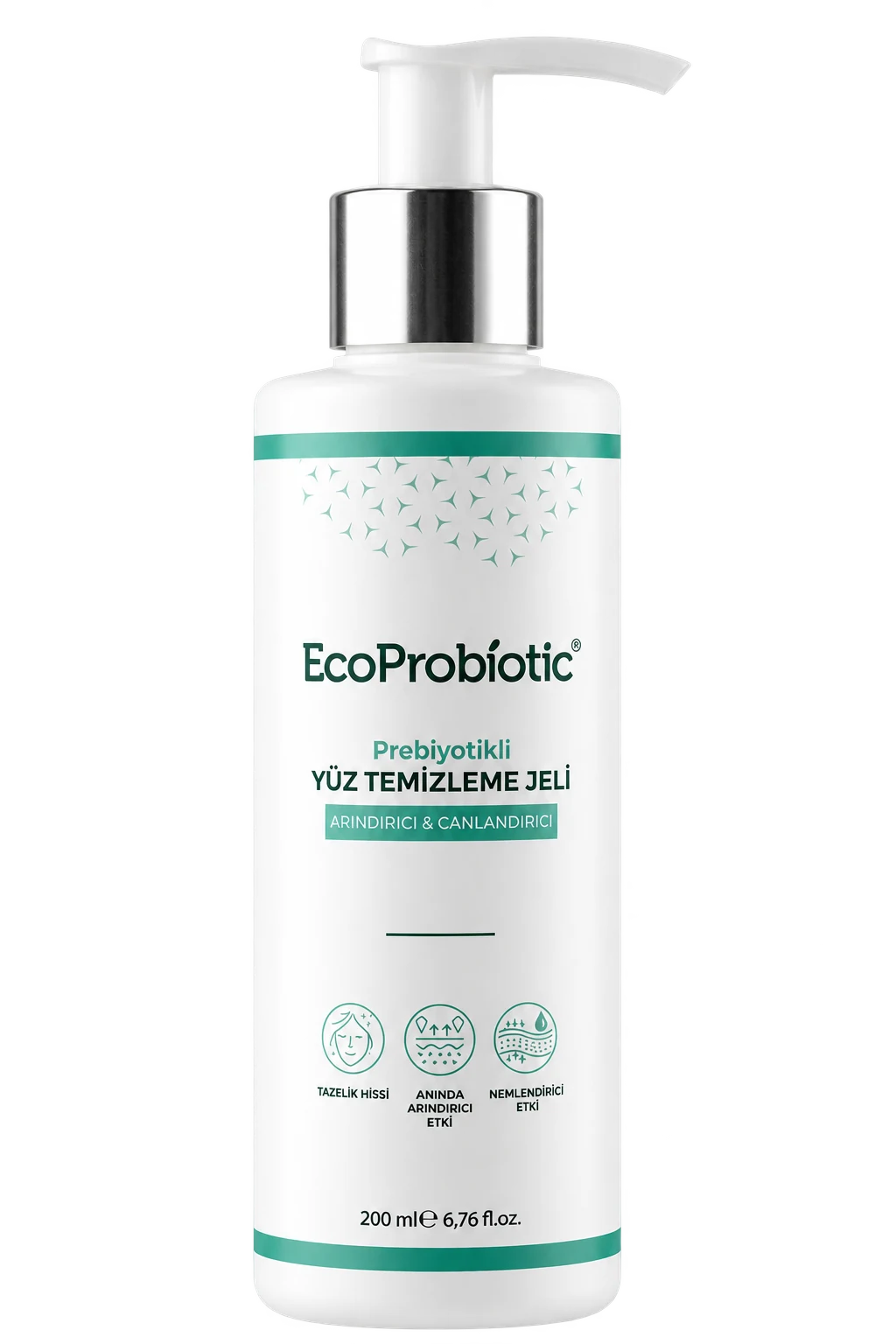 CleansingPrebiotic Face Cleansing GelRemoves make-up and the day’s grime with a gentle foam, supporting the skin barrier as it cleanses. Morning and evening.View ↗
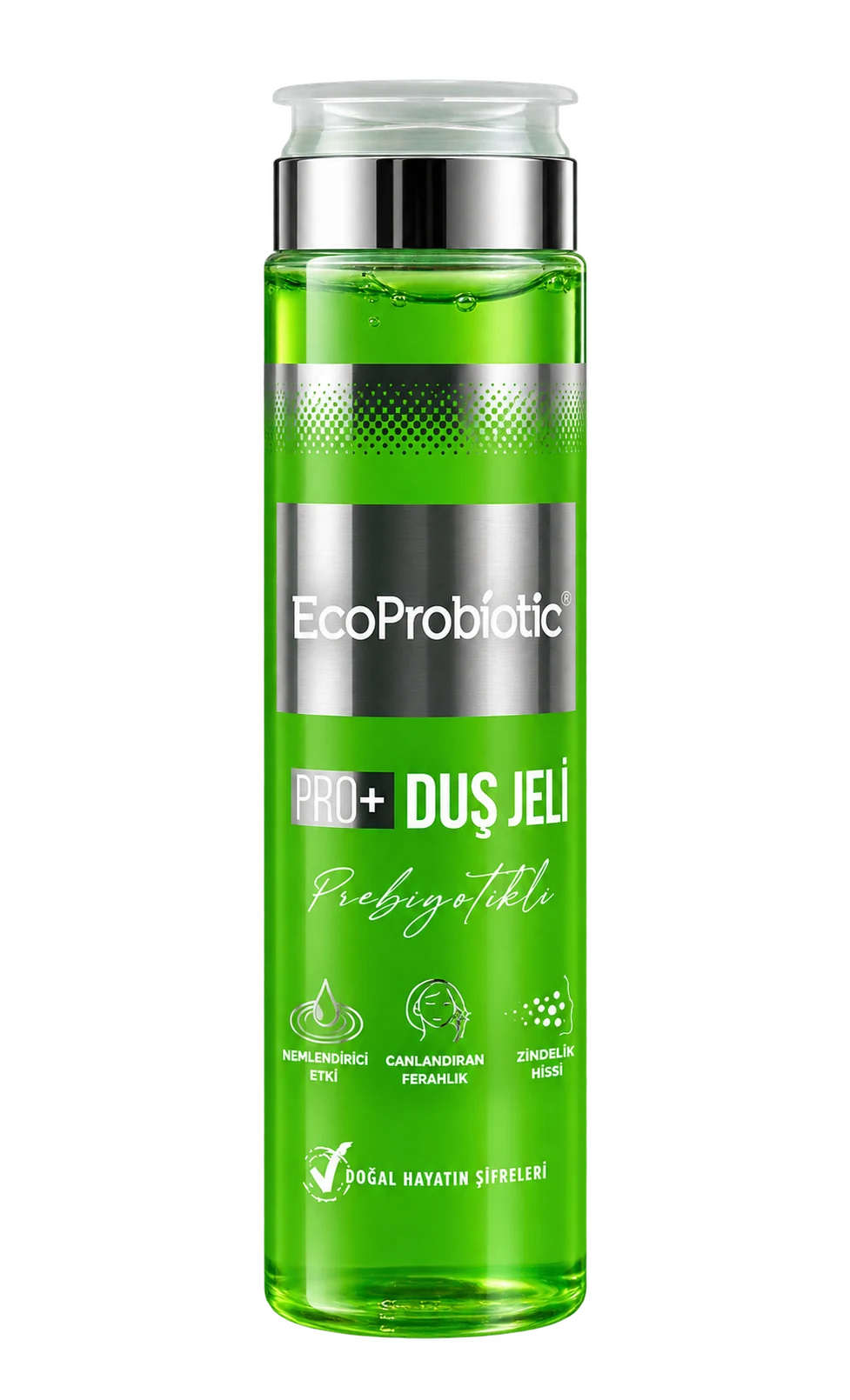 BodyPrebiotic Shower GelMoisturises the skin as it cleanses and supports the barrier; a fresh feeling all day.View ↗
Reading labels
Ingredient guide
✓What helps
- Ceramides: the main building block of the barrier's mortar.
- Cholesterol and free fatty acids: form a balanced mortar together with ceramides.
- Hyaluronic acid: a humectant that can bind many times its weight in water.
- Glycerin: a simple but very effective humectant with strong evidence.
- Urea (5–10%): holds moisture and softens flakes.
- Squalane: a light emollient similar to the skin's own oil.
- Shea butter: a softening, nourishing source of lipids.
- Panthenol: soothes and helps barrier repair.
- Lactic acid: renews and holds moisture, an acid that's friendly to dry skin.
- Prebiotics: support the balance of beneficial bacteria.
!Be careful with
- Soap-based, very foamy cleansers: strip lipids.
- Toners and gels high in alcohol (ethanol).
- Strong glycolic acid and salicylic acid peels: increase dryness with frequent use.
- Jumping straight into high-dose retinoids: can cause flaking and redness in dry skin.
- Clay masks: because they absorb oil, limit them to the T-zone if you have dry skin.
- Heavy fragrance: makes irritation easier when the barrier is weak.
All year round
By season
Winter
The hardest time for dry skin. Cold, wind and central heating increase TEWL. Use a thicker night cream, apply a protective balm to your cheeks and lips when going out, and use a humidifier at home.
Summer
Skin feels more comfortable when humidity rises, but air conditioning and sun dry it out. A lighter cream may be enough; never skip sunscreen, and always moisturize after the sea or pool.
Seasonal transitions
In the fall, gradually make your moisturizer richer. If flaking starts, increase moisturizing rather than exfoliating.
Caution
Common mistakes
- ✕Washing your face with hot water for a long time to relieve tightness.
- ✕Trying to scrape off flakes with a harsh, grainy scrub.
- ✕Using only hyaluronic acid without an occlusive cream on top; in dry air, moisture can evaporate back out.
- ✕Applying moisturizer to already dried-out skin instead of right after washing, while your skin is still slightly damp.
- ✕Dropping sunscreen in winter.
- ✕Thinking dryness is a lack of water rather than oil and relying only on drinking water.
- ✕Using body soap on your face.
Popular searches
Most asked about Dry skin
Your questions
Frequently asked questions
Is dry skin the same as dehydrated skin?+
No. Dry skin is a lack of oil and is usually a lasting skin type. Dehydrated skin is a lack of water and can appear temporarily even in oily skin. Dry skin needs more lipid support, dehydrated skin more water support; often the two occur together.
Will drinking lots of water fix my dry skin?+
Getting enough fluids is important for overall health, but on its own it won't fix dry skin. The real cause of dryness is a lack of barrier lipids and humectants; you need support from the outside.
Can I use retinol on dry skin?+
Yes, but start slowly: a low dose 2 evenings a week, sandwiched with moisturizer. If flaking increases, cut back on frequency; you can also choose a gentler retinoid derivative.
Face oil or cream?+
They do different jobs. A cream delivers water and oil together, while an oil only softens and seals. For dry skin, the best results often come from a few drops of oil on top of a cream.
When does dryness call for a doctor's visit?+
If itching keeps you up at night, if redness and cracks bleed, or if it doesn't improve despite regular moisturizing, it could be a condition like eczema; we recommend seeing a dermatologist.
My face is very dry and flaking. What should I do?+
First, don't try to scrape off the flakes; harsh exfoliation makes things worse. Switch to a non-foaming cream cleanser, and while your face is slightly damp, apply a humectant serum topped with a rich cream containing ceramides. Adding a thin layer of an occlusive like petrolatum to the driest areas at night makes a difference within a few days; if the flaking doesn't improve in two to three weeks, see a dermatologist.
What's the best moisturizer for dry skin?+
It's the ingredients that matter, not the brand. A fragrance-free, creamy moisturizer that combines humectants like hyaluronic acid, glycerin or urea, barrier lipids like ceramides and cholesterol, and emollients like shea butter or squalane is a good place to start for dry skin.
Which sunscreen should I use for dry skin?+
Choose a broad-spectrum sunscreen with SPF 30 or higher in a cream or lotion texture with moisturizing ingredients. Matte-finish formulas high in alcohol can make dry skin feel even tighter. Applying sunscreen over your moisturizer improves comfort.
What helps itchy dry skin?+
Short, lukewarm showers, an oil- or cream-based cleanser instead of soap, a thick moisturizer within 3 minutes after showering and a humidifier at home can noticeably reduce itching. If the itching keeps you up at night or you have red, weeping patches, see a dermatologist to check for eczema (atopic dermatitis).
Scientific basis
Sources
- 1.The stratum corneum: structure and function in health and disease.
Harding CR · Dermatologic Therapy · 2004 · doi:10.1111/j.1396-0296.2004.04s1001.x
Explained the brick-and-mortar structure of the skin's top layer, the balance of ceramides, cholesterol and fatty acids, and the role of natural moisturizing factor.
- 2.Moisturization and skin barrier function.
Rawlings AV, Harding CR · Dermatologic Therapy · 2004 · doi:10.1111/j.1396-0296.2004.04s1005.x
Explained that natural moisturizing factor and barrier lipids decrease in dry skin, and that moisturizers can help break this cycle.
- 3.Role of topical emollients and moisturizers in the treatment of dry skin barrier disorders.
Lodén M · American Journal of Clinical Dermatology · 2003 · doi:10.2165/00128071-200304110-00005
Reviewed how humectant, emollient and occlusive ingredients help reduce water loss in dry skin with a weakened barrier.
- 4.The science behind skin care: Moisturizers.
Draelos ZD · Journal of Cosmetic Dermatology · 2018 · doi:10.1111/jocd.12490
Explained the science of how moisturizers support the barrier through humectant, emollient and occlusive ingredients.
- 5.The effect of environmental humidity and temperature on skin barrier function and dermatitis.
Engebretsen KA, Johansen JD, Kezic S, Linneberg A, Thyssen JP · Journal of the European Academy of Dermatology and Venereology · 2016 · doi:10.1111/jdv.13301
Reviewed evidence that low humidity and cold weather weaken the skin barrier, and that dryness and eczema flare-ups increase in the winter months.
- 6.The skin: an indispensable barrier.
Proksch E, Brandner JM, Jensen JM · Experimental Dermatology · 2008 · doi:10.1111/j.1600-0625.2008.00786.x
Described the skin barrier as a multifaceted system made up of physical, chemical (acidic pH, lipids), microbial and immune layers.
- 7.Natural skin surface pH is on average below 5, which is beneficial for its resident flora.
Lambers H, Piessens S, Bloem A, Pronk H, Finkel P · International Journal of Cosmetic Science · 2006 · doi:10.1111/j.1467-2494.2006.00344.x
Showed that the natural pH of the skin surface is on average below 5 and that this mildly acidic environment supports the beneficial microflora living on the skin.