
Self-test
Is this type you?
- ◎Blotting paper test: Wash your face with a gentle cleanser, pat it dry and wait 1 hour without applying anything. Press a clean tissue separately onto your forehead, nose, cheeks and chin. If the tissues show no marks at all, or only a very faint trace of oil from the nose area, your skin is most likely normal.
- ◎You don't feel noticeable tightness or a pulling sensation in the 30 minutes after washing.
- ◎When you look in the mirror in the afternoon, your T-zone (forehead, nose, chin) is only slightly shiny; your cheeks are matte but not dry.
- ◎Your pores are visible up close but not large enough to stand out.
- ◎Breakouts are occasional and usually have a clear trigger, such as before your period or during a stressful time.
- ◎When you try a new product, you generally don't get stinging, burning or redness.
- ◎When the seasons change, your skin may get a little drier or a little oilier, but it finds its balance again within a few days.
In depth
The science of your skin
Normal skin is skin in which the balance between the sebum produced by the oil glands and the water-holding capacity of the skin's top layer, the stratum corneum, works well. In this layer, dead cells are like bricks, and the ceramides, cholesterol and free fatty acids between them are like mortar. When the mortar is intact, transepidermal water loss (TEWL), the water the skin loses by evaporating from the inside out, stays low. The skin's surface is also mildly acidic: research shows that the natural pH of skin is on average below 5, and that this acidic layer (the acid mantle) helps both barrier enzymes do their work and beneficial bacteria settle in.
The characteristics of normal skin come from this balance: pores are small to medium, tone is even and texture is smooth; breakouts are occasional and reactions to new products are rare. Still, this balance isn't permanent. Harsh cleansers, over-exfoliation, unprotected sun exposure, lack of sleep and stress can gradually push skin toward dry, oily or sensitive. That's why the goal of normal skin care isn't to fix, but to protect: gentle cleansing, a light moisturizer and daily sunscreen are usually enough.
Priorities
What does it need?
01
Protect the barrier
Your skin is already balanced; the goal is not to disrupt it. A cleanser with a skin-friendly pH and light lather plus a light moisturizer is usually enough.
02
Daily sun protection
Even in normal skin, most signs of aging are linked to the sun. Research shows that using broad-spectrum sunscreen every day slows the progression of aging signs.
03
Antioxidant support
In the morning, an antioxidant such as vitamin C or niacinamide can act as an extra shield alongside your sunscreen against free radicals generated by sun and pollution.
04
A simple, consistent routine
Balanced skin doesn't like frequent product changes. Stick with the basics that work for you, and try new products one at a time, a few weeks apart.
05
Moderate exfoliation
A mild acid or enzyme exfoliant once a week keeps skin radiant; more than that puts unnecessary strain on the barrier.
Normal skin
Protect the barrier
Step by step
Normal skin routine
- 1
Water or a gentle cleanse
If you cleansed well the night before, lukewarm water may be enough in the morning. If you feel oily, use a sulfate-free gel cleanser with a pH around 5.
- 2
Antioxidant serum
A few drops of a serum containing vitamin C (ascorbic acid or its derivatives) or niacinamide offer support against free radicals throughout the day.
- 3
Light moisturizer
A light lotion with humectants like hyaluronic acid and glycerin plus a small amount of ceramides is enough.
- 4
Sunscreen
Apply about two finger-lengths of a broad-spectrum product with SPF 30 or higher and UVA protection to your face and neck. If you're outdoors, reapply every 2 hours.
What you can add to your routine
Diversity is your greatest asset
In balanced skin, many different bacteria live side by side. Unnecessary antibacterial soaps and over-cleansing can reduce this diversity.
Feed it with prebiotics
Prebiotics are food for the beneficial bacteria on your skin. By creating an environment that favors them, they can help support microbiome balance.
Care you can use in your routine
EcoProbiotic care range ↗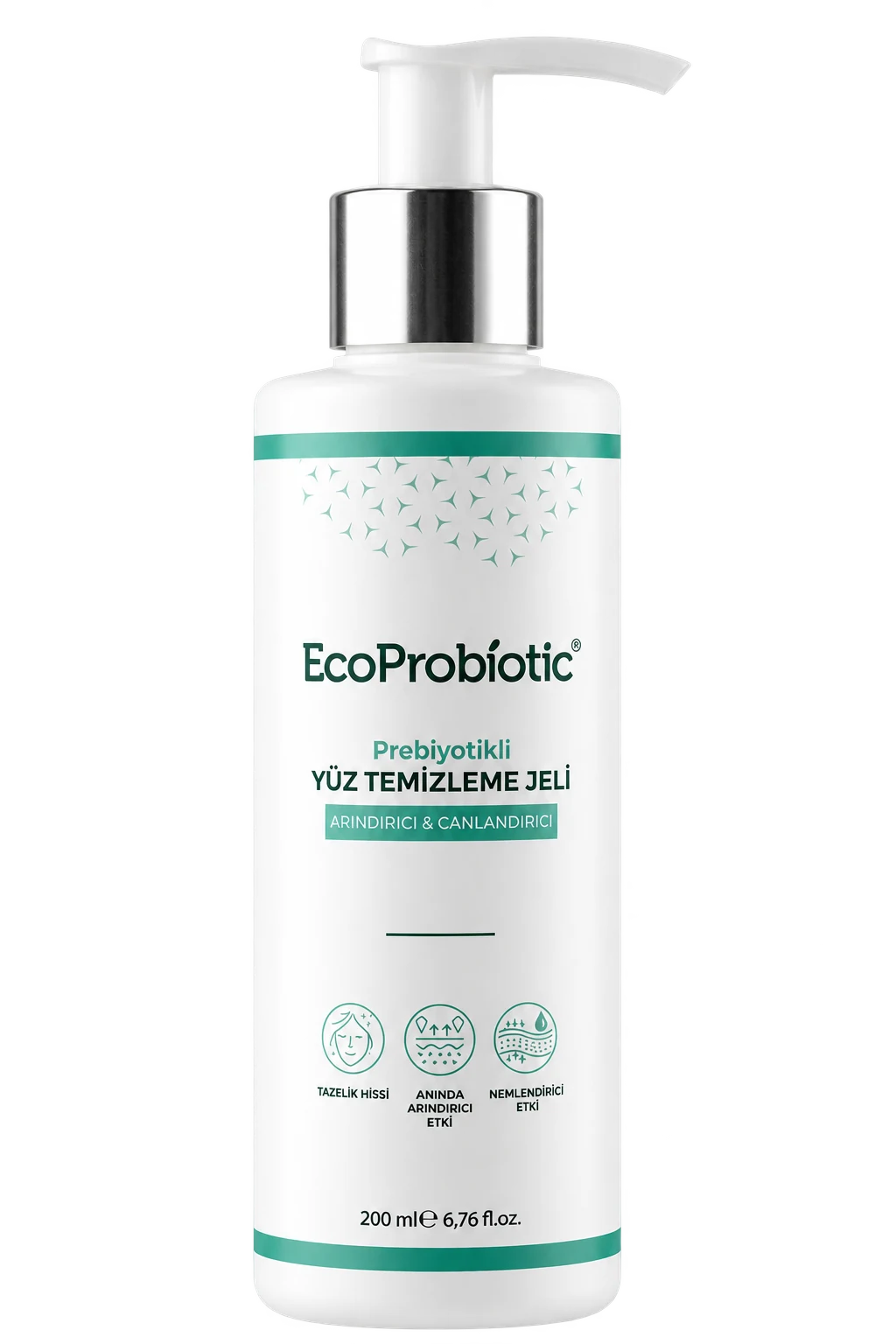 CleansingPrebiotic Face Cleansing GelRemoves make-up and the day’s grime with a gentle foam, supporting the skin barrier as it cleanses. Morning and evening.View ↗
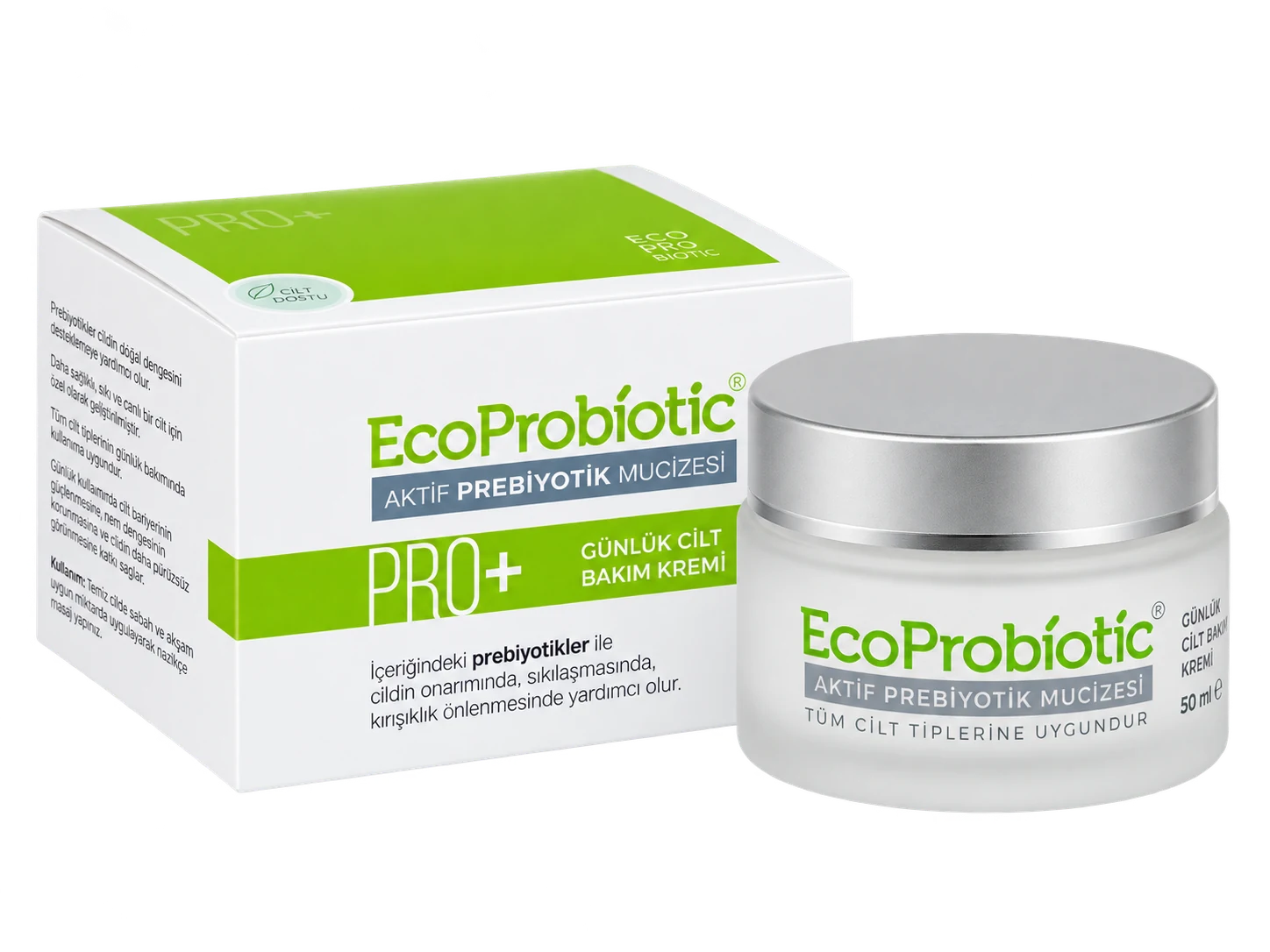 MoisturisingPrebiotic Skin CreamMoisturises the skin and helps repair the barrier. Available in three formulas: for all, dry and oily skin.View ↗
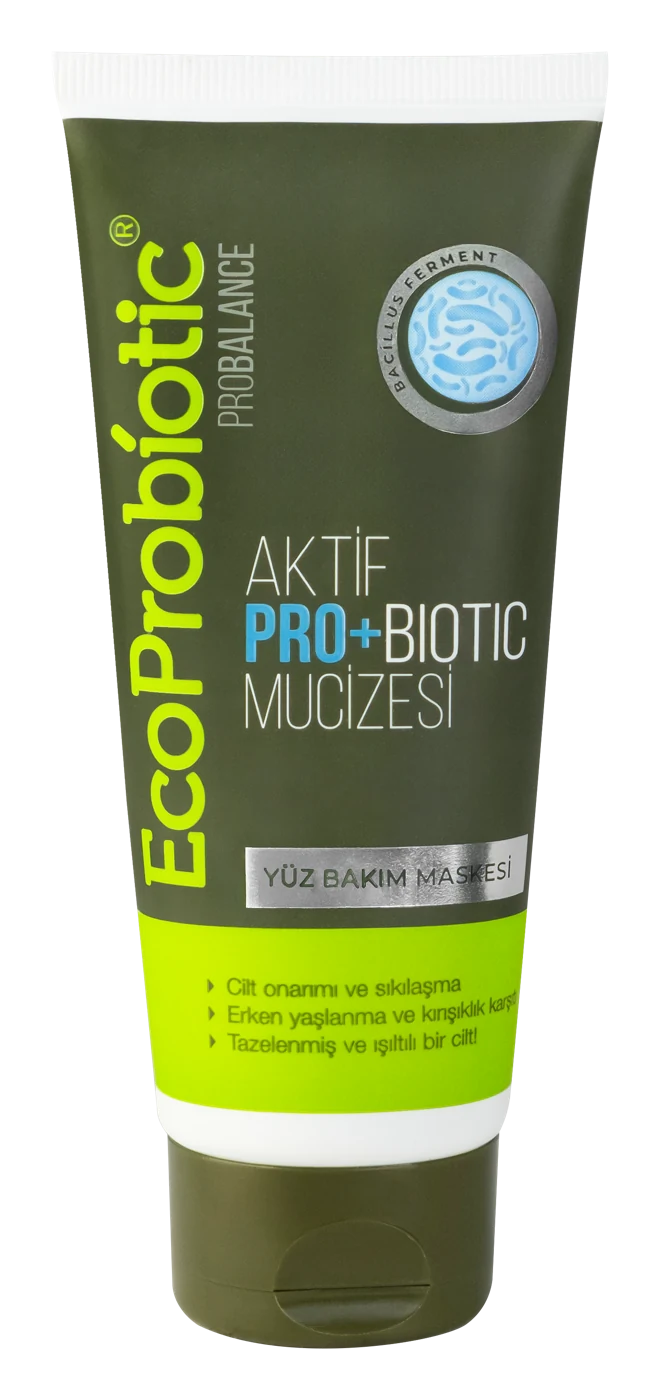 Weekly carePrebiotic Volcanic Clay MaskAbsorbs excess oil and dirt from the surface, purifying while supporting the barrier. Once or twice a week, for ten minutes.View ↗
Reading labels
Ingredient guide
✓What helps
- Niacinamide (2–5%): supports the barrier, even tone and the look of pores.
- Vitamin C: ideal in the morning for antioxidant protection and radiance.
- Hyaluronic acid and glycerin: humectants that draw water into the skin.
- Ceramides, cholesterol, fatty acids: complete the barrier's mortar.
- Panthenol (provitamin B5): soothes and holds moisture.
- Low-dose retinol: in the evening, for preventive anti-aging care.
- Lactic acid or PHA: weekly, for gentle renewal.
- Prebiotic ingredients: help nourish beneficial bacteria.
- Broad-spectrum sunscreen filters: every morning.
!Be careful with
- Harsh foaming agents such as sodium lauryl sulfate: can strip barrier lipids.
- Toners high in alcohol: can cause dryness with frequent use.
- Heavy fragrance and essential oils: can lead to sensitivity over time.
- More than one strong active on the same evening (retinol + high-percentage acid): increases the risk of irritation.
- Harsh physical scrubs with grains: can cause micro-scratches.
All year round
By season
Summer
Sweat and sebum increase; switch to a gel-textured moisturizer and reapply sunscreen more often. Rinse your face with fresh water after the chlorinated pool or the sea.
Winter
Cold air and the dry heat from central heating radiators lower humidity and strain the barrier. Go one step richer with your moisturizer, exfoliate less and avoid hot showers.
Seasonal transitions
Even normal skin can get confused during transitions. Add new products one at a time; if you get a few days of dryness or shine, simplify your routine.
Caution
Common mistakes
- ✕Using sunscreen only in summer or on vacation because your skin is trouble-free.
- ✕Adding every new active ingredient you see on social media to your routine at the same time.
- ✕Washing your face with very hot water or cleansing more than twice a day.
- ✕Straining a balanced barrier with strong acid peels several times a week.
- ✕Sleeping in makeup; it clogs pores and makes overnight repair harder.
- ✕Leaving your neck and décolletage out of your routine.
Popular searches
Most asked about Normal skin
Your questions
Frequently asked questions
I have normal skin. Do I really need a serum?+
It's not essential. A gentle cleanser, moisturizer and sunscreen are the basic trio. A serum makes sense if you have a specific goal (such as radiance or preventive anti-aging care).
Can my skin type change over time?+
Yes. Hormones, pregnancy, age, climate and the products you use all affect your skin type. Skin that is normal in your 20s may tend toward dryness in your 40s; repeating the blotting paper test once a year is a good idea.
When should I start using retinol?+
For prevention, a common approach is to start with a low dose 2–3 evenings a week from around age 25–30. If you are planning a pregnancy or breastfeeding, talk to your doctor first.
Is toner a must for normal skin?+
No. An alcohol-free, hydrating toner can be a pleasant in-between step, but it doesn't replace cleansing, moisturizing and sun protection.
Do occasional breakouts mean I don't have normal skin?+
No. The odd pimple that comes with your menstrual cycle, stress or lack of sleep happens in normal skin too. If you have persistent, widespread breakouts, it's a good idea to see a dermatologist.
How do I figure out my skin type?+
The most practical way is the blotting paper test: wash your face with a gentle cleanser, wait 1 hour without applying anything, and press separate tissues onto your forehead, nose, cheeks and chin. If none of the tissues show oil and your face feels tight, you likely have dry skin; if all of them show oil, oily skin; if only the T-zone does, combination skin; and if there's no mark or very little, normal skin. If you often react to new products with stinging and redness, add a tendency toward sensitive skin on top of that.
What kind of moisturizer should I choose for normal skin?+
A lotion or light cream with humectants such as hyaluronic acid or glycerin and a small amount of ceramides is enough. You can switch to a gel texture in summer and a slightly richer cream in winter. Choosing fragrance-free reduces the risk of sensitivity in the long run.
What should a sunscreen for normal skin be like?+
Choose a broad-spectrum product with SPF 30 or higher and UVA protection. Fluid, cream or gel all work as long as you like the texture; what really matters is applying enough every morning, about two finger-lengths for your face and neck, and reapplying every 2 hours if you're outdoors.
What is a step-by-step routine for normal skin?+
Morning: lukewarm water or a gentle cleanser, an optional antioxidant serum, a light moisturizer and sunscreen. Evening: remove makeup, cleanse gently, a serum if you have a specific goal, then moisturizer. A mild exfoliation once a week is enough; more than that puts unnecessary strain on balanced skin.
Scientific basis
Sources
- 1.Natural skin surface pH is on average below 5, which is beneficial for its resident flora.
Lambers H, Piessens S, Bloem A, Pronk H, Finkel P · International Journal of Cosmetic Science · 2006 · doi:10.1111/j.1467-2494.2006.00344.x
Showed that the natural pH of the skin surface is on average below 5 and that this mildly acidic environment supports the beneficial microflora living on the skin.
- 2.The skin: an indispensable barrier.
Proksch E, Brandner JM, Jensen JM · Experimental Dermatology · 2008 · doi:10.1111/j.1600-0625.2008.00786.x
Described the skin barrier as a multifaceted system made up of physical, chemical (acidic pH, lipids), microbial and immune layers.
- 3.The human skin microbiome.
Byrd AL, Belkaid Y, Segre JA · Nature Reviews Microbiology · 2018 · doi:10.1038/nrmicro.2017.157
Summarized that the skin microbiome differs markedly by body site (oily, moist and dry areas) and is in constant interaction with the barrier and the immune system.
- 4.Cleansing without compromise: the impact of cleansers on the skin barrier and the technology of mild cleansing.
Ananthapadmanabhan KP, Moore DJ, Subramanyan K, Misra M, Meyer F · Dermatologic Therapy · 2004 · doi:10.1111/j.1396-0296.2004.04s1002.x
Showed that harsh surfactants can damage barrier proteins and lipids, and that mild cleansing technologies reduce this effect.
- 5.Sunscreen and prevention of skin aging: a randomized trial.
Hughes MC, Williams GM, Baker P, Green AC · Annals of Internal Medicine · 2013 · doi:10.7326/0003-4819-158-11-201306040-00002
Over four and a half years, people who used broad-spectrum sunscreen every day showed less progression of skin aging signs than those who used it occasionally.
- 6.Impact of prebiotics and probiotics on skin health.
Al-Ghazzewi FH, Tester RF · Beneficial Microbes · 2014 · doi:10.3920/BM2013.0040
Reviewed studies suggesting that prebiotics and probiotics may help support skin health both when applied to the skin and through diet.