
Self-test
Is this type you?
- ◎When you apply a new product, you feel stinging, burning or itching within a few minutes, sometimes even without visible redness.
- ◎Wind, cold, heat, sun or a hot shower makes your face turn red or feel warm.
- ◎Your skin reacts after fragranced products, alcohol-based toners or certain sunscreens.
- ◎Your skin becomes more reactive during stressful times or when you haven't slept enough.
- ◎You often have redness, fine visible blood vessels or dryness on your cheeks and around your nose.
- ◎Simple test: Apply a new product behind your ear or under your jaw once a day for 5–7 days. If you get redness, itching or stinging, that product may not be right for your skin. If you react this way to most products, your skin is sensitive.
- ◎If you have persistent redness, pimple-like bumps or scaly, itchy patches, it could be a condition such as rosacea, eczema or contact dermatitis; it's important to see a dermatologist.
In depth
The science of your skin
Experts define sensitive skin as the occurrence of unpleasant sensations such as stinging, burning, pain, itching or tingling in response to stimuli that normally shouldn't cause discomfort. Two mechanisms act together behind these reactions: a thinned or weakened barrier lets irritants get in more easily, and the nerve endings in the skin become more sensitive. Sensitive skin has been reported to have higher transepidermal water loss and lower levels of barrier lipids. It is more common in women, and hormonal fluctuations, stress, climate and the wrong product choices can make it worse.
When it comes to what causes sensitive skin, the most common culprits are fragrance and essential oils, alcohol-based products, several strong actives at once (acids, retinol), over-cleansing and frequent product changes; as well as wind, cold, heat, sun and stress. Sensitive skin isn't a disease but a tendency; however, persistent redness, visible blood vessels and pimple-like bumps may be signs of rosacea, while itchy, scaly patches may point to eczema (atopic dermatitis) or contact dermatitis, and these need a dermatologist's evaluation. The essence of sensitive skin care is simplicity: few products, short ingredient lists, gentle cleansing, a barrier-repairing moisturizer and a sunscreen with mineral filters.
Priorities
What does it need?
01
A minimalist routine
A gentle cleanser, a barrier-repairing moisturizer and a sunscreen with mineral filters: only these three to start.
02
Short, simple ingredient lists
Fragrance-free, essential-oil-free, alcohol-free products with as few ingredients as possible also make it easier to find your triggers.
03
Barrier repair
Ingredients such as ceramides, panthenol, glycerin and squalane help support the barrier.
04
Soothing
Niacinamide (at a low percentage), panthenol and allantoin can help reduce redness and stinging.
05
Know your triggers
For a few weeks, note which products, weather, foods or situations you react to; patterns will emerge.
06
Patch test first
Try every new product behind your ear or under your jaw for 5–7 days; if there's no reaction, move on to your whole face. Add only one new product at a time.
Sensitive skin
A minimalist routine
Step by step
Sensitive skin routine
- 1
Just lukewarm water
Sensitive skin often doesn't need a cleanser in the morning. Rinse your face with lukewarm water without rubbing, and pat dry with a soft towel.
- 2
Soothing serum (optional)
A fragrance-free serum with panthenol or low-percentage (2–4%) niacinamide.
- 3
Barrier cream
A moisturizer with a short ingredient list containing ceramides, glycerin and squalane.
- 4
Mineral sunscreen
Fragrance-free SPF 30+ products with zinc oxide or titanium dioxide filters are generally better tolerated by sensitive skin.
What you can add to your routine
Sensitivity and the microbiome
Researchers think there may be a link between sensitive skin and an imbalance in the skin microbiota. Maintaining balance may help your skin become less reactive.
Prebiotic ingredients
Prebiotics support the selective nourishment of beneficial bacteria; for sensitive skin, they stand out as a gentle, low-risk approach to the microbiome.
Care you can use in your routine
EcoProbiotic care range ↗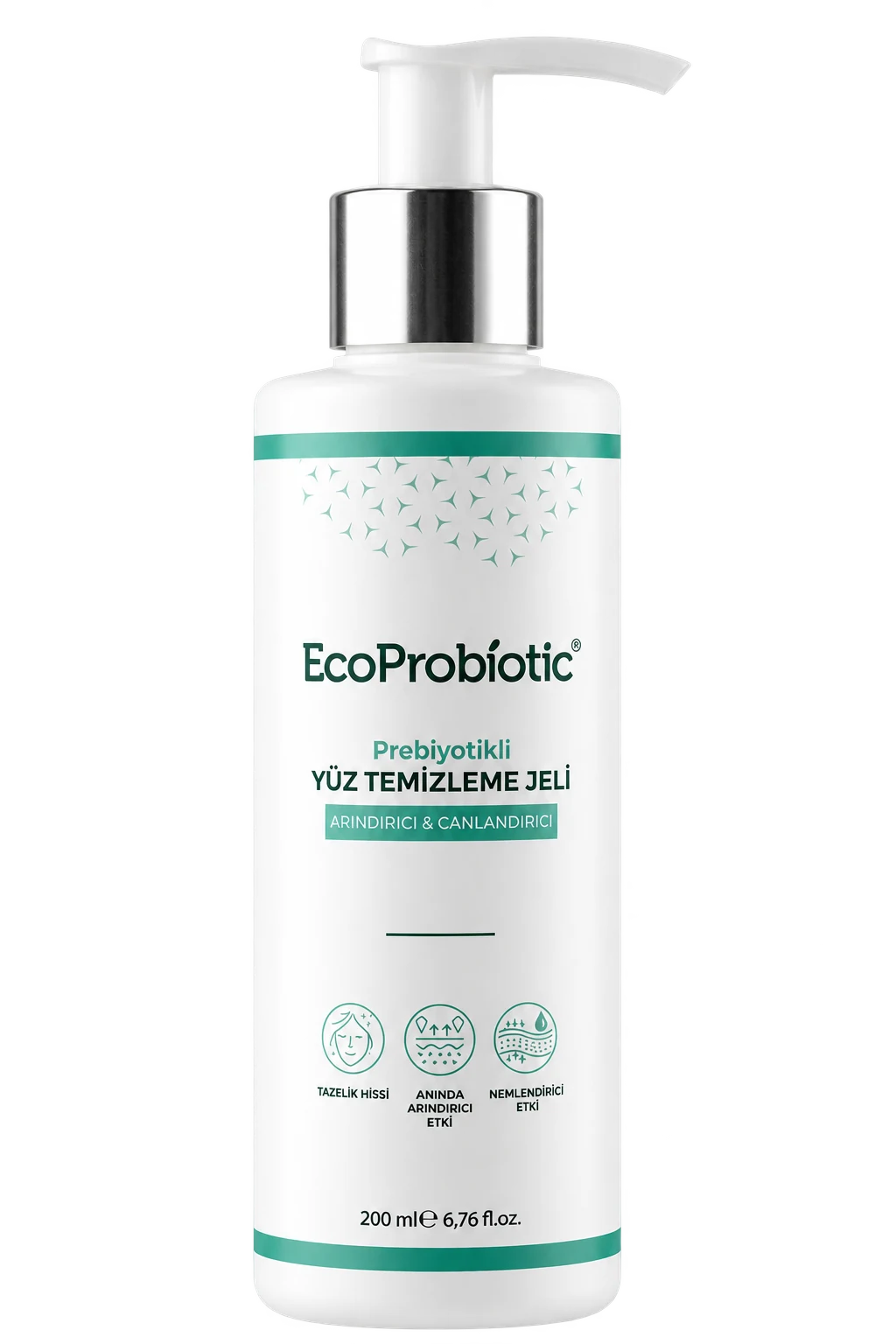 CleansingPrebiotic Face Cleansing GelRemoves make-up and the day’s grime with a gentle foam, supporting the skin barrier as it cleanses. Morning and evening.View ↗
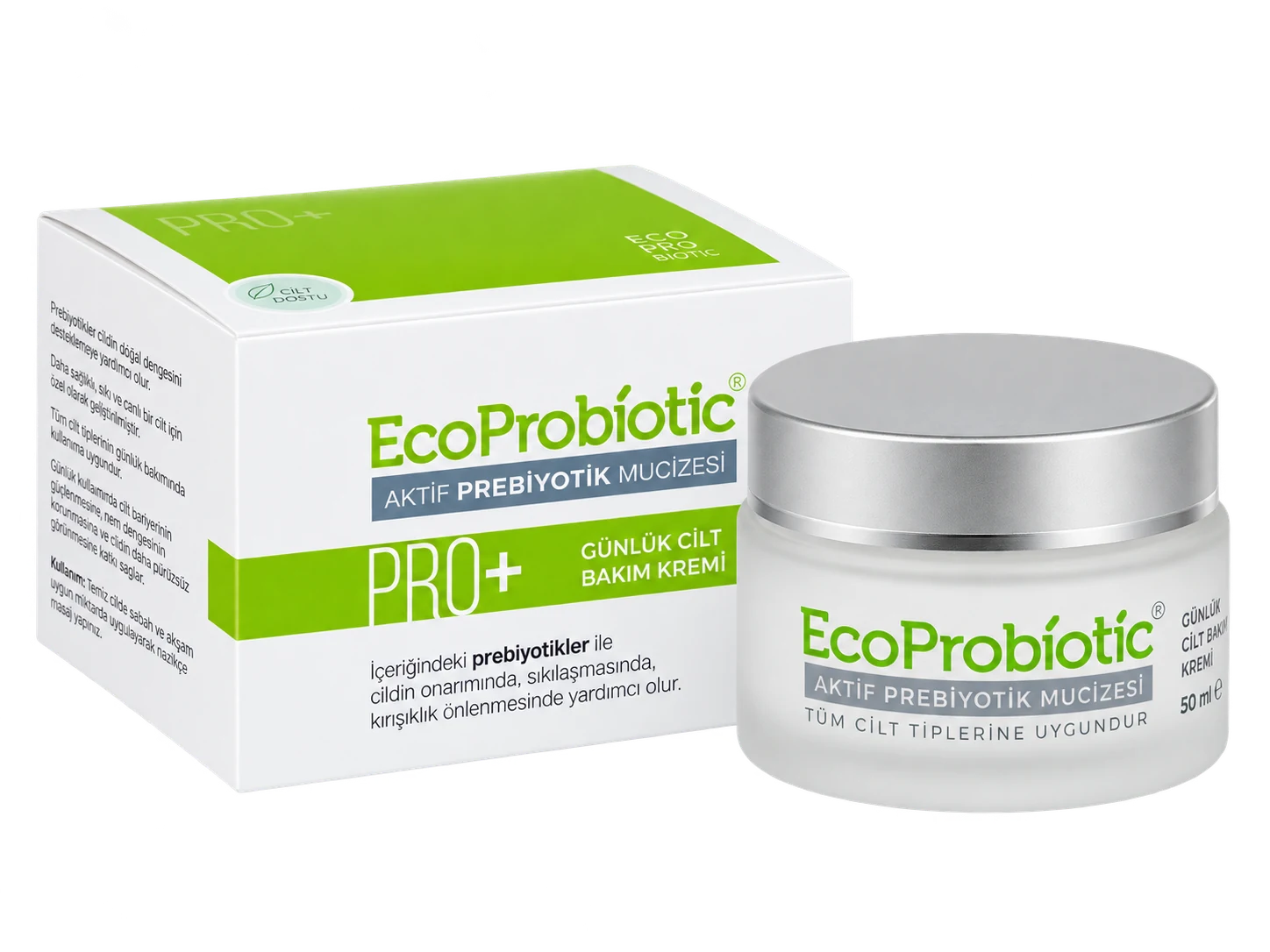 MoisturisingPrebiotic Skin CreamMoisturises the skin and helps repair the barrier. Available in three formulas: for all, dry and oily skin.View ↗
Reading labels
Ingredient guide
✓What helps
- Ceramides: repair the barrier's mortar.
- Panthenol: soothes and holds moisture.
- Glycerin: a gentle humectant with strong evidence.
- Squalane: an emollient with a low risk of irritation.
- Low-percentage niacinamide (2–4%): supports redness relief and the barrier.
- Azelaic acid: a gentle active often recommended by dermatologists for redness and a tendency toward rosacea.
- Allantoin and colloidal oatmeal: soothing.
- Zinc oxide and titanium dioxide: mineral sunscreen filters.
- Prebiotics: can help support microbiome balance.
!Be careful with
- Fragrance and essential oils: among the most common triggers for sensitive skin.
- Alcohol (ethanol, alcohol denat.): can cause stinging and dryness.
- High-percentage glycolic acid, salicylic acid and ascorbic acid: can sting because of their low pH.
- Retinoids: only when your skin is calm, at a very low dose and infrequently.
- Cooling agents such as menthol, camphor and eucalyptus.
- Physical scrubs, cleansing brushes and hot steam.
All year round
By season
Winter
Cold and wind trigger redness. Apply a rich barrier cream before going out and protect your face with a scarf, but watch out for friction from wool. Cut down on sudden shifts from heat to cold.
Summer
Heat and sun can increase redness. Use a sunscreen with mineral filters, stay in the shade, and cool your skin with thermal water or a cool compress.
Seasonal transitions
Don't try new products during seasonal transitions; do it when your skin is at its calmest.
Caution
Common mistakes
- ✕Constantly trying new products to get rid of redness.
- ✕Trusting fragranced products with essential oils because they're "natural."
- ✕Applying a new product to your whole face without patch testing it first.
- ✕Using several actives at the same time.
- ✕Rubbing your face dry with a towel, or washing it with hot water.
- ✕Continuing to use a product your skin reacts to, thinking your skin will "get used to it."
- ✕Assuming persistent redness is just sensitivity and not seeing a doctor about rosacea or eczema.
Popular searches
Most asked about Sensitive skin
Your questions
Frequently asked questions
Is sensitive skin the same as allergic skin?+
No. Sensitive skin has sensory reactions such as stinging and burning to many triggers. With an allergy, the immune system reacts to a specific substance, causing itchy, raised, eczema-like patches. If an allergy is suspected, your dermatologist can do a patch test.
Will a product labeled hypoallergenic definitely suit me?+
No. The term means efforts were made to lower the risk of reaction, but it's not a guarantee. Still check the ingredient list and try it on a test area.
Can I use retinol on sensitive skin?+
If your skin is calm, you can try it at a very low dose one evening a week, applied over your moisturizer. For a gentler start, you can ask your dermatologist.
Does thermal water work?+
It gives a cooling, comforting feeling; but instead of leaving it on your skin, you need to apply moisturizer right after, or the evaporating water can dry your skin out even more.
My redness never goes away. What should I do?+
Persistent redness on the nose and cheeks, visible blood vessels and pimple-like bumps may be signs of rosacea. We recommend seeing a dermatologist for diagnosis and treatment.
How do I know if I have sensitive skin?+
If you get stinging, burning or itching within minutes of applying a new product, if wind, cold or a hot shower easily makes your face red, and if you often react to fragranced products, your skin may be sensitive. Sensitivity can occur with any skin type, dry, oily or combination; so dry sensitive or oily sensitive skin is also possible.
How do I calm redness on sensitive skin?+
First simplify your routine: take a break of a few weeks from everything except a fragrance-free cleanser, a barrier cream with ceramides and panthenol, and a mineral sunscreen. Avoid hot water, steam and rubbing; a cool compress gives instant relief. If the redness doesn't settle in a few weeks or becomes persistent, see a dermatologist to check for rosacea.
My face is red and burning. What should I do?+
Stop using any new product you've started in the past few days right away and wash your face only with lukewarm water. Protect your skin with a simple, fragrance-free moisturizer and stay out of the sun. If there's swelling, blistering or weeping, or if the burning doesn't go away within a few days, see a dermatologist to check for allergic or irritant contact dermatitis.
Which sunscreen is right for sensitive skin?+
Fragrance-free, alcohol-free mineral sunscreens with zinc oxide or titanium dioxide filters are generally better tolerated by sensitive skin. A good approach is to try a product with SPF 30 or higher and UVA protection under your jaw for a few days before moving on to your whole face.
Scientific basis
Sources
- 1.Definition of Sensitive Skin: An Expert Position Paper from the Special Interest Group on Sensitive Skin of the International Forum for the Study of Itch.
Misery L, Ständer S, Szepietowski JC, Reich A, Wallengren J, Evers AW ve ark. · Acta Dermato-Venereologica · 2017 · doi:10.2340/00015555-2397
Defined sensitive skin as the occurrence of unpleasant sensations such as stinging, burning and itching in response to stimuli that normally should not cause discomfort.
- 2.Sensitive skin.
Misery L, Loser K, Ständer S · Journal of the European Academy of Dermatology and Venereology · 2016 · doi:10.1111/jdv.13532
Reviewed evidence that hypersensitive nerve endings and a weakened barrier act together in sensitive skin, and that it is reported more often in women.
- 3.Sensory, clinical and physiological factors in sensitive skin: a review.
Farage MA, Katsarou A, Maibach HI · Contact Dermatitis · 2006 · doi:10.1111/j.0105-1873.2006.00886.x
Reviewed triggers of sensitive skin such as cosmetics, weather and stress, along with sensory, clinical and physiological factors.
- 4.Skin sensitivity and skin microbiota: Is there a link?
Seite S, Misery L · Experimental Dermatology · 2018 · doi:10.1111/exd.13686
Discussed a possible link between sensitive skin and imbalance in the skin microbiota, noting that this area needs more research.
- 5.Cleansing without compromise: the impact of cleansers on the skin barrier and the technology of mild cleansing.
Ananthapadmanabhan KP, Moore DJ, Subramanyan K, Misra M, Meyer F · Dermatologic Therapy · 2004 · doi:10.1111/j.1396-0296.2004.04s1002.x
Showed that harsh surfactants can damage barrier proteins and lipids, and that mild cleansing technologies reduce this effect.
- 6.Impact of prebiotics and probiotics on skin health.
Al-Ghazzewi FH, Tester RF · Beneficial Microbes · 2014 · doi:10.3920/BM2013.0040
Reviewed studies suggesting that prebiotics and probiotics may help support skin health both when applied to the skin and through diet.
- 7.Natural skin surface pH is on average below 5, which is beneficial for its resident flora.
Lambers H, Piessens S, Bloem A, Pronk H, Finkel P · International Journal of Cosmetic Science · 2006 · doi:10.1111/j.1467-2494.2006.00344.x
Showed that the natural pH of the skin surface is on average below 5 and that this mildly acidic environment supports the beneficial microflora living on the skin.