
Self-test
Is this type you?
- ◎Blotting paper test: Wash your face, pat it dry and wait 1 hour. If the tissues from your forehead, nose and chin show traces of oil but the tissues from your cheeks show none or very little, your skin is combination.
- ◎Toward noon your T-zone (forehead, nose, chin) gets shiny, but your cheeks are matte and even a little tight.
- ◎Pores are noticeable on your nose and forehead but barely visible on your cheeks.
- ◎Blackheads cluster especially on your nose and chin.
- ◎The same cream feels heavy on your T-zone but isn't enough for your cheeks.
- ◎Your skin acts more oily in summer and more dry in winter.
In depth
The science of your skin
The oil glands on the face aren't evenly distributed. On the forehead, nose and chin they are both denser and larger; their numbers decrease toward the cheeks. Measurement studies show that sebum decreases markedly from the forehead toward the cheeks and also changes with the seasons; the definition of combination skin is based on this regional difference. The result: in the T-zone you may see the clogged pores and shine typical of oily skin, while on the cheeks you may see dryness and sensitivity due to less sebum and higher transepidermal water loss.
That's the short answer to what combination skin means: two different needs on one face. That's why applying a single harsh product to your whole face can strain both sides: a drying cleanser can make your cheeks tight and red while triggering more oil in the T-zone in response; a very rich cream, on the other hand, may suit your cheeks but clog the pores on your nose and forehead. The goal in caring for combination skin is to think zone by zone: a gentle shared base for the whole face, oil and pore care for the T-zone, and extra hydration for the cheeks.
Priorities
What does it need?
01
A shared, gentle base
For the whole face, a medium-strength gel or cream-gel cleanser with a skin-friendly pH.
02
Use actives by zone
Apply salicylic acid or a clay mask only to the T-zone, and rich cream only to your cheeks.
03
Layered moisturizing
A light moisturizer for the whole face, plus a second layer or a slightly richer cream on your cheeks.
04
Balancing shared actives
Niacinamide and hyaluronic acid are balancing ingredients that suit both zones.
05
Adjust for the season
Combination skin is one of the types that changes most with the seasons; review your routine twice a year.
Combination skin
A shared, gentle base
Step by step
Combination skin routine
- 1
Gentle gel cleanser
A short, lukewarm wash. If your cheeks feel tight, you can try cleansing only your T-zone in the morning.
- 2
Niacinamide serum
On your whole face; it supports the look of pores and shine in the T-zone and the barrier on your cheeks.
- 3
Light moisturizer
A gel-cream moisturizer on your whole face; a second thin layer on your cheeks if needed.
- 4
Sunscreen
A light, fluid SPF 30 or higher. You can control T-zone shine during the day with powder.
What you can add to your routine
Two different neighborhoods
Different bacterial communities live in oily and dry zones. Zone-by-zone care protects each of these balances separately.
Prebiotic support
Moisturizers with prebiotic ingredients can help contribute to balance by supporting the nourishment of beneficial bacteria in both zones.
Care you can use in your routine
EcoProbiotic care range ↗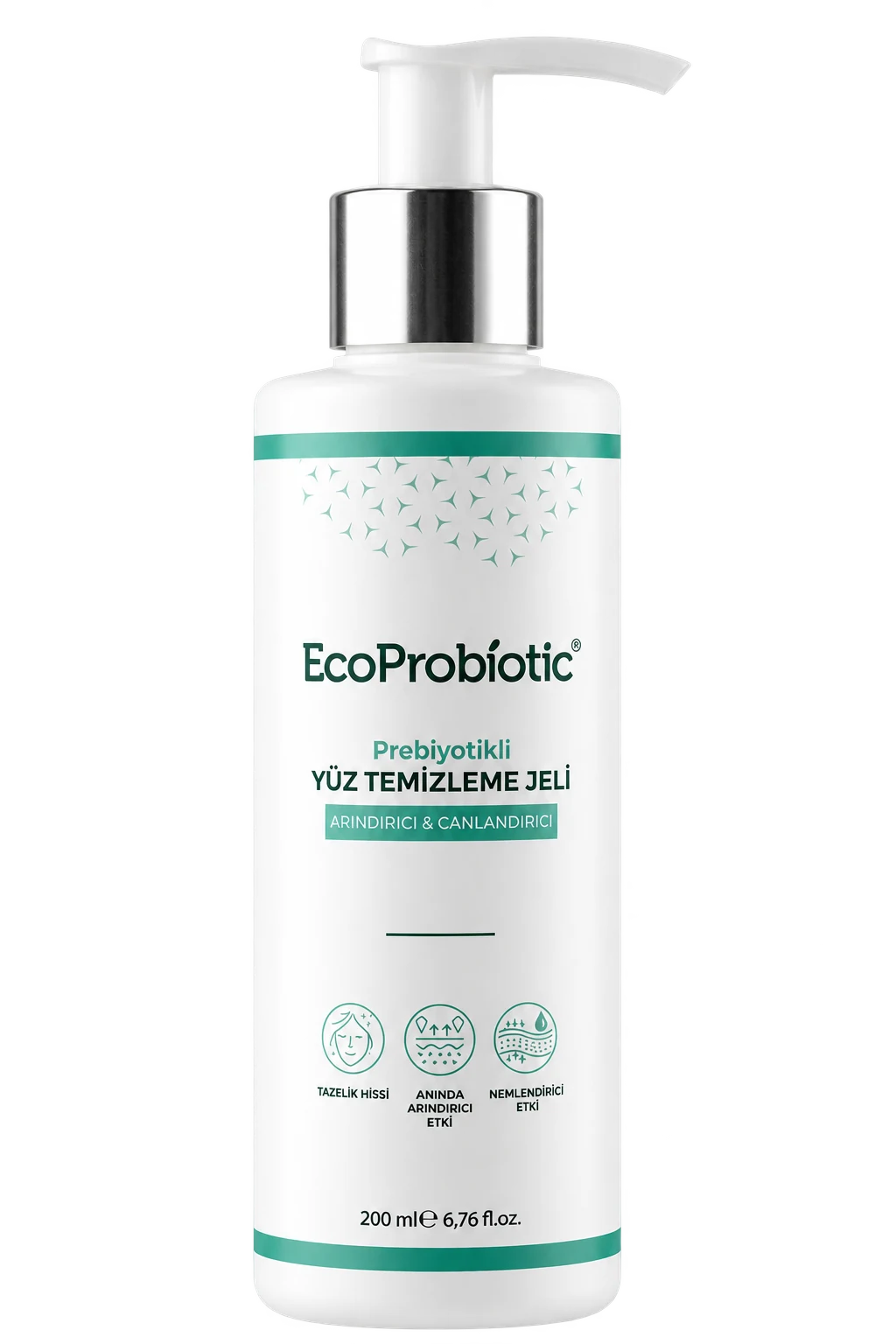 CleansingPrebiotic Face Cleansing GelRemoves make-up and the day’s grime with a gentle foam, supporting the skin barrier as it cleanses. Morning and evening.View ↗
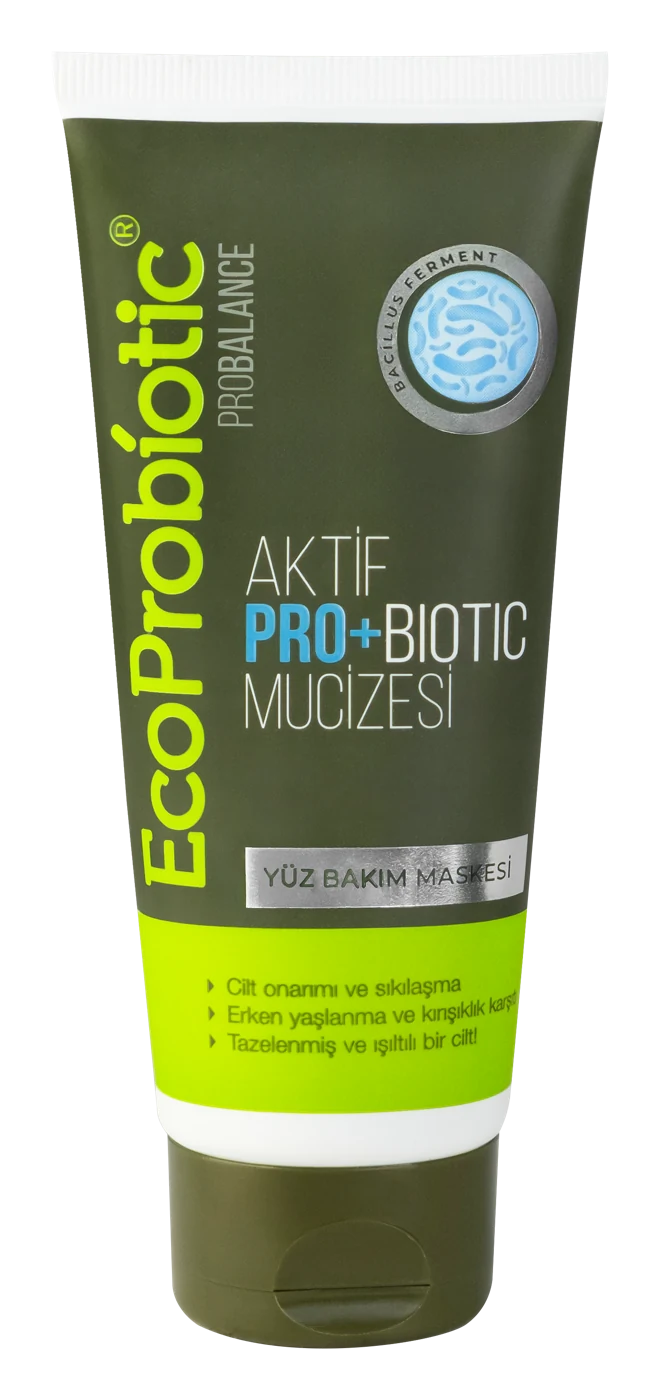 Weekly carePrebiotic Volcanic Clay MaskAbsorbs excess oil and dirt from the surface, purifying while supporting the barrier. Once or twice a week, for ten minutes.View ↗
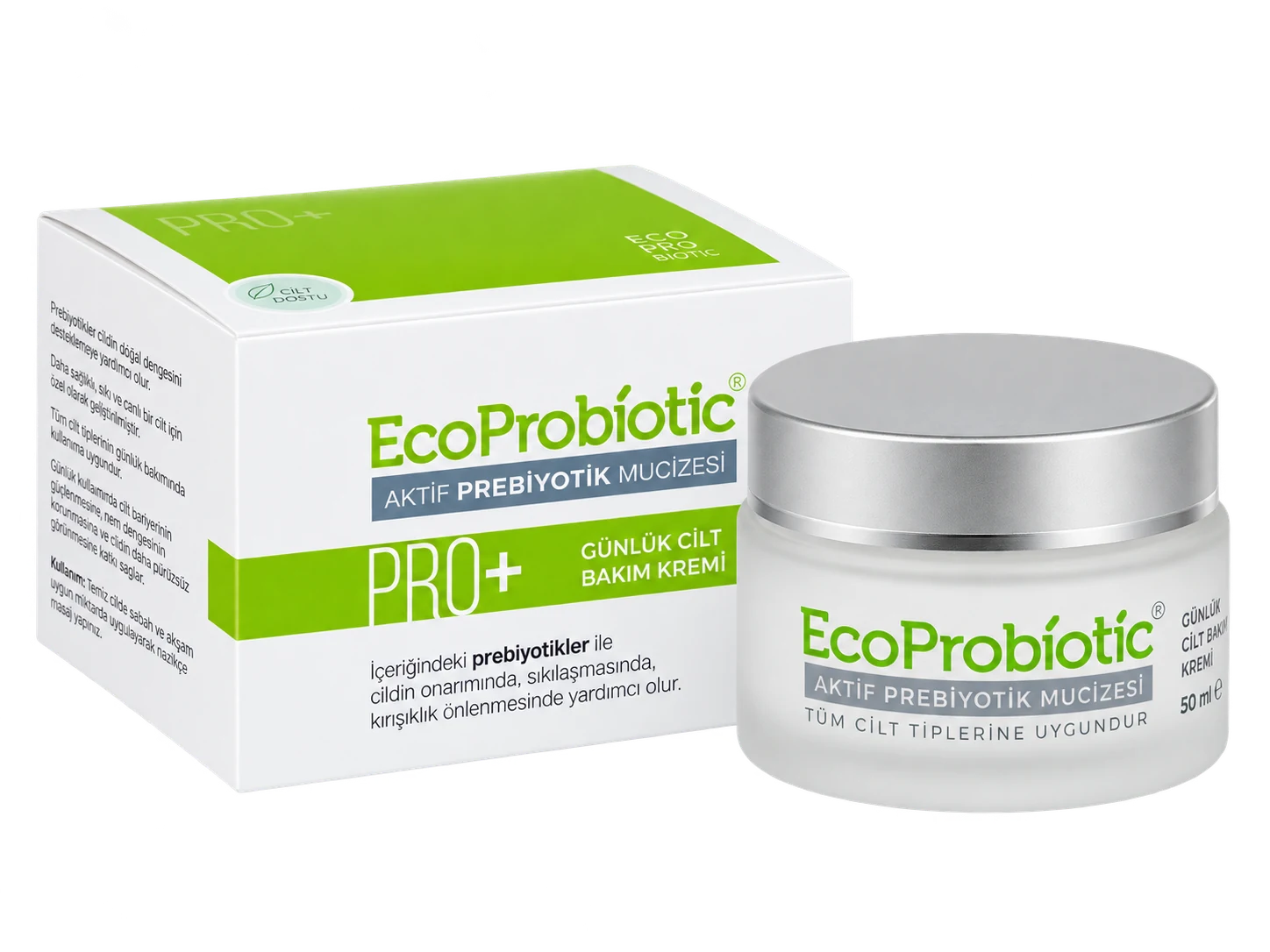 MoisturisingPrebiotic Skin CreamMoisturises the skin and helps repair the barrier. Available in three formulas: for all, dry and oily skin.View ↗
Reading labels
Ingredient guide
✓What helps
- Niacinamide: balances both zones.
- Hyaluronic acid: hydrates without adding oil.
- Salicylic acid: for pores in the T-zone only.
- Ceramides: barrier support for the cheeks.
- Kaolin clay: weekly on the T-zone.
- PHA (gluconolactone, lactobionic acid): a gentle exfoliant that suits the whole face.
- Retinol: regular renewal with an adjusted dose.
- Panthenol: soothes tightness on the cheeks.
- Prebiotics: support microbiome balance across the whole face.
!Be careful with
- Drying products designed for oily skin, applied to the whole face: irritate the cheeks.
- Very rich, occlusive night creams on the whole face: can clog pores in the T-zone.
- Alcohol-based toners.
- Frequent use of strong glycolic acid peels.
- Heavily fragranced products: can sensitize the weaker barrier on the cheeks.
All year round
By season
Summer
The oily side of your skin takes over. Switch to a gel moisturizer, and you can increase the clay mask on your T-zone to twice a week.
Winter
The dry side takes over. Rich cream on the cheeks, light lotion on the T-zone; use acids less often.
Seasonal transitions
Keep two different moisturizers on hand; adjust how much of each you apply based on how your skin is behaving that week.
Caution
Common mistakes
- ✕Using a single harsh, drying product on your whole face.
- ✕Dropping moisturizer entirely to stop T-zone shine.
- ✕Trying to get rid of flaking on your cheeks with exfoliation.
- ✕Applying a clay mask to your whole face and waiting until it dries completely.
- ✕Sticking to the same routine even though the season has changed.
Popular searches
Most asked about Combination skin
Your questions
Frequently asked questions
Should I buy two separate moisturizers for combination skin?+
Not necessarily. Applying a light moisturizer to your whole face and a second layer of the same product to your cheeks is often enough. In winter, a separate, richer cream for your cheeks makes things easier.
Is it combination skin or oily but dehydrated skin?+
With oily but dehydrated skin, the whole face gets oily but feels tight. With combination skin, the cheeks don't get oily. If the cheek tissue comes away clean in the blotting paper test, combination skin is likely.
With combination skin, should retinol go on the whole face?+
Yes, you can apply a thin layer to your whole face. If your cheeks get irritated, applying moisturizer first and retinol on top reduces irritation.
A clay mask dries out my cheeks. What should I do?+
Apply the clay mask only to your T-zone and don't wait for it to dry completely. You can apply a hydrating mask to your cheeks at the same time.
Does combination skin change with age?+
Yes. Because sebum production decreases with age, combination skin usually shifts toward normal or dry.
How do I know if I have combination skin?+
Wash your face, wait 1 hour without applying anything, then press separate tissues onto your forehead, nose, chin and cheeks. If the forehead, nose and chin tissues show traces of oil while the cheek tissues are clean or only slightly oily, your skin is combination. Noticeable pores and blackheads on the nose and tightness on the cheeks are also typical signs.
What's the difference between normal and combination skin?+
In normal skin, the T-zone gets at most slightly shiny in the afternoon, and the cheeks neither dry out nor get oily. In combination skin, the T-zone gets noticeably oily, pores there are larger and the cheeks often feel tight or flaky. In the blotting paper test, the clearer the oil marks on the forehead and nose tissues, the more likely you have combination skin.
How do I choose a face wash for combination skin?+
Choose a sulfate-free gel or cream-gel cleanser with a skin-friendly pH that is neither very foamy and drying nor very oily. If your cheeks feel tight after washing, the product is too harsh; if your T-zone still feels oily, you can double cleanse in the evening.
Should I use a toner for combination skin?+
It's not essential, but it can make things easier. An alcohol-free hydrating toner suits the whole face; a salicylic acid toner, on the other hand, should be applied with a cotton pad only to the T-zone, every other day. Toners high in alcohol dry out the cheeks and don't reduce T-zone oiliness in the long run.
Scientific basis
Sources
- 1.Regional and seasonal variations in facial sebum secretions: a proposal for the definition of combination skin type.
Youn SW, Na JI, Choi SY, Huh CH, Park KC · Skin Research and Technology · 2005 · doi:10.1111/j.1600-0846.2005.00119.x
Showed that facial sebum decreases markedly from the forehead toward the cheeks and changes with the seasons, proposing a measurable definition of combination skin.
- 2.Understanding and treating various skin types: the Baumann Skin Type Indicator.
Baumann L · Dermatologic Clinics · 2008 · doi:10.1016/j.det.2008.03.007
Proposed a classification that evaluates skin type along the axes of oily–dry, sensitive–resistant, pigmented–non-pigmented and wrinkle-prone–tight.
- 3.The skin microbiome.
Grice EA, Segre JA · Nature Reviews Microbiology · 2011 · doi:10.1038/nrmicro2537
Showed that oily areas such as the T-zone of the face and dry areas such as the cheeks host different microbial communities.
- 4.The human skin microbiome.
Byrd AL, Belkaid Y, Segre JA · Nature Reviews Microbiology · 2018 · doi:10.1038/nrmicro.2017.157
Summarized that the skin microbiome differs markedly by body site (oily, moist and dry areas) and is in constant interaction with the barrier and the immune system.
- 5.The effect of 2% niacinamide on facial sebum production.
Draelos ZD, Matsubara A, Smiles K · Journal of Cosmetic and Laser Therapy · 2006 · doi:10.1080/14764170600717704
A moisturizer containing 2 percent niacinamide was observed to reduce the facial sebum excretion rate over four weeks of use.
- 6.The effect of environmental humidity and temperature on skin barrier function and dermatitis.
Engebretsen KA, Johansen JD, Kezic S, Linneberg A, Thyssen JP · Journal of the European Academy of Dermatology and Venereology · 2016 · doi:10.1111/jdv.13301
Reviewed evidence that low humidity and cold weather weaken the skin barrier, and that dryness and eczema flare-ups increase in the winter months.