Definition
What is Rosacea?
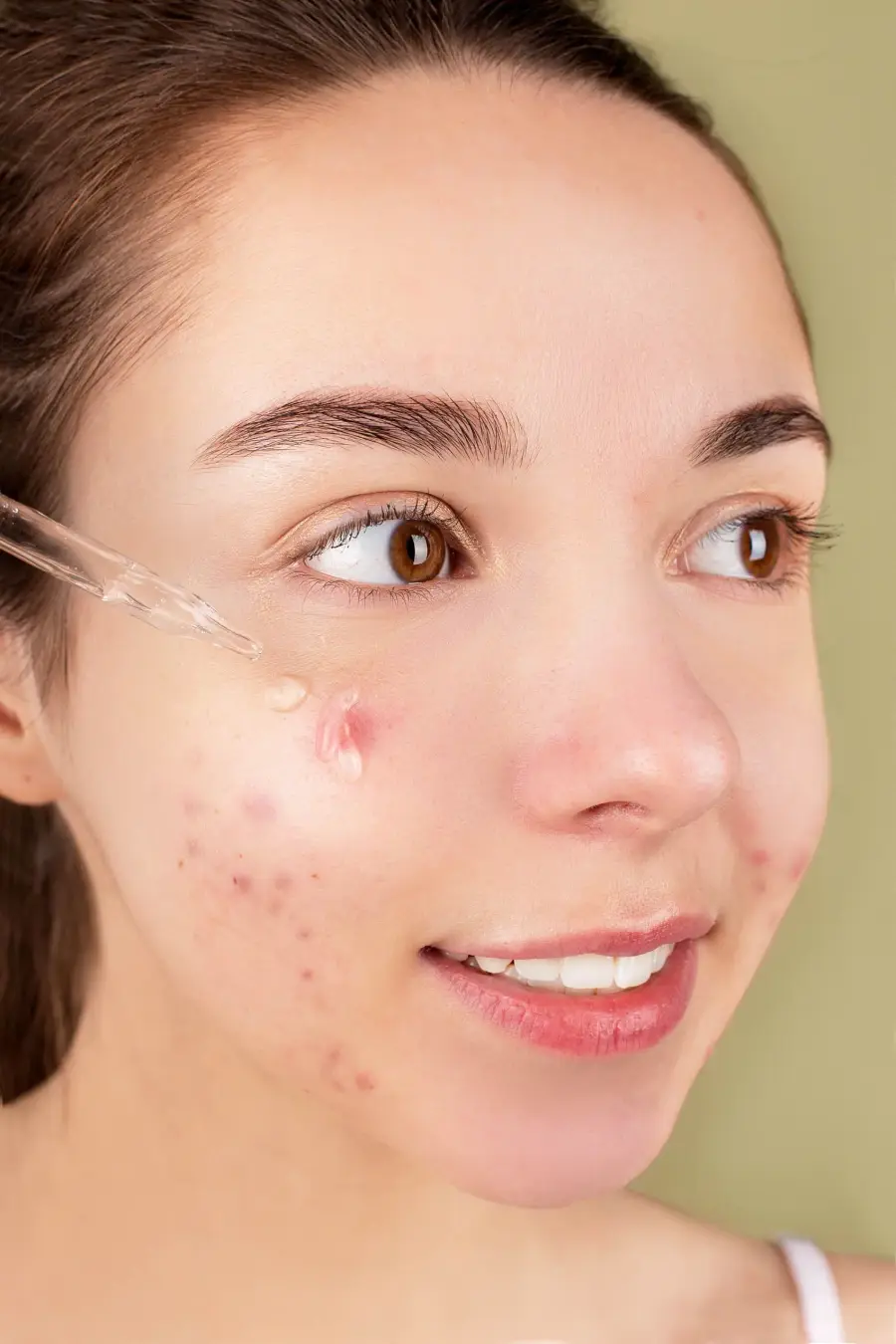
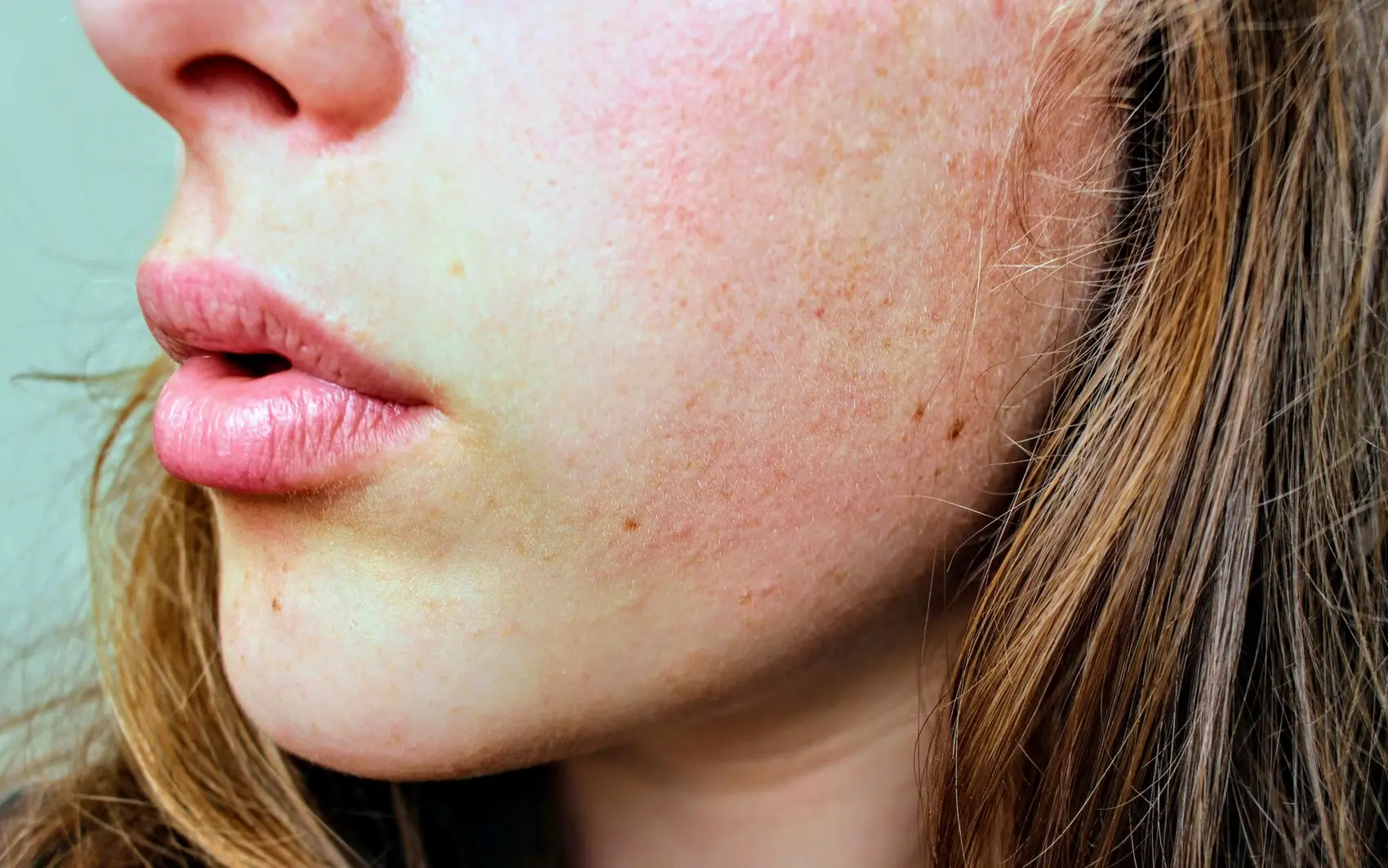
Rosacea is a chronic inflammatory skin condition that affects the central face (cheeks, nose, forehead, chin) and comes and goes in flare-ups and calm periods. Its most typical sign is that your face flushes easily when you step into a warm room, after spicy food or when you get emotional, and that this redness gradually becomes persistent. It's accompanied by visible fine blood vessels near the surface, burning or stinging and sometimes pimple-like bumps.
Experts now assess rosacea by the symptoms a person actually has, rather than by the old 'subtype' classification: persistent redness, flushing episodes, inflammatory bumps, visible blood vessels, eye symptoms and skin thickening, especially on the nose. Every woman may have a different mix of these symptoms, so treatment is tailored accordingly.
Rosacea most often starts after age 30 and is more common in fair-skinned women. Underneath it lie an overreactive innate immune response, easily triggered blood vessels and nerve endings, and a weakened skin barrier; in some people, a higher density of a microscopic mite that naturally lives on the skin (Demodex) also plays a role. The good news: even though rosacea doesn't go away completely, most women can keep it well under control by knowing their triggers, protecting their skin with gentle care and using dermatological treatment.
Check yourself
How do you recognise it?
- ✓Sudden flushing episodes brought on by heat, sun, alcohol, spices or emotions
- ✓Redness on the cheeks and nose that gradually becomes persistent
- ✓Fine, red blood vessels that become visible on the surface
- ✓Red, pimple-like bumps and inflamed spots without blackheads
- ✓A burning, stinging, hot or tight feeling
- ✓Facial skin that looks rough, dry and flaky
- ✓Increasing sensitivity to many skincare products
- ✓Dry, gritty, red eyes or swelling along the eyelid margins
- ✓In later stages, thickening of the skin, especially on the nose
Why it happens
Main causes
01
Oversensitive innate immunity
In rosacea, the skin's first line of defense responds more strongly than it should; changes in defense peptides and enzymes fuel redness and inflammation.
02
Easily triggered blood vessels and nerve endings
Nerve channels that respond to stimuli such as heat, spices and alcohol are triggered more easily in skin with rosacea; this makes blood vessels dilate and causes a flushing episode.
03
A weakened skin barrier
Disruption in the barrier structure increases sensitivity to products and environmental factors and keeps the cycle of inflammation going.
04
Microbial factors
An increase in mite density and the bacteria associated with them may be one of the factors that trigger inflammation in some people.
05
Genetics and skin type
It's more common in people with a family history of rosacea and in those with fair skin that flushes easily.
06
Sun damage
Ultraviolet rays wear down blood vessel walls and connective tissue, which can increase persistent redness and visible blood vessels.
In daily life
Triggers that cause flare-ups
Medical approach
Treatment options
01
Topical medications for redness
For persistent redness, topical medications that temporarily constrict blood vessels may be used after your dermatologist's assessment. These reduce redness during the day but don't eliminate the underlying process.
02
Topical treatments for inflammatory bumps
Azelaic acid, topical metronidazole and topical ivermectin (effective against mites) are the most commonly used options for pimple-like bumps. The National Rosacea Society expert committee presents these options as the foundation of symptom-based treatment.
03
Oral treatments
For widespread or stubborn inflammatory rosacea, low-dose tetracycline-class antibiotics aimed at reducing inflammation may be used after your dermatologist's assessment. In very stubborn cases, other systemic options are also considered.
04
Laser and light treatments
For visible blood vessels and persistent redness, procedures such as vascular lasers and intense pulsed light (IPL) are effective options. Several sessions are needed, and results fade over time if triggers aren't controlled.
05
Treating eye symptoms
If you have dry eyes or eyelid inflammation, eyelid hygiene, warm compresses and, if needed, treatments recommended by an eye doctor are used.
06
Barrier repair is part of treatment
Because scientific findings show the barrier is clearly disrupted in rosacea, gentle cleansing, moisturizing and daily sun protection are recommended as an essential part of medical treatment.
Did you know? · Rosacea
5.46% · The prevalence of rosacea in the adult population; in a meta-analysis covering more than 26 million people, it was most common between ages 45 and 60.
Step by step
Care routine for Rosacea
- 1
Just water or very gentle cleansing
If your skin isn't very oily in the morning, rinsing with lukewarm water may be enough. If you use a cleanser, choose one that's soap-free, fragrance-free and low-foaming.
- 2
Pat dry gently
Pat dry with a cotton towel; rubbing your face can trigger redness.
- 3
Treatment cream
If your dermatologist recommended a cream for the morning, apply a thin layer and wait a few minutes.
- 4
Barrier moisturizer
Use a fragrance-free, alcohol-free soothing moisturizer with ceramides, glycerin and prebiotics.
- 5
Mineral sunscreen
A broad-spectrum, fragrance-free sunscreen with zinc oxide or titanium dioxide is usually better tolerated by skin with rosacea. Green-tinted formulas can also visually neutralize redness.
Care you can use in your routine
EcoProbiotic care range ↗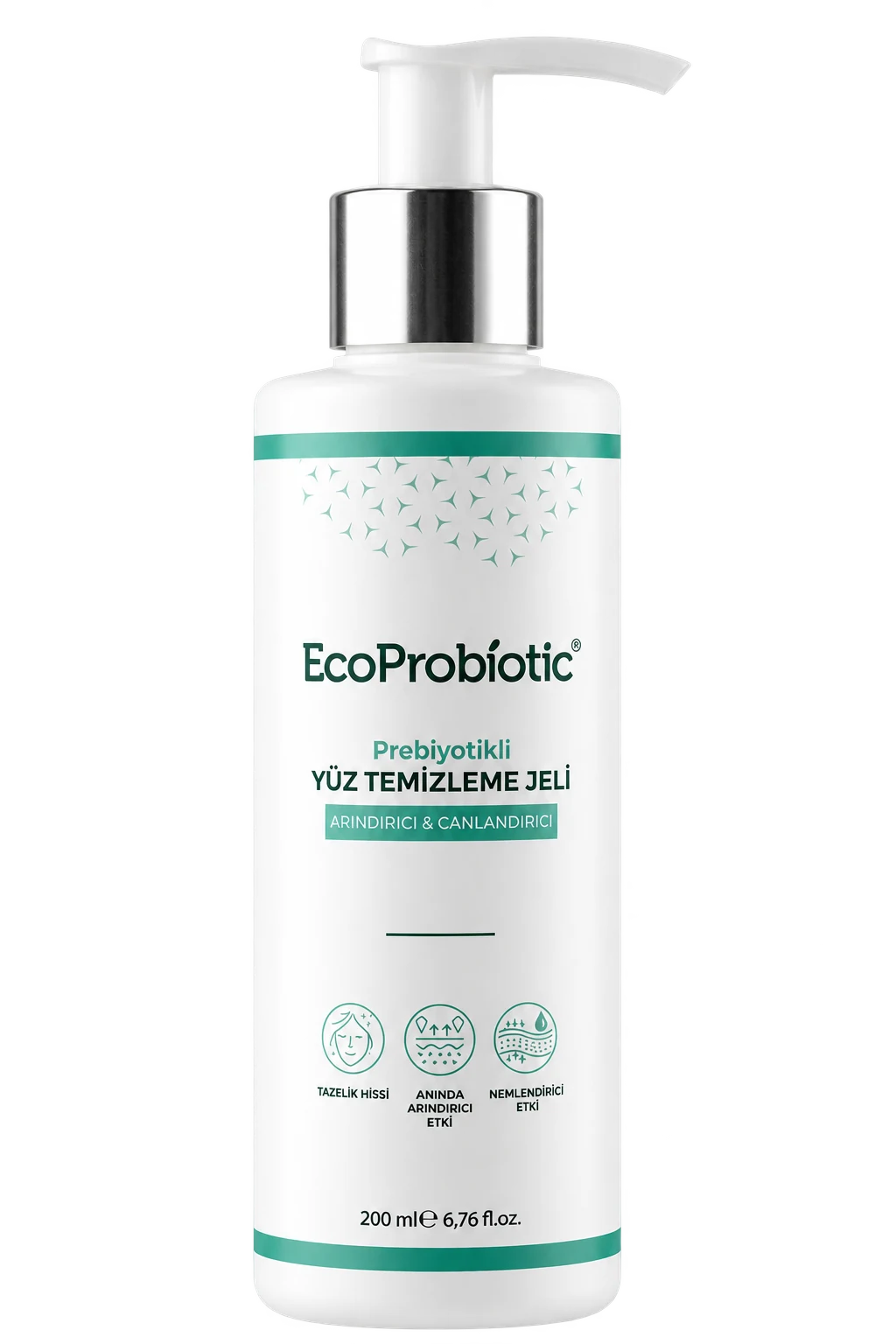 CleansingPrebiotic Face Cleansing GelRemoves make-up and the day’s grime with a gentle foam, supporting the skin barrier as it cleanses. Morning and evening.View ↗
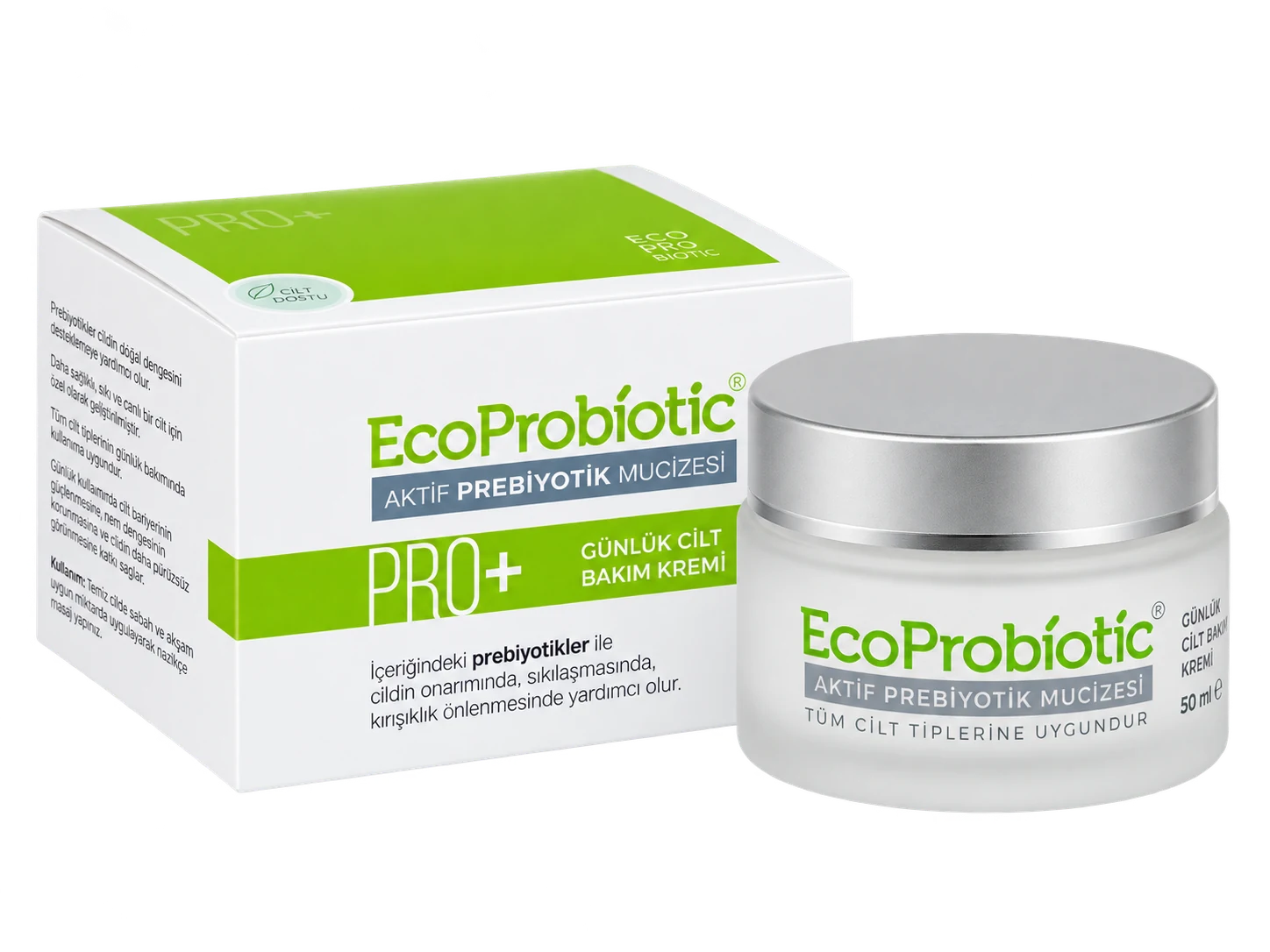 MoisturisingPrebiotic Skin CreamMoisturises the skin and helps repair the barrier. Available in three formulas: for all, dry and oily skin.View ↗
Caution
What to avoid, and when to see a doctor?
Avoid these
- ✕Hot showers, steam rooms, saunas and hot steam on your face
- ✕Products containing alcohol, menthol, camphor, eucalyptus and fragrance
- ✕Gritty scrubs, cleansing brushes and vigorous facial massage
- ✕High-strength acid peels and unsupervised retinoid use
- ✕Applying cortisone cream to your face on your own (it can make rosacea worse)
- ✕Heavy, waterproof makeup that requires rubbing to remove
- ✕Skipping sunscreen, even on cloudy days
- ✕Trying several new products at the same time
See a dermatologist
- →If the redness on your face hasn't gone away for several weeks and is becoming persistent
- →If pimple-like bumps or inflamed spots are appearing
- →If you have dry, stinging or red eyes or blurred vision (you should also see an eye doctor)
- →If you notice thickening or a change in shape of the skin on your nose
- →If you used a cortisone cream on your face for a long time and redness increased when you stopped
- →If the redness comes with other symptoms such as joint pain, fever or extreme sensitivity to the sun
Common misconceptions
Myth or fact?
Myth
Rosacea is a type of acne and clears up with acne products.
Fact
Rosacea and acne are different conditions; rosacea doesn't involve blackheads. Harsh, drying acne products can irritate skin with rosacea and make it worse.
Myth
Rosacea only affects people who drink alcohol.
Fact
Alcohol can trigger flushing in some people, but it isn't the cause of rosacea. Many women who never drink alcohol also have rosacea.
Myth
Rosacea is contagious and caused by poor hygiene.
Fact
Rosacea isn't contagious and has nothing to do with dirt. It's a chronic condition in which immune, vascular, nerve, barrier and microbiome factors all play a role.
Popular searches
Most asked about Rosacea
Your questions
Frequently asked questions
Does rosacea ever go away completely?+
Rosacea is a chronic condition that comes and goes in flare-ups and calm periods. But with the right treatment, avoiding triggers and barrier care, most women can keep their symptoms well under control for long periods.
Can I wear makeup?+
Yes. Fragrance-free, mineral-based products and green-tinted color correctors help cover redness. Removing makeup gently is just as important as the makeup itself.
Which sunscreen should I choose?+
Broad-spectrum, at least SPF 30, fragrance-free formulas, preferably with mineral filters like zinc oxide or titanium dioxide, are usually better tolerated by skin with rosacea.
Is there a link between rosacea and atopic dermatitis?+
They are different conditions, but research has shown that barrier disruption in inflammatory rosacea is surprisingly similar to atopic dermatitis at the molecular level. That's why barrier repair is at the center of care for both.
Are probiotic skincare products suitable for rosacea?+
Fragrance-free, alcohol-free formulas with short ingredient lists are usually well tolerated. Probiotic and prebiotic ingredients may help support microbiome balance and the barrier; still, always try any new product on a small area first.
Does menopause affect rosacea?+
Hot flashes during menopause can increase flushing episodes in some women. If your symptoms change during this time, it helps to review your treatment with your dermatologist.
Is rosacea contagious?+
No. Rosacea isn't contagious and isn't caused by poor hygiene. It's a chronic condition in which immune, vascular and nerve responses and changes in the skin barrier all play a role.
What helps reduce facial redness?+
The first steps are gentle cleansing with lukewarm or cool water, a fragrance-free soothing moisturizer, a mineral sunscreen every day and staying away from your own triggers such as heat, alcohol and spices. If the redness is persistent, your dermatologist may consider creams that temporarily constrict blood vessels or laser treatment.
Does laser treatment work for rosacea?+
Vascular lasers and intense pulsed light (IPL) are among the effective options for visible blood vessels and persistent redness. Several sessions are usually needed; since redness can return over time if triggers aren't controlled, sun protection and gentle care should be continued.
How can you tell rosacea from acne?+
Rosacea doesn't involve blackheads or whiteheads (comedones); its bumps come with redness on the cheeks, flushing episodes and a burning feeling. Comedones, on the other hand, are typical of acne. Telling them apart matters because acne products can irritate skin with rosacea; a dermatologist makes the definitive diagnosis.
Scientific basis
Sources
- 1.Incidence and prevalence of rosacea: a systematic review and meta-analysis
Gether L, Overgaard LK, Egeberg A, Thyssen JP · British Journal of Dermatology · 2018 · doi:10.1111/bjd.16481
A meta-analysis covering 41 populations found that rosacea affects 5.46% of the adult population, occurring in 5.41% of women and 3.90% of men, and is most common between ages 45 and 60.
- 2.Standard classification and pathophysiology of rosacea: The 2017 update by the National Rosacea Society Expert Committee
Gallo RL, Granstein RD, Kang S, ve ark. · Journal of the American Academy of Dermatology · 2018 · doi:10.1016/j.jaad.2017.08.037
Recommended classifying rosacea by the symptoms a person has (phenotype) instead of subtypes and summarized the shared underlying disease processes.
- 3.Standard management options for rosacea: The 2019 update by the National Rosacea Society Expert Committee
Thiboutot D, Anderson R, Cook-Bolden F, ve ark. · Journal of the American Academy of Dermatology · 2020 · doi:10.1016/j.jaad.2020.01.077
Summarized symptom-based treatment options for redness, bumps, blood vessels and eye symptoms, and the importance of daily skincare.
- 4.Increased serine protease activity and cathelicidin promotes skin inflammation in rosacea
Yamasaki K, Di Nardo A, Bardan A, ve ark. · Nature Medicine · 2007 · doi:10.1038/nm1616
Showed that the defense peptide cathelicidin is abnormally high and processed differently in skin with rosacea, triggering inflammation and blood vessel dilation.
- 5.Rosacea Is Characterized by a Profoundly Diminished Skin Barrier
Medgyesi B, Dajnoki Z, Béke G, ve ark. · Journal of Investigative Dermatology · 2020 · doi:10.1016/j.jid.2020.02.025
Found marked disruption of barrier proteins, lipid layers and cell junctions in inflammatory rosacea; the picture resembled atopic dermatitis, and the importance of barrier-repairing treatments was emphasized.
- 6.Rosacea and the Microbiome: A Systematic Review
Daou H, Paradiso M, Hennessy K, Seminario-Vidal L · Dermatology and Therapy · 2021 · doi:10.1007/s13555-020-00460-1
Systematically reviewed the role of the skin and gut microbiome in rosacea and its associations with small intestinal bacterial overgrowth, irritable bowel syndrome and inflammatory bowel diseases.
- 7.Potential role of microorganisms in the pathogenesis of rosacea
Holmes AD · Journal of the American Academy of Dermatology · 2013 · doi:10.1016/j.jaad.2013.08.006
Examined increased mite density and associated microorganisms in rosacea, but emphasized that a mechanism by which a microorganism triggers the disease has not yet been shown.
- 8.The role of topical probiotics in skin conditions: A systematic review of animal and human studies and implications for future therapies
Knackstedt R, Knackstedt T, Gatherwright J · Experimental Dermatology · 2020 · doi:10.1111/exd.14032
Reviewed animal and human studies on topically applied probiotics; reported positive findings in some conditions, including rosacea, and a lack of research in many areas.
- 9.Rosacea
NHS · NHS (UK National Health Service) · 2023
Summarizes rosacea symptoms, common triggers and treatment options in a patient-friendly way.