Definition
What is Skin and hair in menopause?
Menopause, which usually happens between ages 45 and 55, is when estrogen production drops sharply as the ovaries run out of follicles and periods stop permanently. Estrogen isn't only a signal for the reproductive system; it also regulates your skin's collagen production, moisture-holding capacity, oil glands, blood circulation and hair follicles. That's why many women clearly feel the menopause transition in their skin and hair.
When estrogen drops, the skin gets thinner, collagen and elastin decrease, moisture-holding capacity falls and the barrier repairs itself more slowly. The result is the dry skin, itching, more noticeable wrinkles, sagging and new sensitivity to products that never caused problems before that are common in menopause. On the hair side, the number of hairs in the growth phase decreases; hair becomes finer, loses volume and thinning that starts at the crown may become noticeable.
These changes aren't an inevitable 'collapse'. Your skin's needs have changed, and your care needs to be updated accordingly. A simple approach that protects moisture, supports collagen, protects from the sun every day and doesn't irritate can noticeably improve both the comfort and the appearance of menopausal skin.
Check yourself
How do you recognise it?
- ✓Noticeable dryness, tightness and flaking
- ✓Itching, especially on the legs and back
- ✓Thinner skin, easy bruising and slow wound healing
- ✓Deepening wrinkles and sagging facial contours
- ✓Burning, stinging and redness from products you used to tolerate without problems
- ✓Sudden facial flushing with hot flashes
- ✓Adult acne or hair growth around the chin in some women
- ✓Thinning hair, loss of volume and a widening part
- ✓Dryness and itching of the scalp
- ✓Thinning along the front hairline and eyebrows
Why it happens
Main causes
01
Falling estrogen
After menopause, estradiol levels drop to very low levels. When the estrogen receptors in skin cells no longer receive this signal, collagen production, moisture retention and repair capacity decrease.
02
A relative rise in androgens
As estrogen decreases, androgens fall more slowly, so the balance between them shifts. In some women, this can show up as hair growth around the chin, adult acne and thinning hair at the crown.
03
Accumulated sun damage
When sun damage built up over the years combines with hormonal changes, dark spots, wrinkles and loss of elasticity become visible more quickly.
04
Reduced oil production
Oil gland activity drops; the skin's natural protective oil layer gets thinner and dryness increases.
05
Sleep and hot flashes
Night sweats and sleep problems can disrupt your skin's overnight repair process, and frequent flushing can increase sensitivity.
06
Accompanying conditions
Thyroid disorders, iron deficiency and certain medications can also increase dry skin and hair loss during menopause. That's why underlying causes should also be investigated when noticeable new changes appear.
In daily life
Triggers that cause flare-ups
Medical approach
Treatment options
01
Menopausal hormone therapy
Studies have shown that hormone therapy has positive effects on skin collagen and thickness. However, this treatment is planned by your OB-GYN for overall menopause symptoms, not for your skin, based on a personal assessment of risks and benefits.
02
Topical retinoids
Retinoids used on your dermatologist's advice support collagen production and reduce fine lines. Because skin is more sensitive in menopause, it's important to start with a low strength, use them infrequently at first and pair them with a moisturizer.
03
Barrier-repairing moisturizers
Creams containing ceramides, cholesterol and fatty acids, humectants such as glycerin and hyaluronic acid, and urea are the foundation of treatment for dry, itchy menopausal skin. If the itching is intense, your dermatologist may recommend additional creams for a short time.
04
Aesthetic and clinical treatments
Collagen-stimulating lasers, radiofrequency, microneedling and fillers can support your skin's texture and volume after your dermatologist's assessment. Since healing can take longer in more sensitive skin, treatment intervals are planned accordingly.
05
Thinning hair
For female pattern hair loss, dermatologists usually start with topical minoxidil; other medications can be added when needed. Checking iron, vitamin D, thyroid and other blood levels is part of the treatment.
06
Redness and a rosacea-like picture
In menopause, persistent facial redness can develop along with hot flashes. If your dermatologist diagnoses rosacea, suitable topical treatments and vascular lasers may be considered.
Did you know? · Skin and hair in menopause
1–2% · In postmenopausal women, skin collagen content and skin thickness were measured to decrease by 1-2% per year from menopause onward.
Step by step
Care routine for Skin and hair in menopause
- 1
Water only or a creamy cleanser
If your skin is very dry in the morning, just rinsing with lukewarm water may be enough; if you use a cleanser, make it creamy and soap-free.
- 2
Antioxidant serum
A vitamin C or niacinamide serum supports your skin against oxidative stress; start with a low strength if your skin is sensitive.
- 3
Hydration layer
Apply a hyaluronic acid or glycerin serum to damp skin.
- 4
Barrier cream
Apply a rich cream containing ceramides and prebiotics; don't forget your neck and décolletage.
- 5
Sunscreen
Apply a broad-spectrum sunscreen every day to your face, neck, décolletage and the backs of your hands.
Care you can use in your routine
EcoProbiotic care range ↗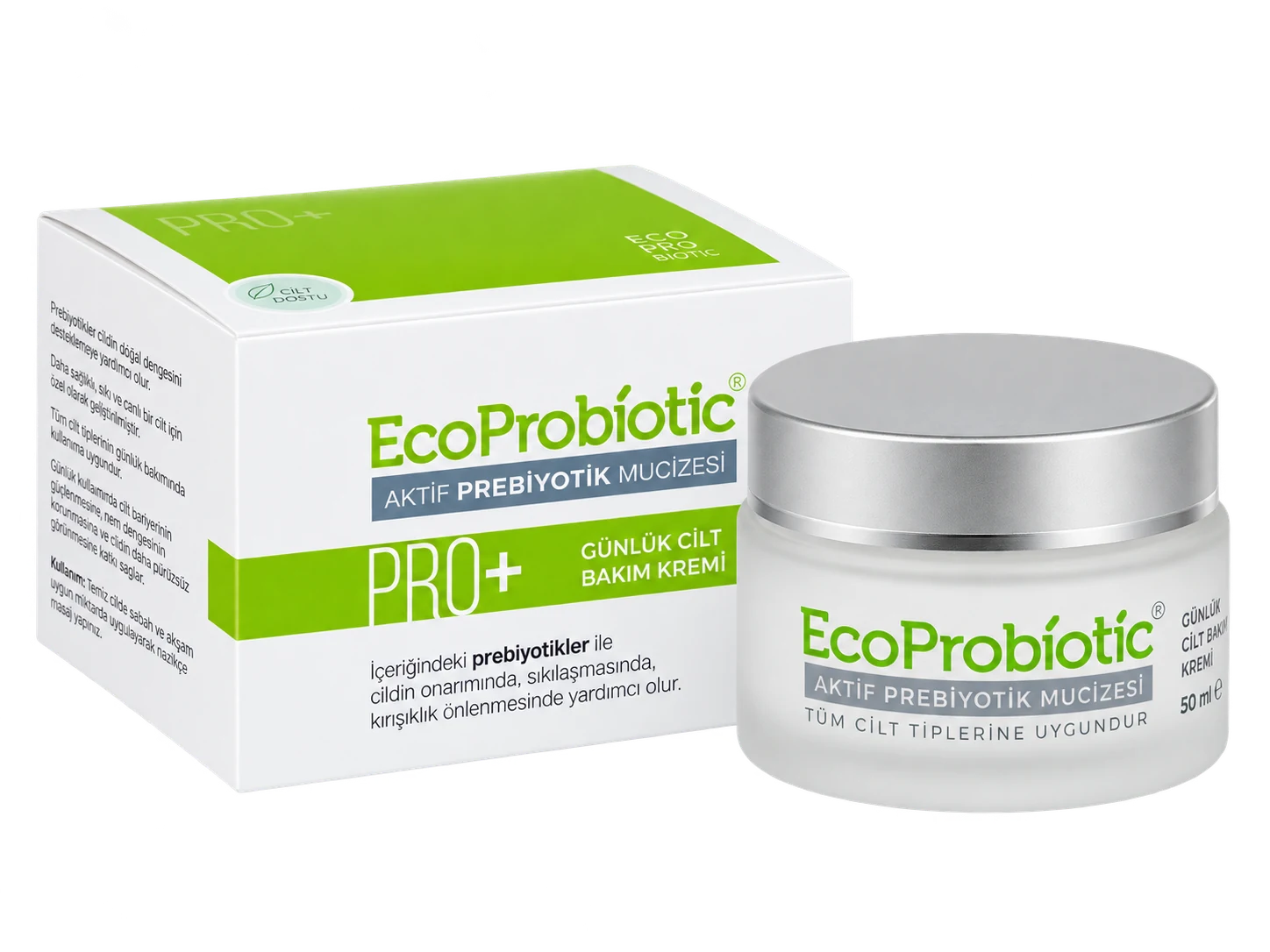 MoisturisingPrebiotic Skin CreamMoisturises the skin and helps repair the barrier. Available in three formulas: for all, dry and oily skin.View ↗
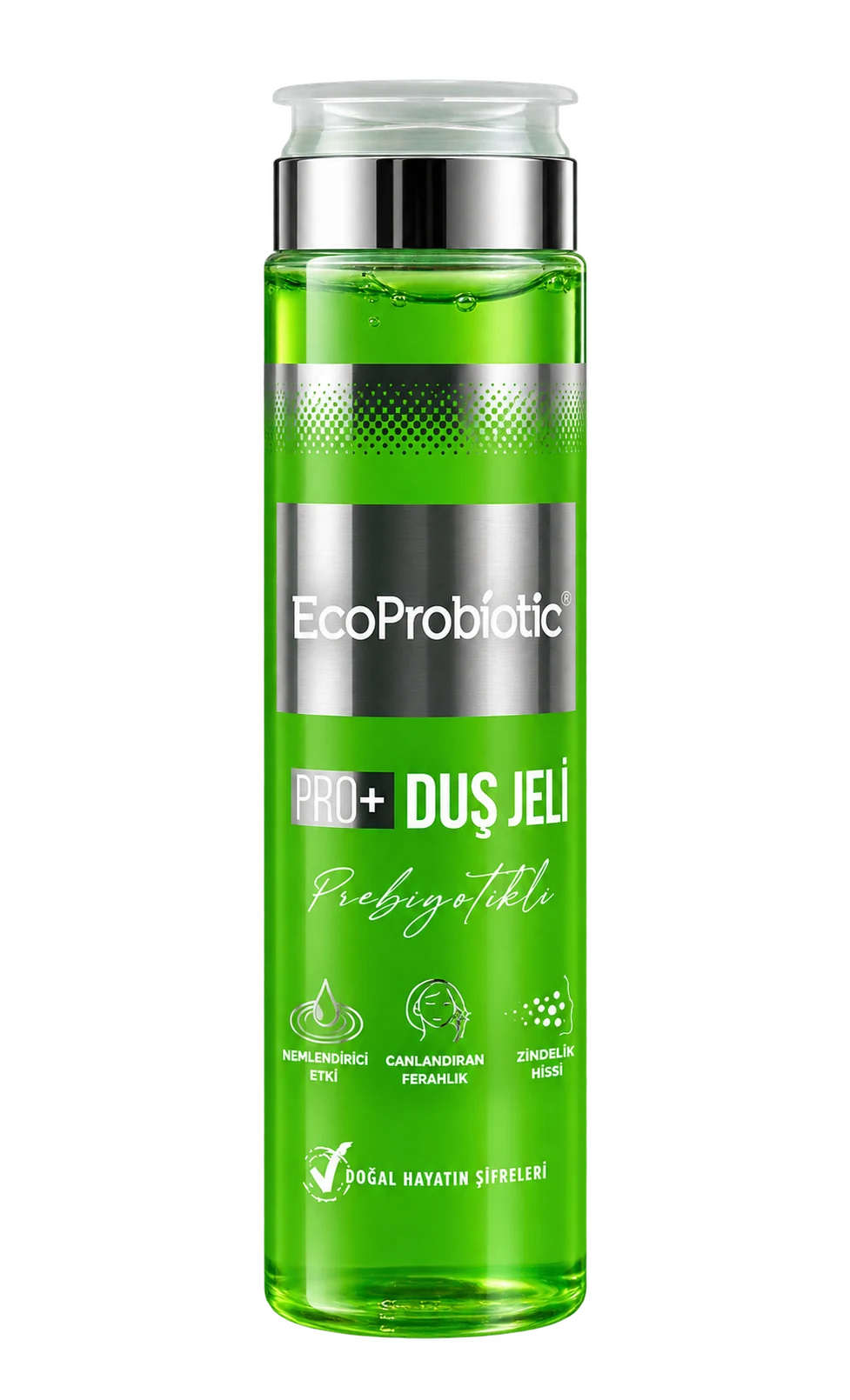 BodyPrebiotic Shower GelMoisturises the skin as it cleanses and supports the barrier; a fresh feeling all day.View ↗
 ScalpPrebiotic ShampooGently cleanses your scalp and supports its barrier; you can use it every day.View ↗
Caution
What to avoid, and when to see a doctor?
Avoid these
- ✕Foamy, sulfate-based and alkaline cleansers
- ✕Alcohol-based toners
- ✕Long, hot showers
- ✕More than one strong active at the same time (retinoid + high-strength acid)
- ✕Using sunscreen only in summer
- ✕Smoking
- ✕Styling your hair with a very hot blow dryer and curling iron instead of on a gentle setting
- ✕Hormone-containing creams or supplements without consulting a doctor
See a dermatologist
- →If dryness and itching are severe enough to disturb your sleep despite moisturizer
- →If hair loss has increased quickly or noticeably thin areas have formed
- →If you've noticed a clear receding of your front hairline and eyebrows
- →If you have persistent facial redness, visible blood vessels or pimple-like bumps
- →If you have a new or changing mole or a wound that won't heal
- →If menopause symptoms are lowering your quality of life and you want to talk about hormone therapy
Common misconceptions
Myth or fact?
Myth
After menopause, nothing you do for your skin makes a difference.
Fact
Skin responds at every age. Retinoids, sun protection, barrier-repairing moisturizers and clinical treatments have been shown to support collagen and appearance in postmenopausal skin too.
Myth
I can fix dry skin by drinking more water.
Fact
Drinking enough water matters, but it doesn't solve dry skin on its own. Menopausal dryness comes from a decrease in barrier lipids and moisture-holding components, so barrier support from the outside is essential.
Myth
Hair loss in menopause is definitely permanent.
Fact
Female pattern hair loss can be progressive, but it can be slowed with treatment and some hair can be regained. Correctable causes such as iron deficiency or thyroid problems are also commonly found.
Popular searches
Most asked about Skin and hair in menopause
Your questions
Frequently asked questions
I don't understand why my skin suddenly became sensitive in menopause.+
When estrogen drops, barrier lipids decrease, the skin gets thinner and repair slows down. That's why even products you used without problems before can burn and sting. Simplifying your routine and focusing on barrier repair usually makes a difference within a few weeks.
Will hormone therapy make my skin look younger?+
Studies show that hormone therapy can have a positive effect on skin collagen and thickness. However, this treatment is recommended by your OB-GYN for overall menopause symptoms, not for your skin, after assessing your personal risks.
Can I use retinol during menopause?+
Yes, it's one of the most researched ingredients for supporting collagen. For sensitive skin, starting with a low strength a few nights a week and using it with a moisturizer reduces irritation.
Do phytoestrogen creams work?+
Reviews report that some plant-derived, estrogen-like compounds have shown positive results in laboratory and clinical studies on estrogen-deficient skin. However, the evidence is limited; think of these products as a complement to your basic care, not a replacement.
How can I slow down my hair thinning?+
First, get your blood levels checked. After that, the treatment your dermatologist recommends, gentle hair care, enough protein and iron, and cutting back on heat and chemical treatments work best together.
Will taking probiotics during menopause help my skin?+
Research shows that the gut and skin microbiome play a role in the aging process. A diet and skincare that include probiotics and prebiotics can help support microbiome balance; however, clinical evidence in this area is still developing.
Does menopause cause itchy skin, and how do I stop it?+
Yes, it's common: as estrogen drops, the skin dries out and itching starts, especially on the legs and back. Short lukewarm showers, a soap-free cleanser, a urea or ceramide moisturizer right after showering and a room humidifier in dry air bring relief for most women. If itching disturbs your sleep despite moisturizing, see your doctor to check for other causes such as thyroid problems or iron deficiency.
Can menopause cause acne on the face?+
It can. As estrogen decreases, the relative effect of androgens increases, so some women get adult acne and hair growth around the chin. Gentle cleansing, a non-comedogenic moisturizer and the treatments your dermatologist recommends are preferred over drying products; if you have bumps along with facial redness, you should also be evaluated for rosacea.
Should I take collagen during menopause?+
Some studies report positive results from collagen supplements on skin hydration and elasticity, but the evidence is mixed and supplements don't replace basic care. The best-supported ways to support collagen in menopause are daily sun protection, retinoids and, if appropriate, hormone therapy discussed with your OB-GYN. Talk to your doctor about your current medications before starting a supplement.
Why does my face get red during menopause?+
During hot flashes, the blood vessels in your face widen and you flush suddenly; if it happens often, some women develop persistent redness and a rosacea-like picture. Alcohol, spicy foods and hot environments can increase flushing. If you have persistent redness or bumps, your dermatologist may recommend suitable creams or vascular lasers.
Scientific basis
Sources
- 1.A study of the decrease of skin collagen content, skin thickness, and bone mass in the postmenopausal woman.
Brincat M, Kabalan S, Studd JW, Moniz CF, de Trafford J, Montgomery J · Obstet Gynecol · 1987
Showed that postmenopausal skin collagen content, skin thickness and bone mass decrease similarly, by 1-2% per year after menopause.
- 2.Long-term effects of the menopause and sex hormones on skin thickness.
Brincat M, Moniz CJ, Studd JW, Darby A, et al. · Br J Obstet Gynaecol · 1985 · doi:10.1111/j.1471-0528.1985.tb01091.x
Found that in untreated women, skin collagen decreases in relation to the time since menopause, not chronological age.
- 3.Estrogens and aging skin.
Thornton MJ · Dermatoendocrinol · 2013 · doi:10.4161/derm.23872
Reviewed how estrogen deficiency thins the skin, reduces collagen and elasticity, increases dryness and wrinkles, and weakens defenses against oxidative stress.
- 4.Menopause and the Skin: Old Favorites and New Innovations in Cosmeceuticals for Estrogen-Deficient Skin.
Lephart ED, Naftolin F · Dermatol Ther (Heidelb) · 2021 · doi:10.1007/s13555-020-00468-7
Reviewed how estrogen deficiency impairs collagen, elastin and barrier function, and noted that cosmetic ingredients with selective estrogen receptor modulator activity are promising.
- 5.Menopause, skin and common dermatoses. Part 1: hair disorders.
Kamp E, Ashraf M, Musbahi E, DeGiovanni C · Clin Exp Dermatol · 2022 · doi:10.1111/ced.15327
Reported that the proportion of hairs in the growth phase decreases after menopause, and that female pattern hair loss and frontal fibrosing alopecia are associated with perimenopause and menopause.
- 6.Menopause, skin and common dermatoses. Part 2: skin disorders.
Kamp E, Ashraf M, Musbahi E, DeGiovanni C · Clin Exp Dermatol · 2022 · doi:10.1111/ced.15308
Reviewed how estrogen plays a role in water loss from the skin and in dermal collagen, and how menopause is associated with dryness, itching, hidradenitis and psoriasis.
- 7.Aging-related changes in the diversity of women's skin microbiomes associated with oral bacteria.
Shibagaki N, Suda W, Clavaud C, Bastien P, et al. · Sci Rep · 2017 · doi:10.1038/s41598-017-10834-9
Comparing women aged 21-37 and 60-76, showed that the diversity and makeup of the skin microbiome change markedly with age.
- 8.Microbiome and Human Aging: Probiotic and Prebiotic Potentials in Longevity, Skin Health and Cellular Senescence.
Boyajian JL, Ghebretatios M, Schaly S, Islam P, Prakash S · Nutrients · 2021 · doi:10.3390/nu13124550
Reviewed how the gut microbiota may influence cellular aging via the gut-skin axis, and how probiotics and prebiotics are promising options in this process.
- 9.Female Pattern Hair Loss and Androgen Excess: A Report From the Multidisciplinary Androgen Excess and PCOS Committee.
Carmina E, Azziz R, Bergfeld W, Escobar-Morreale HF, et al. · J Clin Endocrinol Metab · 2019 · doi:10.1210/jc.2018-02548
Reported that evaluation of female pattern hair loss is primarily clinical and recommended measuring iron, vitamin D, zinc, thyroid and prolactin levels.