Definition
What is Skin during pregnancy and after birth?
Pregnancy is the time when a woman's body changes the fastest and most intensely, and the skin is the most visible mirror of that change. Rising estrogen, progesterone and melanocyte-stimulating hormones, expanding blood volume and a rapidly growing belly affect your skin's color, texture, oil balance and elasticity. Darkening nipples, a dark line down the middle of the belly (linea nigra), patchy darkening on the face (the pregnancy mask), pregnancy acne and stretch marks are the best-known physiological changes of this period.
The vast majority of these changes are harmless and fade on their own in the months after giving birth. However, some situations need closer monitoring. Severe itching that starts on the palms and soles, especially in the third trimester, can be a sign of a liver condition called intrahepatic cholestasis of pregnancy, which matters for your baby's health. That's why you shouldn't brush it off by telling yourself 'itching is normal in pregnancy'.
The golden rule of skincare during pregnancy is 'less, but safer'. Some active ingredients, retinoids above all, must be stopped, and safe alternatives should be chosen for others. In the postpartum period, as hormones drop quickly, new changes such as hair loss, dryness and acne returning can appear. This page covers both periods step by step.
Check yourself
How do you recognise it?
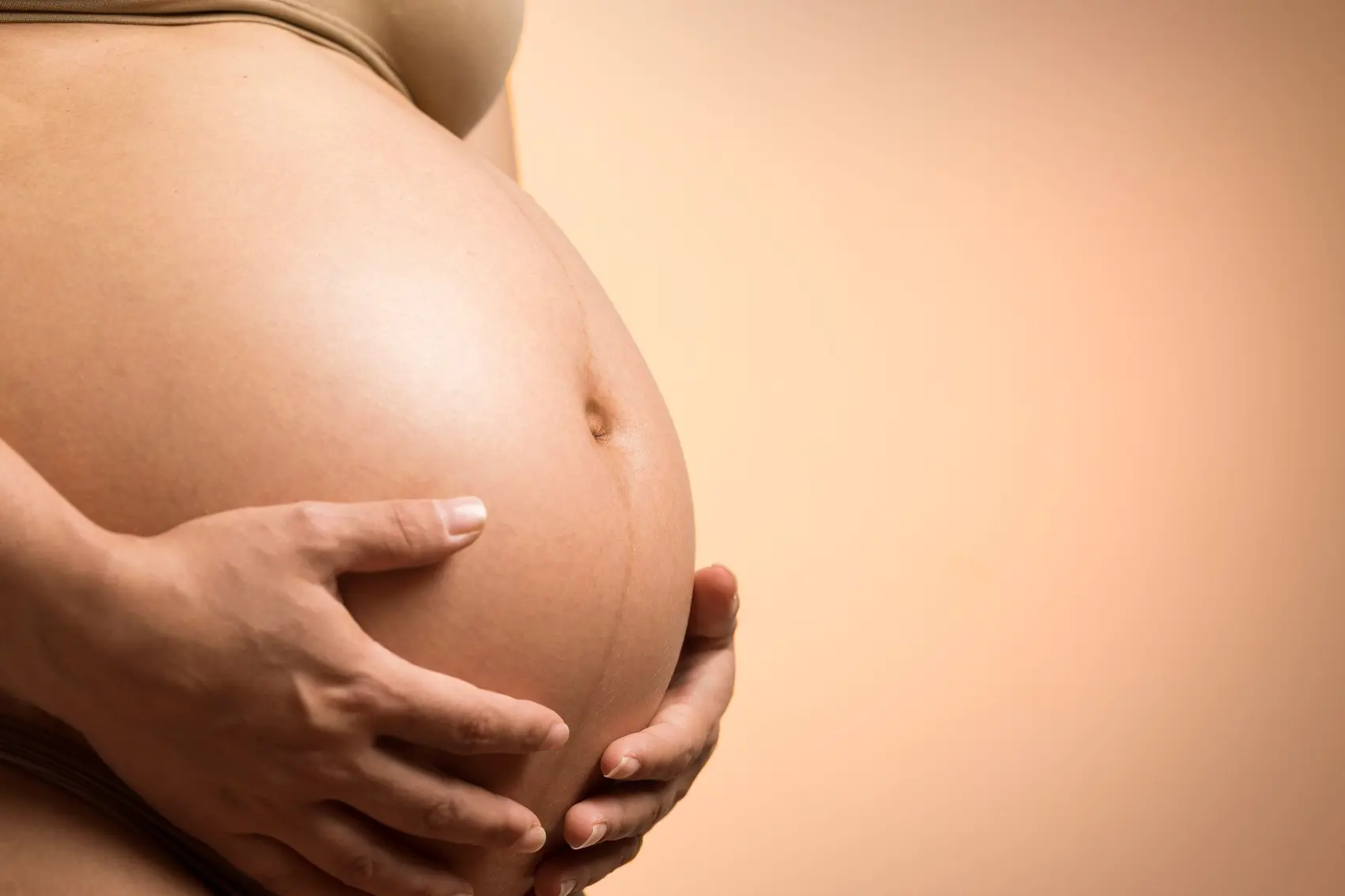
- ✓Lines on the belly, breasts, hips and thighs that start pink-purple and lighten over time (stretch marks)
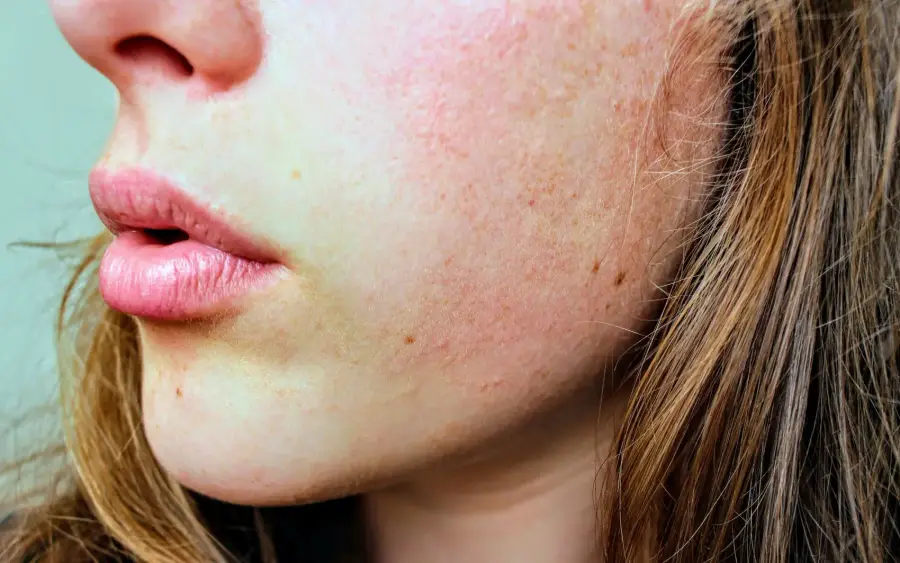
- ✓Brown patches on the forehead, cheeks and upper lip (pregnancy mask, melasma)
- ✓A dark line down the middle of the belly and darkening of the nipples and underarms
- ✓Increased oiliness and breakouts, especially in the first trimester
- ✓A feeling of tightness and itching on the skin of the belly
- ✓Itchy red bumps that start within stretch marks or on the belly
- ✓Severe itching on the palms and soles that gets worse especially at night
- ✓Redness on the palms and small spider veins on the skin
- ✓Heavy hair shedding that becomes noticeable 2-4 months after giving birth
- ✓Postpartum dryness and sensitivity
Why it happens
Main causes
01
Rising hormones
Increased levels of estrogen, progesterone and melanocyte-stimulating hormone are the main cause of many changes, from pigmentation to oiliness.
02
Mechanical stretching
The rapid growth of the belly, breasts and hips strains the skin's connective tissue. Pregnancy at a young age, a family history of stretch marks, excess weight gain before and during pregnancy and a high birth weight have been reported as the most important risk factors for stretch marks.
03
Genetic predisposition
If your mother got stretch marks during pregnancy, you're more likely to get them too. Melasma also runs in families and is more common in darker skin types.
04
Sun and light
Sunlight and visible light stimulate pigment cells already sensitized by hormones and make the pregnancy mask more noticeable.
05
Changes in the immune system
During pregnancy, the immune system shifts into a different balance. In women with an atopic tendency, this can set the stage for eczema flare-ups and, rarely, for pregnancy-specific rashes.
06
The liver and bile flow
In intrahepatic cholestasis of pregnancy, hormones slow down bile flow and bile acids rise in the blood. It shows up as severe itching without a rash and requires medical follow-up.
In daily life
Triggers that cause flare-ups
Medical approach
Treatment options
01
What you must stop during pregnancy
Oral retinoids must never be used during pregnancy or while planning a pregnancy because of the risk of birth defects. For topical retinoids (tretinoin, adapalene, tazarotene and concentrated retinol products), the general recommendation is also to stop them throughout pregnancy. Hydroquinone isn't recommended during pregnancy because its systemic absorption is relatively high. Oral tetracycline-class antibiotics also aren't used because they can affect the development of the baby's teeth and bones.
02
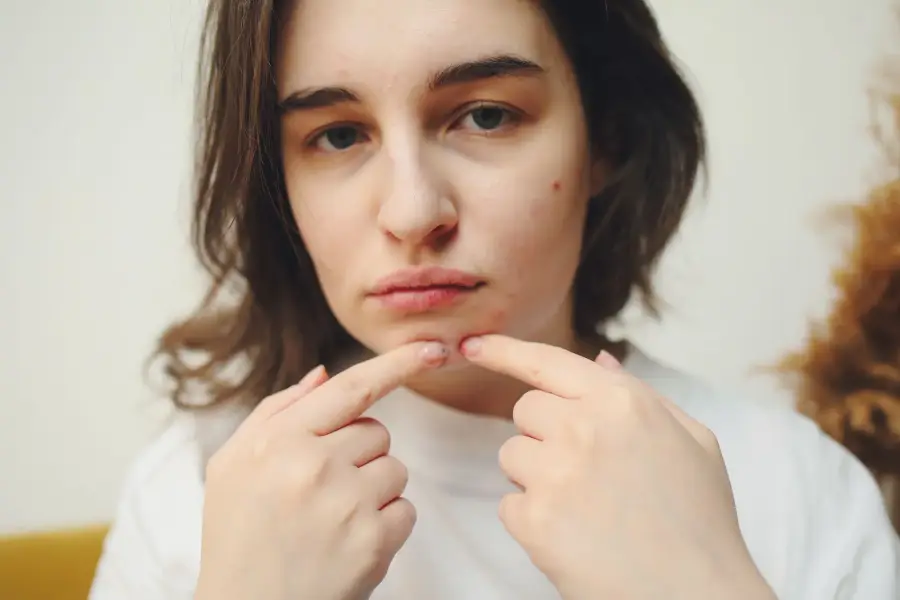
Pregnancy acne
Evidence-based reviews recommend topical azelaic acid or benzoyl peroxide as the main acne treatment during pregnancy. For inflammatory acne, some topical antibiotics can be added after evaluation by your OB-GYN and dermatologist; in severe cases, short-term oral treatments considered safe in pregnancy may be considered.
03
Pregnancy mask (melasma)
The main approach during pregnancy is strict sun protection. Azelaic acid and some mild brightening ingredients can be used on your doctor's advice. For many women, the patches lighten in the months after giving birth; stronger treatments for lasting patches can be planned for after breastfeeding.
04
Stretch marks
A Cochrane review found no high-quality evidence that topical products prevent stretch marks during pregnancy. Still, keeping your skin moisturized and massaging regularly improves comfort by reducing itching and tightness. After giving birth and breastfeeding, your dermatologist may consider options such as retinoid creams and fractional laser; reviews report that laser provides 50-75% improvement in stretch marks.
05
Itching and rashes
Mild itching often eases with rich moisturizing and lukewarm showers. For itchy rashes, your OB-GYN and dermatologist may recommend creams that are suitable during pregnancy. For severe itching without a rash, a blood test is done to check for intrahepatic cholestasis of pregnancy; if it's diagnosed, follow-up and treatment are planned by your OB-GYN.
06
Postpartum hair loss
The heavy shedding seen after giving birth is usually temporary and returns to normal within 6-12 months. If shedding lasts longer than that, a blood test for iron deficiency and thyroid problems is recommended.
Did you know? · Skin during pregnancy and after birth
50–90% · According to a Cochrane review, pregnancy stretch marks occur in 50% to 90% of pregnant women.
Step by step
Care routine for Skin during pregnancy and after birth
- 1
Lukewarm, gentle cleansing
Wash your face with a fragrance-free, soap-free, low-pH cleanser.
- 2
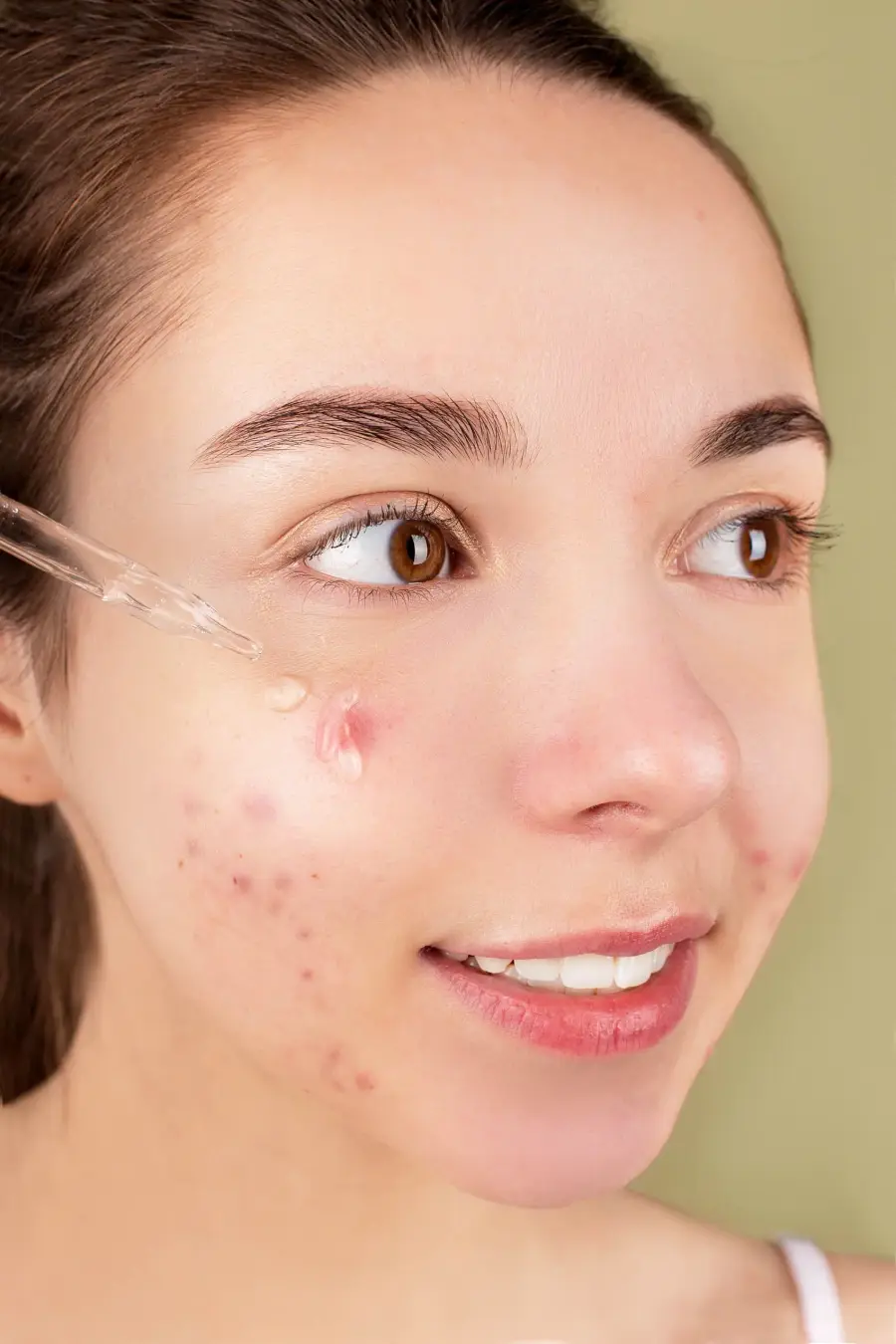
Pregnancy-friendly serum
Niacinamide or azelaic acid (on your doctor's advice) are considered safe options for skin prone to dark spots and acne.
- 3
Prebiotic moisturizer
Use a simple moisturizer containing ceramides, glycerin and prebiotics.
- 4
Mineral sunscreen
Choose a broad-spectrum sunscreen with zinc oxide or titanium dioxide, preferably tinted; tinted formulas also give extra protection against visible light. Don't skip the hat.
- 5
Belly and breast care
After your shower, apply a rich moisturizer or oil to your belly, breasts, hips and thighs and massage gently.
Caution
What to avoid, and when to see a doctor?
Avoid these
- ✕Oral and topical retinoids (tretinoin, adapalene, tazarotene, concentrated retinol)
- ✕Dark spot creams containing hydroquinone
- ✕Oral tetracycline-class antibiotics
- ✕High-strength salicylic acid peels without your doctor's approval
- ✕Unprotected sun exposure and tanning beds
- ✕Very hot showers, saunas and steam baths (hammams)
- ✕Herbal oil and essential oil blends sold as 'natural' without reading the label
- ✕Waiting it out because you assume severe itching on your palms and soles is 'normal'
See a dermatologist
- →If you have severe itching without a rash that starts on the palms and soles and gets worse especially at night (this should be evaluated right away for intrahepatic cholestasis of pregnancy)
- →If you have an itchy rash that starts around the belly button and turns into fluid-filled blisters
- →If you have itchy bumps that start within your stretch marks, spread and disturb your sleep
- →If a mole is growing quickly or changing color or shape
- →If you develop severe acne that leaves marks
- →If postpartum hair loss lasts more than a year or noticeable bald patches form
Common misconceptions
Myth or fact?
Myth
If I use the right cream, I won't get any stretch marks.
Fact
A Cochrane review found no high-quality evidence that any topical product prevents stretch marks. Genetics and how fast the skin stretches are what decide it. Moisturizing improves comfort and reduces itching; if you do get stretch marks, it isn't your fault.
Myth
You can't use any skincare products during pregnancy.
Fact
Most products act locally and very little reaches the bloodstream. Apart from exceptions such as hydroquinone and retinoids, you can comfortably care for your skin during pregnancy with well-chosen products.
Myth
Itching in pregnancy always comes from the skin stretching.
Fact
It usually does; however, severe itching without a rash that starts on the palms and soles can be a sign of intrahepatic cholestasis of pregnancy and must be evaluated with a blood test.
Popular searches
Most asked about Skin during pregnancy and after birth
Your questions
Frequently asked questions
Does the pregnancy mask go away after giving birth?+
For many women, the patches lighten noticeably in the months after giving birth. For lasting patches, your dermatologist may recommend stronger treatments once breastfeeding is over. Throughout this process, sun protection is the most effective step.
Which sunscreen should I choose during pregnancy?+
Mineral sunscreens containing zinc oxide or titanium dioxide are often preferred because they stay on the skin, reflect light and are better tolerated by sensitive skin. Tinted formulas also give extra protection against visible light, which is an advantage if you're prone to pigmentation.
Can I use retinol while breastfeeding?+
Caution with retinoids is also recommended during breastfeeding. The safest approach is to decide which products are suitable during this time together with your dermatologist and pediatrician.
When will my postpartum hair loss stop?+
Shedding that starts 2-4 months after giving birth usually eases on its own within 6-12 months. A gentle shampoo, not pulling your hair back tightly and a balanced diet make this period easier.
What can I use for acne during pregnancy?+
Reviews recommend azelaic acid and benzoyl peroxide as the main treatment. Retinoids and oral tetracycline-class medications aren't used. Let your OB-GYN and dermatologist plan your treatment together.
Can I take a probiotic supplement?+
According to current data, probiotics rarely pass into the bloodstream in healthy people, and studies in pregnancy haven't reported an increase in adverse outcomes for the baby. Still, choose which product to use after talking with your OB-GYN.
Is retinol safe during pregnancy?+
The general answer is no: oral retinoids must never be used, and topical retinoids, including concentrated retinol products, are also recommended to be stopped throughout pregnancy. Options such as niacinamide and, on your doctor's advice, azelaic acid can be considered instead. If you used it before finding out you were pregnant, stop the product and tell your OB-GYN.
Is itching normal during pregnancy?+
Mild itching from the belly skin stretching and from dryness is common and usually eases with rich moisturizing and lukewarm showers. However, severe itching without a rash, especially if it starts on the palms and soles and gets worse at night, can be a sign of intrahepatic cholestasis of pregnancy. In that case, contact your doctor without delay.
What helps with stretch marks during pregnancy?+
No cream has been shown with high-quality evidence to prevent stretch marks; genetics and how fast the skin stretches are what decide it. Still, moisturizing regularly and gentle massage reduce tightness and itching, and balanced weight gain helps lower the risk. Stretch marks that do form lighten over time; after giving birth and breastfeeding, your dermatologist may consider options such as laser.
Can I get facials during pregnancy?+
Gentle treatments focused on cleansing and hydration usually don't cause problems; however, chemical peels, products containing retinoids or hydroquinone and intensive device treatments aren't preferred during this time. Always tell your provider that you're pregnant and ask about the products they'll use. It's safest to leave any procedure you're unsure about until after giving birth.
Scientific basis
Sources
- 1.Topical preparations for preventing stretch marks in pregnancy.
Brennan M, Young G, Devane D · Cochrane Database Syst Rev · 2012 · doi:10.1002/14651858.CD000066.pub2
Noted that pregnancy stretch marks occur in 50-90% of women; across 6 studies including 800 women, no high-quality evidence was found that topical products prevent stretch marks.
- 2.Physiologic changes of pregnancy: A review of the literature.
Motosko CC, Bieber AK, Pomeranz MK, Stein JA, Martires KJ · Int J Womens Dermatol · 2017 · doi:10.1016/j.ijwd.2017.09.003
Reviewed physiological skin changes in pregnancy such as pigmentation, melasma, stretch marks and telogen hair shedding.
- 3.Physiological skin changes during pregnancy.
Tyler KH · Clin Obstet Gynecol · 2015 · doi:10.1097/GRF.0000000000000077
Emphasized that most physiological skin changes in pregnancy regress on their own after birth and that reassurance and monitoring are sufficient in most cases.
- 4.Striae gravidarum: Risk factors, prevention, and management.
Farahnik B, Park K, Kroumpouzos G, Murase J · Int J Womens Dermatol · 2017 · doi:10.1016/j.ijwd.2016.11.001
Young age, family history, weight and the baby's birth weight were found to be the most important risk factors; fractional lasers were reported to provide 50-75% improvement in stretch marks.
- 5.The specific dermatoses of pregnancy revisited and reclassified: results of a retrospective two-center study on 505 pregnant patients.
Ambros-Rudolph CM, Müllegger RR, Vaughan-Jones SA, Kerl H, Black MM · J Am Acad Dermatol · 2006 · doi:10.1016/j.jaad.2005.12.012
Among 505 pregnant women, 49.7% of itchy rashes were atopic eruption of pregnancy, 21.6% were polymorphic eruption of pregnancy and 3% were intrahepatic cholestasis of pregnancy.
- 6.Safety of skin care products during pregnancy.
Bozzo P, Chua-Gocheco A, Einarson A · Can Fam Physician · 2011
Reported that, apart from hydroquinone, which has relatively high systemic absorption, and tretinoin, whose evidence is debated, most skincare products act locally and very little reaches the bloodstream.
- 7.Treatment of Acne in Pregnancy.
Chien AL, Qi J, Rainer B, Sachs DL, Helfrich YR · J Am Board Fam Med · 2016 · doi:10.3122/jabfm.2016.02.150165
Recommended topical azelaic acid or benzoyl peroxide as the main acne treatment in pregnancy; emphasized that oral retinoids are teratogenic and strictly contraindicated.
- 8.Are probiotics safe for use during pregnancy and lactation?
Elias J, Bozzo P, Einarson A · Can Fam Physician · 2011
Stated that probiotics are rarely absorbed systemically in healthy people, that third-trimester studies showed no increase in adverse fetal outcomes, and that passage into breast milk is unlikely.
- 9.Impact of prebiotics and probiotics on skin health.
Al-Ghazzewi FH, Tester RF · Benef Microbes · 2014 · doi:10.3920/BM2013.0040
Discussed the potential of prebiotics and probiotics to support skin health by regulating the skin microbiota.