Definition
What is Premature aging?
Skin aging has two sides. Intrinsic (chronological) aging is about genetics and time; slower collagen production, thinner skin and volume loss are natural parts of this process. Extrinsic aging is the sum of the marks left on your skin by outside factors such as sun, air pollution, smoking, diet, stress and sleep. What we call 'premature aging' is usually these outside factors getting ahead of the calendar.
Scientists call the full set of these outside factors the 'skin aging exposome'. The sun comes first: UV rays activate enzymes that break down collagen, damage elastic fibers and stimulate pigment cells. Fine particles from traffic have also been shown to be linked to more dark spots, especially on the face. Smoking suppresses collagen production and speeds up its breakdown.
In recent years, an important concept has been added to this picture: 'inflammaging', the chronic, silent, low-grade inflammation that increases with age. This constant inflammatory state fuels both intrinsic and extrinsic aging. That's why preventing premature aging isn't just about wrinkle creams: when daily sun protection, proven ingredients such as retinoids, avoiding smoking, regular sleep and a balanced diet are addressed together, skin aging can slow down noticeably.
Check yourself
How do you recognise it?
- ✓Fine lines on the forehead, around the eyes and around the mouth that become noticeable at a young age
- ✓Deepening expression lines and wrinkles that don't disappear even at rest
- ✓Skin losing elasticity and bouncing back slowly when pinched
- ✓Sun spots on the face, neck, décolletage and backs of the hands
- ✓Uneven skin tone and a dull, lackluster look
- ✓Pores looking larger and a rough texture
- ✓Tiny broken capillaries around the cheeks and nose
- ✓Reddish-brown discoloration and lines on the neck and décolletage
- ✓Skin drying out and getting irritated easily
- ✓Facial contours, especially the jawline, becoming less defined
Why it happens
Main causes
01
Sun (photoaging)
UV rays are responsible for the largest share of visible signs of aging. Pigment changes are especially strongly linked to sun exposure, while wrinkles are affected by both the sun and time.
02
Air pollution
A study of 400 women aged 70 to 80 found that an increase in traffic-related particles was associated with about 20% more pigment spots on the forehead and cheeks.
03
Smoking
Tobacco smoke disrupts collagen production and increases the enzymes that break down collagen and elastic fibers. Epidemiological studies point to smoking as an important environmental cause of premature skin aging.
04
Chronic inflammation and metabolic health
'Metaflammation', caused by overeating and metabolic disorders, shares the same mechanisms as inflammaging. High sugar intake can also speed up the processes that stiffen collagen fibers.
05
Sleep and stress
Chronic stress and not enough sleep disrupt the skin's repair processes, increase inflammation and contribute to a tired, lined look on the face.
06
Hormonal change
Falling estrogen, especially during the menopause transition, speeds up collagen loss and makes the skin drier and thinner.
07
Genetics
Genetics affect your skin type, collagen quality and how fast you age. However, research shows that most visible aging comes from environmental factors, not genetics.
In daily life
Triggers that cause flare-ups
Medical approach
Treatment options
01
Daily sun protection
In a randomized study of 903 adults, those who used a broad-spectrum sunscreen every day showed no detectable increase in skin aging after 4.5 years; aging was 24% lower than in those who used it occasionally. This is the foundation of anti-aging care.
02
Topical retinoids
Retinoids are the most researched group of ingredients for clinical effectiveness in photoaging. Prescription tretinoin is the strongest option; retinol and retinaldehyde are less irritating. On your dermatologist's advice, you start with a low strength; they aren't used during pregnancy.
03
Antioxidants
Antioxidants such as vitamin C, vitamin E, ferulic acid and niacinamide support your skin against oxidative stress and complement the effect of sunscreen.
04
Chemical peels and laser
Depending on your skin type, your dermatologist may recommend chemical peels, fractional laser, light treatments or microneedling. These treatments can improve texture and dark spots by starting a controlled renewal process.
05
Injectables and volume treatments
Muscle-relaxing injections for expression lines, fillers for volume loss and collagen-stimulating treatments may be considered after evaluation by a dermatologist or plastic surgeon.
06
Lifestyle
Quitting smoking, regular sleep, regular movement and a diet rich in vegetables and fruit reduce oxidative stress and inflammation in the skin and boost the effect of every treatment.
Did you know? · Premature aging
80% · A study of 298 women concluded that UV exposure is responsible for about 80% of visible signs of aging on the face.
Step by step
Care routine for Premature aging
- 1
Gentle cleansing
Wash your face with a low-pH, soap-free cleanser.
- 2
Antioxidant serum
A serum with vitamin C or niacinamide strengthens your first line of defense against oxidative stress.
- 3
Prebiotic moisturizer
Support your barrier with a moisturizer containing ceramides, hyaluronic acid and prebiotics.
- 4
Broad-spectrum sunscreen
Apply a generous amount to your face, neck, décolletage and the backs of your hands; reapply every 2 hours if you're outdoors.
- 5
Physical protection
A wide-brimmed hat and sunglasses with UV protection reduce both dark spots and squint lines at the corners of your eyes.
Care you can use in your routine
EcoProbiotic care range ↗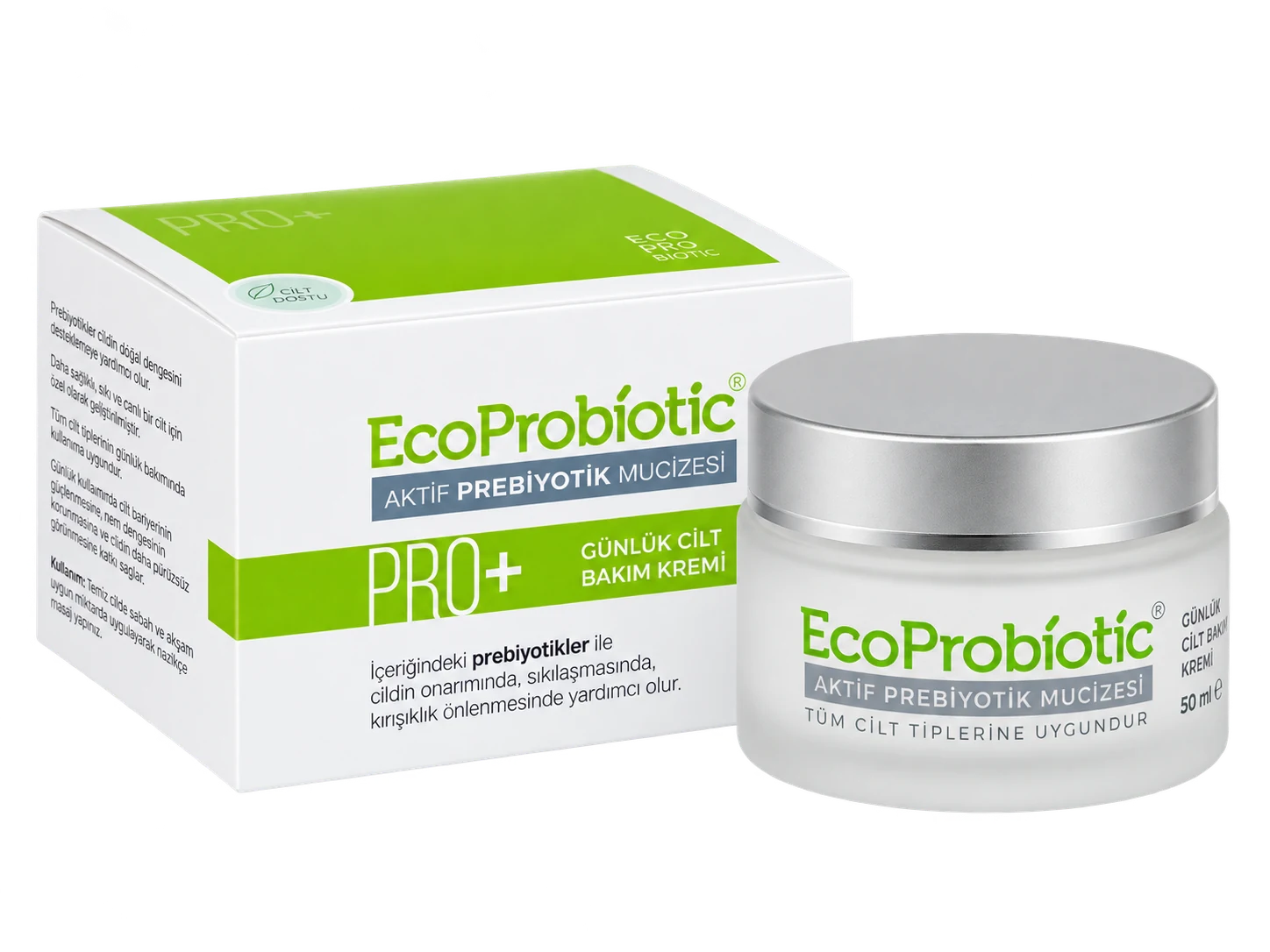 MoisturisingPrebiotic Skin CreamMoisturises the skin and helps repair the barrier. Available in three formulas: for all, dry and oily skin.View ↗
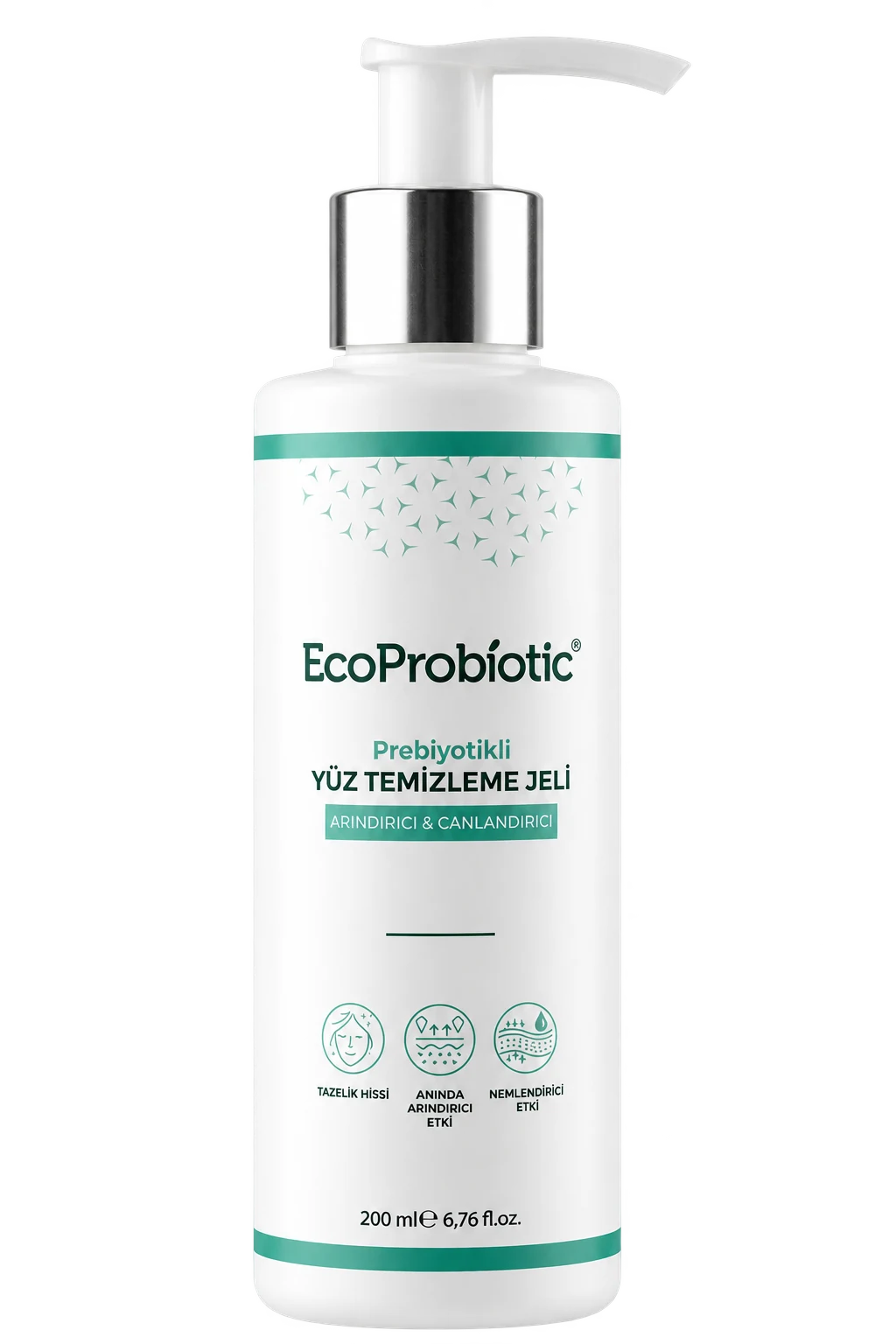 CleansingPrebiotic Face Cleansing GelRemoves make-up and the day’s grime with a gentle foam, supporting the skin barrier as it cleanses. Morning and evening.View ↗
 Weekly carePrebiotic Volcanic Clay MaskAbsorbs excess oil and dirt from the surface, purifying while supporting the barrier. Once or twice a week, for ten minutes.View ↗
Caution
What to avoid, and when to see a doctor?
Avoid these
- ✕Tanning beds and sunbathing to get a tan
- ✕Using sunscreen only in summer or on vacation
- ✕Smoking
- ✕Using a retinoid, high-strength acid and peel together on the same night
- ✕Harsh cleansers that leave your skin squeaky
- ✕Sleeping in your makeup
- ✕Products that promise miracles and have unclear ingredients
- ✕Sudden, aggressive weight-loss diets
See a dermatologist
- →If you have a new mole or spot, or one that's growing or changing color or shape
- →If you notice a sore that won't heal, bleeds or crusts over
- →If signs of aging are progressing very quickly for your age, together with noticeable dryness or hair loss
- →If you develop severe irritation from using a retinoid or acid
- →If you're considering a procedure such as laser, a peel or fillers
- →If your dark spots keep getting darker despite all your care
Common misconceptions
Myth or fact?
Myth
Wrinkles are entirely genetic; there's nothing you can do.
Fact
Genetics affect how fast you age, but research shows that most visible signs of aging come from environmental factors, the sun above all. A randomized study proved that regular sun protection noticeably slows aging.
Myth
You don't need sunscreen on cloudy days.
Fact
A significant share of UV rays passes through clouds. The UVA rays that cause aging can also pass through glass; that's why sun protection is needed every day.
Myth
The more active ingredients, the younger your skin.
Fact
Using many strong actives at once disrupts the barrier and increases inflammation, which can speed up aging. Regular use of a sunscreen, a retinoid, an antioxidant and a good moisturizer is usually enough.
Popular searches
Most asked about Premature aging
Your questions
Frequently asked questions
At what age should I start anti-aging skincare?+
You should start sun protection at any age. Active ingredients such as retinoids can generally be added from your mid-20s onward, depending on your skin's needs. What really matters is consistency more than starting early.
Retinol or a prescription retinoid?+
Prescription tretinoin is the strongest and most researched option, but it has a higher risk of irritation. Retinol and retinaldehyde offer a gentler start. You can decide with your dermatologist which one is right for you.
What exactly does inflammaging mean?+
It's the name for the chronic, low-grade, symptom-free inflammation that develops in the body with age. This inflammation is linked to many age-related problems as well as skin aging; the gut microbiome is seen as an important regulator in this process.
Do probiotic creams reduce wrinkles?+
Research has observed that products with probiotic ingredients may help support barrier function and moisture balance. Clinical studies on wrinkles are still limited, so it's best to think of them as a barrier-balancing complement, not a replacement for sunscreen and a retinoid.
Do collagen supplements work?+
Although some studies report positive results from oral collagen peptides on skin hydration and elasticity, the evidence is mixed. Supplements don't replace sun protection and proven topical care.
How can I protect my skin from air pollution?+
Cleansing your skin gently but effectively in the evening, using an antioxidant serum and sunscreen in the morning and keeping your barrier strong are the most practical defenses against the oxidative effects of pollution.
What are the signs of premature aging?+
The most common signs are lines on the forehead, around the eyes and around the mouth that appear early for your age, sun spots, uneven skin tone, dullness, loss of elasticity and discoloration on the neck and décolletage. The fact that these signs are concentrated in sun-exposed areas shows the role of outside factors.
How do I get rid of wrinkles on my face?+
Deep wrinkles don't disappear completely, but they can be softened noticeably. For fine lines, regular retinoid use and daily sun protection are the first steps; for deep lines and expression lines, your dermatologist may consider options such as laser, peels, muscle-relaxing injections or fillers. Whatever method you choose, results won't last without sun protection.
How can I prevent collagen loss?+
The outside factors that break down collagen fastest are UV rays and smoking, so using a broad-spectrum sunscreen every day and avoiding smoking are the most effective measures. Retinoids support collagen production, and antioxidants such as vitamin C help against oxidative stress. Regular sleep and a diet lower in sugar are also supportive.
At what age does skin aging start?+
Collagen production gradually decreases with age in adulthood; however, when visible signs appear is largely determined by the sun, smoking and lifestyle. In skin that's well protected from the sun, fine lines and dark spots become noticeable much later. That's why the best time to start preventing it is today.
Scientific basis
Sources
- 1.Effect of the sun on visible clinical signs of aging in Caucasian skin.
Flament F, Bazin R, Laquieze S, Rubert V, Simonpietri E, Piot B · Clin Cosmet Investig Dermatol · 2013 · doi:10.2147/CCID.S44686
In 298 women aged 30-78, UV exposure was concluded to be responsible for about 80% of visible signs of aging on the face.
- 2.The skin aging exposome.
Krutmann J, Bouloc A, Sore G, Bernard BA, Passeron T · J Dermatol Sci · 2017 · doi:10.1016/j.jdermsci.2016.09.015
Defined the full set of outside factors affecting skin aging, such as sun, pollution, smoking, diet, stress and sleep, as the 'skin aging exposome'.
- 3.Sunscreen and prevention of skin aging: a randomized trial.
Hughes MC, Williams GM, Baker P, Green AC · Ann Intern Med · 2013 · doi:10.7326/0003-4819-158-11-201306040-00002
Among 903 adults, the group using sunscreen daily showed 24% less skin aging over 4.5 years than those using it occasionally.
- 4.Inflammaging: a new immune-metabolic viewpoint for age-related diseases.
Franceschi C, Garagnani P, Parini P, Giuliani C, Santoro A · Nat Rev Endocrinol · 2018 · doi:10.1038/s41574-018-0059-4
Defined the chronic, low-grade inflammation that develops with age (inflammaging) and emphasized the central role of the gut microbiota in this process.
- 5.Retinoids in the treatment of skin aging: an overview of clinical efficacy and safety.
Mukherjee S, Date A, Patravale V, Korting HC, Roeder A, Weindl G · Clin Interv Aging · 2006 · doi:10.2147/ciia.2006.1.4.327
Reviewed how retinoids provide clinical improvement in photoaging; tretinoin is the strongest, while retinol and retinaldehyde are less irritating.
- 6.Airborne particle exposure and extrinsic skin aging.
Vierkötter A, Schikowski T, Ranft U, Sugiri D, et al. · J Invest Dermatol · 2010 · doi:10.1038/jid.2010.204
In 400 women, an increase in exposure to traffic-related particles was associated with 20% more pigment spots on the forehead and cheeks.
- 7.Tobacco smoke causes premature skin aging.
Morita A · J Dermatol Sci · 2007 · doi:10.1016/j.jdermsci.2007.06.015
Reviewed how tobacco smoke disrupts collagen production and increases collagen-degrading enzymes, leading to premature skin aging.
- 8.How Microbiomes Affect Skin Aging: The Updated Evidence and Current Perspectives.
Ratanapokasatit Y, Laisuan W, Rattananukrom T, Petchlorlian A, et al. · Life (Basel) · 2022 · doi:10.3390/life12070936
Stated that the gut and skin microbiota influence skin aging through oxidative stress, inflammation and immunity, and that anti-aging probiotic studies are still limited.
- 9.Aging-related changes in the diversity of women's skin microbiomes associated with oral bacteria.
Shibagaki N, Suda W, Clavaud C, Bastien P, et al. · Sci Rep · 2017 · doi:10.1038/s41598-017-10834-9
Showed that the makeup of the skin microbiome changes with age in women and that this change is associated with clinical signs of skin aging.
- 10.Microbiome and Human Aging: Probiotic and Prebiotic Potentials in Longevity, Skin Health and Cellular Senescence.
Boyajian JL, Ghebretatios M, Schaly S, Islam P, Prakash S · Nutrients · 2021 · doi:10.3390/nu13124550
Reviewed how microbial imbalance has been linked to cellular aging and how probiotics and prebiotics hold potential for healthy aging and skin health.