If you asked which single step in skincare makes the biggest difference, most dermatologists would give the same answer: sunscreen. But shelves are packed with options ranging from SPF 15 to 50+, chemical filters to mineral filters, gels to sprays. On top of that, choosing the right product is only half the job. The other half is using it in the right amount and as often as you should.
Does sunscreen really make a difference?
One of the strongest answers to this question comes from a long-running randomized trial in Australia. Some participants used sunscreen regularly every day, while the others kept their usual habits. At follow-up years later, the group that used sunscreen regularly was reported to have a lower incidence of melanoma.
Another study by the same research group focused on skin aging. According to the results published in the Annals of Internal Medicine, participants who used sunscreen every day for four and a half years showed no detectable increase in skin aging, compared with those who used it at their own discretion. So sunscreen is one of the most valuable steps in a daily routine, both for skin health and for how your skin looks.
The single most effective step in skincare is often the most ordinary one: enough sunscreen, every morning.
Reading the label: SPF, broad spectrum and more
- SPF: Mainly indicates protection against UVB rays, which cause sunburn. At least SPF 30 is recommended for daily use.
- Broad spectrum or UVA protection: Shows that the product also protects against UVA rays, which reach deeper into the skin and are linked to aging. Look for a UVA logo or the words broad spectrum on the label.
- Water resistance: Shows that protection lasts for a certain amount of time while swimming or sweating heavily; but you need to reapply after that time.
- Texture: Creams may be more comfortable for dry skin, and gels or fluid formulas for oily skin. The product you enjoy using is the one that gives the best protection, because you'll use it consistently.
Mineral or chemical?
Mineral filters, meaning zinc oxide and titanium dioxide, stay on the surface of the skin and reflect and scatter light. They're generally well tolerated by sensitive skin, but some formulas can leave a white cast. Organic filters absorb light and convert it into harmless energy, and usually offer a lighter, more transparent texture. Well-formulated examples of both types provide effective protection. You can choose based on your skin type, sensitivity and personal preference.
The real issue is quantity
A sunscreen's SPF is measured in the lab by applying 2 milligrams of product to every square centimeter of skin. That's much more than most of us are used to. A review published in a photodermatology journal explains that in real life people usually apply far less than this, mostly between a quarter and a half, which means the protection they get is significantly lower than what's on the label.
In practice, about two finger-lengths of product is recommended for the face and neck, meaning a strip squeezed along the full length of your index and middle fingers. This may seem like a lot at first. Applying the product in two thin layers gives a more even spread and can also feel more comfortable.
The SPF on the label only becomes real when you apply enough. An SPF 50 applied too thinly may not give you the protection you expect.
When and how often?
Apply sunscreen as the last step of your morning routine, after moisturizer and before makeup. An article published in the Journal of the American Academy of Dermatology suggests that applying a second layer shortly after going out in the sun can make protection more consistent by covering areas missed the first time. After that, you need to reapply if you're outdoors for a long time, have been sweating, have been swimming or have toweled off.
- Don't forget your ears, the sides of your neck, your chest and the backs of your hands.
- Your hairline and part are exposed to the sun too; a hat is a great help for these areas.
- Use a lip balm with SPF for your lips.
- An SPF powder or spray can be handy for reapplying over makeup, but it doesn't replace an adequate first layer.
How many hours does SPF 50 protect you?
SPF doesn't indicate a length of time; it indicates the level of protection against UVB rays. Both SPF 50 and SPF 30 lose effectiveness over time due to sweating, rubbing off and contact with water; outdoors, it's recommended to reapply about every two hours, and right away after swimming or heavy sweating. On a day spent indoors away from windows, enough sunscreen applied in the morning is usually sufficient.
Do you need it in winter, on cloudy days and at home too?
UVA rays stay relatively constant throughout the year, pass through clouds and can partly come in through glass. Although UVB is weaker in winter, snow can reflect light and increase exposure. If you work by a window for long hours or go outside often, using sunscreen regardless of the season is a good habit.
Sunscreen and the microbiome
Sunlight can indirectly affect the skin microbiome by affecting the skin's barrier and immune balance. So sunscreen can also be thought of as part of protecting the barrier and, in turn, microbial balance. Removing your sunscreen thoroughly with a gentle cleanser in the evening and then using a barrier-supporting moisturizer completes the cycle.
Common mistakes
- Using it only in summer or on vacation
- Thinking the SPF in your foundation or moisturizer is enough on its own
- Applying just a hazelnut-sized amount to your face
- Applying it in the morning and never reapplying all day
- Using a product that's expired or has been sitting in a hot car
- Thinking you can stay in the sun longer because you're using a high SPF
Sun protection with makeup
If you wear makeup, apply sunscreen before makeup and after moisturizer, and wait a few minutes for it to set. That way your foundation goes on more smoothly and the sunscreen layer isn't disturbed. You don't have to take off your makeup to reapply at midday; after lightly blotting surface oil with a tissue, you can use a powder or spray with SPF. This doesn't replace the first layer, but it helps keep protection going.
If you have sensitive or breakout-prone skin, non-comedogenic and fragrance-free formulas may be more comfortable. Before applying a new sunscreen to your whole face, it's also a good habit to test it on a small area along your jawline for a few days.
Keep in mind
The best sunscreen is the one you can use in sufficient amounts every day. Find a texture that suits your skin, make the two-finger rule a habit and don't forget to reapply on long days. This simple step is one of the most valuable investments you can make in your skin, for today and for the future.
Helpful as you build this routine
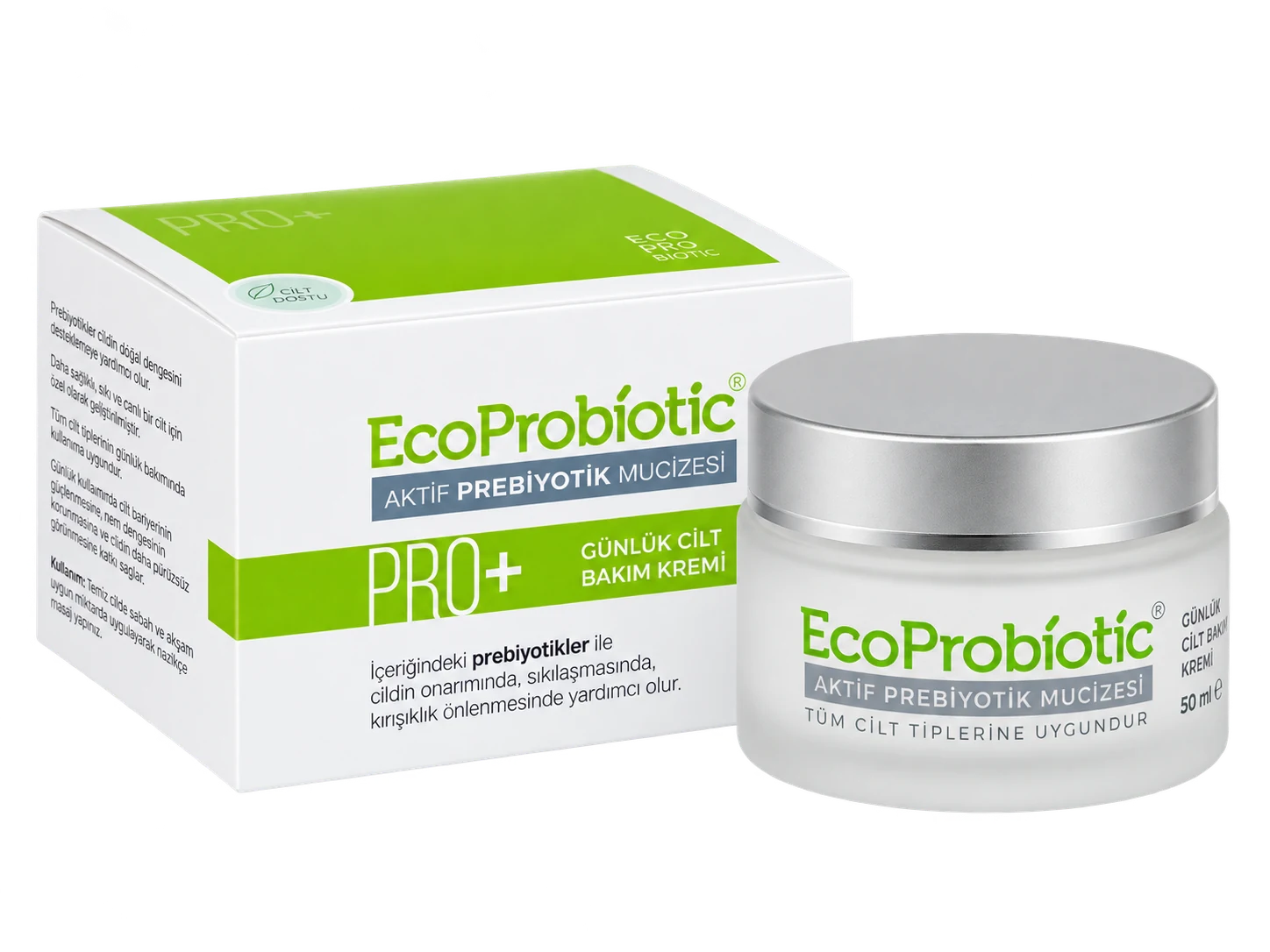
EcoProbiotic care range ↗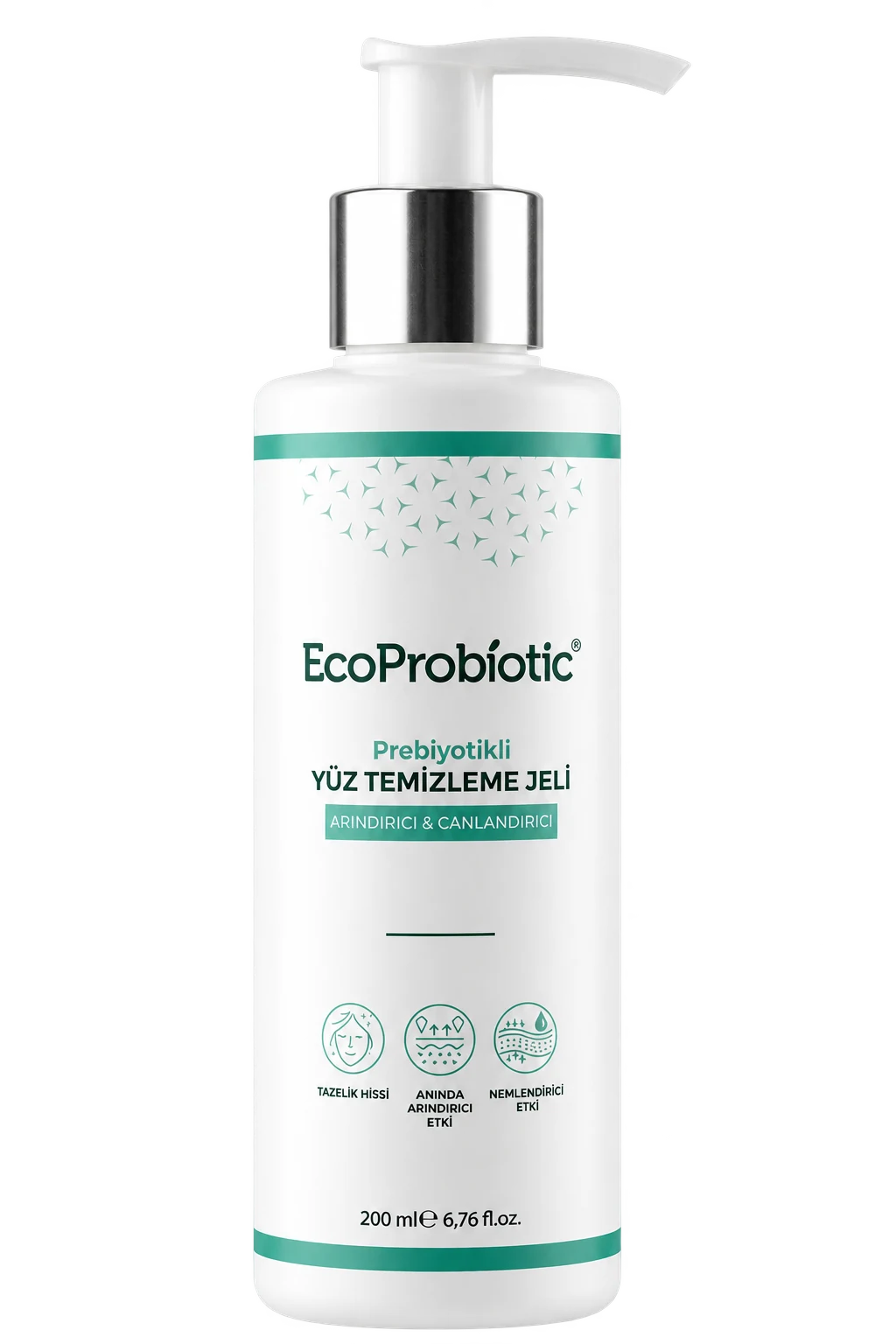 CleansingPrebiotic Face Cleansing GelRemoves make-up and the day’s grime with a gentle foam, supporting the skin barrier as it cleanses. Morning and evening.View ↗
 MoisturisingPrebiotic Skin CreamMoisturises the skin and helps repair the barrier. Available in three formulas: for all, dry and oily skin.View ↗
Sources
- 1.Reduced melanoma after regular sunscreen use: randomized trial follow-up
Green AC, Williams GM, Logan V, Strutton GM · Journal of Clinical Oncology · 2011 · doi:10.1200/JCO.2010.28.7078
Reported a lower incidence of melanoma at long-term follow-up in the group that used sunscreen regularly.
- 2.Sunscreen and prevention of skin aging: a randomized trial
Hughes MCB, Williams GM, Baker P, Green AC · Annals of Internal Medicine · 2013 · doi:10.7326/0003-4819-158-11-201306040-00002
No detectable increase in skin aging was observed over four and a half years in those who used sunscreen every day.
- 3.Application of sunscreen - theory and reality
Petersen B, Wulf HC · Photodermatology, Photoimmunology & Photomedicine · 2014 · doi:10.1111/phpp.12099
Showed that in real life people apply sunscreen at far below the test amount, which lowers protection.
- 4.When should sunscreen be reapplied?
Diffey BL · Journal of the American Academy of Dermatology · 2001 · doi:10.1067/mjd.2001.117385
Suggested that applying a second layer shortly after going out in the sun may make protection more consistent by reducing gaps in application.
- 5.The skin aging exposome
Krutmann J, Bouloc A, Sore G, Bernard BA, Passeron T · Journal of Dermatological Science · 2017 · doi:10.1016/j.jdermsci.2016.09.015
Identified sunlight as the most important environmental factor contributing to skin aging.