For most of us, the skin barrier sounds like an abstract idea. But the barrier is something you touch, see and feel every day. The outermost layer of the skin, the stratum corneum, is often compared by scientists to a brick-and-mortar wall. The bricks are skin cells that are no longer alive but still do their job. The mortar is the lipid layer of ceramides, cholesterol and fatty acids that fills the space between these cells.
This wall has a two-way job: to keep the water inside from evaporating and escaping, and to make it harder for irritants, allergens and unwanted microbes from outside to get in. A classic review published in Experimental Dermatology describes the barrier as an integrated system with not only physical but also chemical, immune and microbial layers.
The barrier isn't just a wall; it's a living system that holds in moisture, turns irritation away and hosts the microbiome.
Why does the barrier get damaged?
When the mortar layer weakens, cracks form in the wall. Water escapes through these cracks and irritants seep in. Scientifically, this is measured as an increase in transepidermal water loss, meaning the amount of water evaporating from the skin. A 2006 validation study showed that this measurement reliably reflects the state of the barrier. Harsh cleansers, over-exfoliation, dry air, sun, stress and lack of sleep are the main factors that can widen these cracks.
Damaged skin barrier symptoms: 9 signs
1. Products suddenly start to sting
If a serum or moisturizer you've used without problems for months suddenly burns or tingles one morning, the problem is most likely your skin, not the product. When the barrier is intact, ingredients are absorbed in a controlled way; when cracks form, they can reach nerve endings more easily.
2. Tightness after washing
If your skin feels like it's shrinking a few minutes after you wash your face, that's often a sign of lipid loss. Clean skin is not tight skin. A healthy barrier feels comfortable and supple even after washing.
3. Flaking and fine scaling
Fine white flakes that appear around the sides of your nose, between your brows or on your cheeks can mean that surface cells aren't shedding properly. When barrier lipids are depleted, the enzymes that hold cells together and let them separate on time can't work properly either.
4. Redness with no clear cause
If you turn red when you walk into a warm room, walk in the wind or simply touch your face, your skin's line of defense may be on high alert. Gaps in the barrier can make it easier for outside triggers to reach immune cells.
5. Skin that's both oily and dry
Skin that's shiny but flaky at the same time is confusing. When the barrier is weakened, the surface dries out and feels tight, while the T-zone may keep getting shiny. In this situation, trying to strip away even more oil can reinforce the cycle.
6. Unexpected breakouts
When the barrier is damaged, the microbial balance on the surface can be affected too. When the skin's slightly acidic environment is disrupted and moisture loss increases, the balance of the resident community can shift. This can show up as unusual pimples or small bumps, especially around the chin and cheeks.
7. Dullness and rough texture
Skin that doesn't reflect light evenly and feels like sandpaper to the touch can be the combined result of cells building up on the surface and moisture loss. At this point most people exfoliate more; yet when the barrier is weak, cutting back on exfoliation often works better.
8. Itching
Itching is a common complaint with dry skin. A review published in the Yonsei Medical Journal describes how barrier damage triggers the skin's defense and immune responses. Scratching then causes additional mechanical damage to the barrier and keeps the cycle going.
9. Blemishes and marks that heal slowly
If a squeezed pimple, a small scratch or an irritated area takes longer than usual to heal, that can also be a sign that your barrier is worn out. A healthy barrier also provides a good foundation for repair processes.
Clean skin is not tight skin. A healthy barrier feels comfortable and supple even after washing.
The recovery plan: four weeks, four rules
A review that takes a holistic look at the defensive functions of the stratum corneum emphasizes that the permeability barrier, antimicrobial defense and the acidic surface are all interconnected. That's why recovery should be holistic too:
- Simplify: Cut your routine down to three steps: cleanser, moisturizer and sunscreen. Take a break from acids, retinol and exfoliants for at least two weeks.
- Cleanse gently: Choose a slightly acidic cleanser that doesn't leave your skin tight; use lukewarm water instead of hot.
- Rebuild the mortar: Use a moisturizer that contains ceramides, cholesterol and fatty acids, or one enriched with humectants like glycerin. Formulas with prebiotics can be a complementary option that may help support microbial balance.
- Be patient: Renewal of the skin's top layer takes a few weeks. You'll usually notice the first signs of improvement within two to four weeks.
How long does it take to repair the skin barrier?
With mild damage, tightness and stinging start to ease within a few days of simplifying your routine. Since renewal of the skin's top layer takes a few weeks, it's realistic to allow two to four weeks for texture and tolerance to products to return to normal. Not trying new products and holding off on exfoliation during this time makes recovery easier.
When should you see a dermatologist?
If, despite simplifying your routine, you have redness lasting more than four weeks, intense itching, oozing, crusting or a spreading rash, it's best to see a dermatologist. Conditions like atopic dermatitis, rosacea or contact dermatitis can cause symptoms similar to barrier damage and require an expert evaluation.
Barrier and microbiome: two sides of the same coin
Thinking of the barrier only as a wall leaves something out. The skin's resident microbial community lives on top of this wall. A healthy barrier offers this community a slightly acidic, moist and balanced place to live. In return, the community contributes to the skin's defenses by making it harder for unwanted microorganisms to take hold and by maintaining calm communication with the immune system.
When the barrier cracks, this relationship is shaken too. The surface pH can rise, moisture loss increases and the balance of the community can shift. An unbalanced community, in turn, can make barrier repair harder by increasing inflammatory signals. That's why the microbiome needs to be taken into account when repairing the barrier. Gentle, low-pH cleansers and balance-minded formulas are the simplest way to support both sides together.
This perspective also lets you read your symptoms with fresh eyes. Sudden breakouts, redness or itching aren't separate problems to be tackled on their own; they're often signals coming from different corners of the same ecosystem.
Keep in mind
Your barrier is both your skin's wall and your microbiome's home. What wears it down is often something we do with good intentions: washing too much to get cleaner, exfoliating too much to get brighter. If you recognized several of these nine signs, it may be time to give your skin a little break.
Helpful as you build this routine
EcoProbiotic care range ↗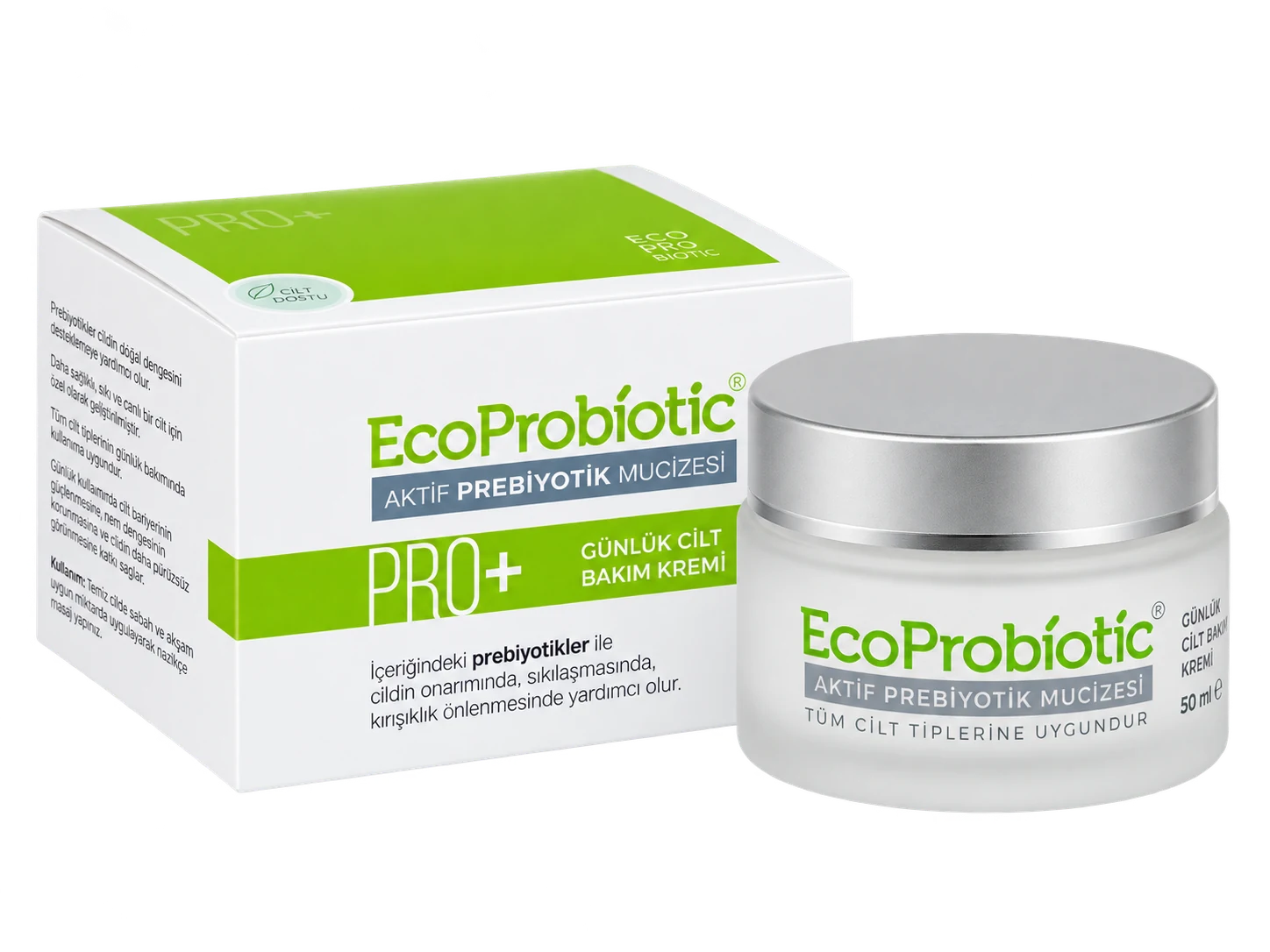
Sources
- 1.The skin: an indispensable barrier
Proksch E, Brandner JM, Jensen JM · Experimental Dermatology · 2008 · doi:10.1111/j.1600-0625.2008.00786.x
Reviewed the skin barrier as an integrated system made up of physical, chemical, immune and microbial layers.
- 2.Stratum corneum defensive functions: an integrated view
Elias PM · Journal of Investigative Dermatology · 2005 · doi:10.1111/j.0022-202X.2005.23668.x
Showed that the top layer of the skin's functions, such as moisture retention, antimicrobial defense and the acidic surface, are interconnected.
- 3.Transepidermal water loss reflects permeability barrier status: validation in human and rodent in vivo and ex vivo models
Fluhr JW, Feingold KR, Elias PM · Experimental Dermatology · 2006 · doi:10.1111/j.1600-0625.2006.00437.x
Confirmed that measuring water loss through the skin reliably reflects the state of the barrier.
- 4.An update of the defensive barrier function of skin
Lee SH, Jeong SK, Ahn SK · Yonsei Medical Journal · 2006 · doi:10.3349/ymj.2006.47.3.293
Summarized how barrier damage triggers the skin's defense and immune responses.
- 5.Skin pH: from basic science to basic skin care
Ali SM, Yosipovitch G · Acta Dermato-Venereologica · 2013 · doi:10.2340/00015555-1531
Emphasized the importance of skin pH for barrier repair and microbial balance, and the need to consider pH in skincare products.