When you wash your face in the morning or put on moisturizer at night, you're actually not alone. On the surface of your skin lives a crowded community you can't see, one that wakes up with you every day. Scientists call this community the skin microbiome. Over the past twenty years, as gene sequencing techniques have advanced, it has become clear that these invisible guests play a much bigger role in skin health than anyone assumed.
For many years, the word “microbes” brought only disease to mind. Clean skin meant germ-free skin. Today the picture is far more nuanced: most of the microorganisms on your skin are harmless, and some even contribute to the skin's defenses and balance. In this article we walk you step by step through what the skin microbiome is, where it lives, what it feeds on and why its balance matters.
What exactly does “microbiome” mean?
A microbiome is the full set of microorganisms living in a particular environment, along with their genetic material. For the skin, that environment includes the skin surface, hair follicles, sweat glands and the openings of oil glands. Bacteria make up the largest group in this community, but fungi, viruses and even microscopic mites are also part of the ecosystem.
A comprehensive review published in Nature Reviews Microbiology points out that when hair follicles and gland openings are taken into account, the surface the skin offers to microorganisms is far larger than people think. In other words, skin isn't a flat surface; with its dips, ridges and tiny caves, it's more like a landscape. Every nook is home to a different resident.
Skin isn't a flat surface; with its hair follicles and gland openings, it's a landscape with different residents in every corner.
Every area has its own neighborhood
You can think of your skin as a city. Areas packed with oil glands, like the forehead, the sides of the nose and the back, are the oily neighborhoods. The underarms, the inner elbows and the backs of the knees are the moist neighborhoods. The forearms and legs are the drier, cooler neighborhoods. A study published in Nature in 2014 showed that different microbial communities dominate in each of these areas, and that the makeup of each community is shaped by the characteristics of its environment.
The same study had another striking finding: differences from person to person are large, but a person's own microbiome is quite stable over time. So the community on your skin behaves like a fingerprint unique to you. This partly explains why a product that works wonders for a friend may not have the same effect on you.
What do these guests do for your skin?
Your skin's resident population isn't there for nothing. Research suggests that a balanced microbiome may benefit the skin in several ways:
- By taking up space: A resident community that shares the surface area and nutrients can make it harder for unwanted microorganisms to gain a foothold.
- Through chemical signals: Some resident bacteria have been observed producing natural substances that suppress competing microbes.
- By communicating with the immune system: The skin's immune cells are in constant communication with resident microbes, and this dialogue may help prevent unnecessary alarms.
- By contributing to an acidic surface: Microbial metabolism is one of the factors that help maintain the skin's slightly acidic environment.
Grice and Segre's 2011 review examines this cooperation between the skin microbiome and the immune system in detail. According to the review, the same microorganism can shift from a harmless resident to a troublemaker when conditions change. That's why what matters is not individual microbes but the balance of the community as a whole.
Why does the balance get disrupted?
An imbalance in the microbiome is called dysbiosis; it means the community has become less diverse or certain groups have overgrown. This kind of imbalance can be seen in conditions such as acne (pimples), atopic dermatitis (eczema), dandruff and seborrheic dermatitis, but the microbiome is not the only cause of these problems. Genetic predisposition, hormones, sun, stress and skincare habits are all part of the picture; the imbalance is often something that accompanies the problem rather than its cause.
The everyday factors that can strain this balance are surprisingly ordinary:
- Harsh, high-pH cleansers that leave skin feeling tight
- Washing your face many times a day or exfoliating heavily
- Indoor air dried out by central heating radiators
- Stress and irregular sleep
- Routines that change often and contain many active ingredients
- Long-term use of antibiotic creams without a doctor's advice
The acidic surface: the microbiome's home
The surface of your skin is slightly acidic. A study published in the International Journal of Cosmetic Science in 2006 reported that natural skin surface pH is on average below 5, and that this acidic environment favors the resident flora. This acid mantle matters both for the enzymes that produce barrier lipids and for the balance of the community.
Classic bar soaps, on the other hand, are usually alkaline. When you use an alkaline cleanser, your skin's pH rises temporarily and takes time to return to normal. During that window, both the barrier and the microbiome may be more vulnerable. That's why gentle, low-pH cleansers have taken center stage in skincare.
The goal isn't to leave skin germ-free; it's to create a slightly acidic, healthy foundation where the resident community can live comfortably.
How do you restore the skin microbiome? Daily care steps
Here's the good news: you don't need a complicated routine to support your microbiome. More often than not, less is more. A 2016 update written for dermatologists emphasizes the importance of gentle cleansing, barrier-supporting moisturizing and avoiding unnecessarily aggressive treatments in maintaining a healthy skin microbiome.
- Wash your face twice a day with lukewarm water and a slightly acidic cleanser with a soft lather.
- Reduce friction by gently patting your skin dry instead of rubbing it with a towel.
- Use a barrier-supporting moisturizer that contains ceramides and humectants.
- Spread exfoliants and acids across your weekly schedule; don't use them back to back every day.
- Finish your morning routine with a broad-spectrum sunscreen of at least SPF 30.
- If you like, you can add a skincare product with prebiotics as an option that complements these basic steps.
- Think of sleep, nutrition and stress management as part of your skincare, too.
Where do probiotics and prebiotics come in?
Probiotics are live microorganisms that provide a health benefit when taken in adequate amounts. Prebiotics are substances that resident microorganisms selectively use, thereby supporting balance. In skincare, these two concepts are emerging as part of a new approach that aims to work with the microbiome rather than wipe it out.
Research in this field is exciting, but still in development. Some studies have observed positive changes in skin hydration and barrier markers; even so, larger and longer studies are needed before the results can be generalized. So it's best to think of probiotic and prebiotic skincare not as a replacement for solid basic habits, but as support that complements them.
What should you look for in a microbiome-friendly product?
A «microbiome friendly» label on its own doesn't tell you much. The real test is how the product feels on your skin: a slightly acidic cleanser that doesn't leave your skin tight after washing, a barrier-supporting moisturizer with little unnecessary fragrance and few additives, and a sunscreen you'll actually enjoy using every day. Trying a new product on its own for at least a few weeks and watching how your skin responds is the most reliable test.
Keep in mind
Your skin isn't just a membrane separating you from the outside world; it's a living ecosystem you share with millions of tiny partners. These partners contribute to your skin's defenses, balance and calm. Protecting them often comes down to simplifying: gentle cleansing, good moisturizing, sun protection and patience. In the next article, we'll look at the signs that the barrier, this ecosystem's home, has been damaged.
Helpful as you build this routine
EcoProbiotic care range ↗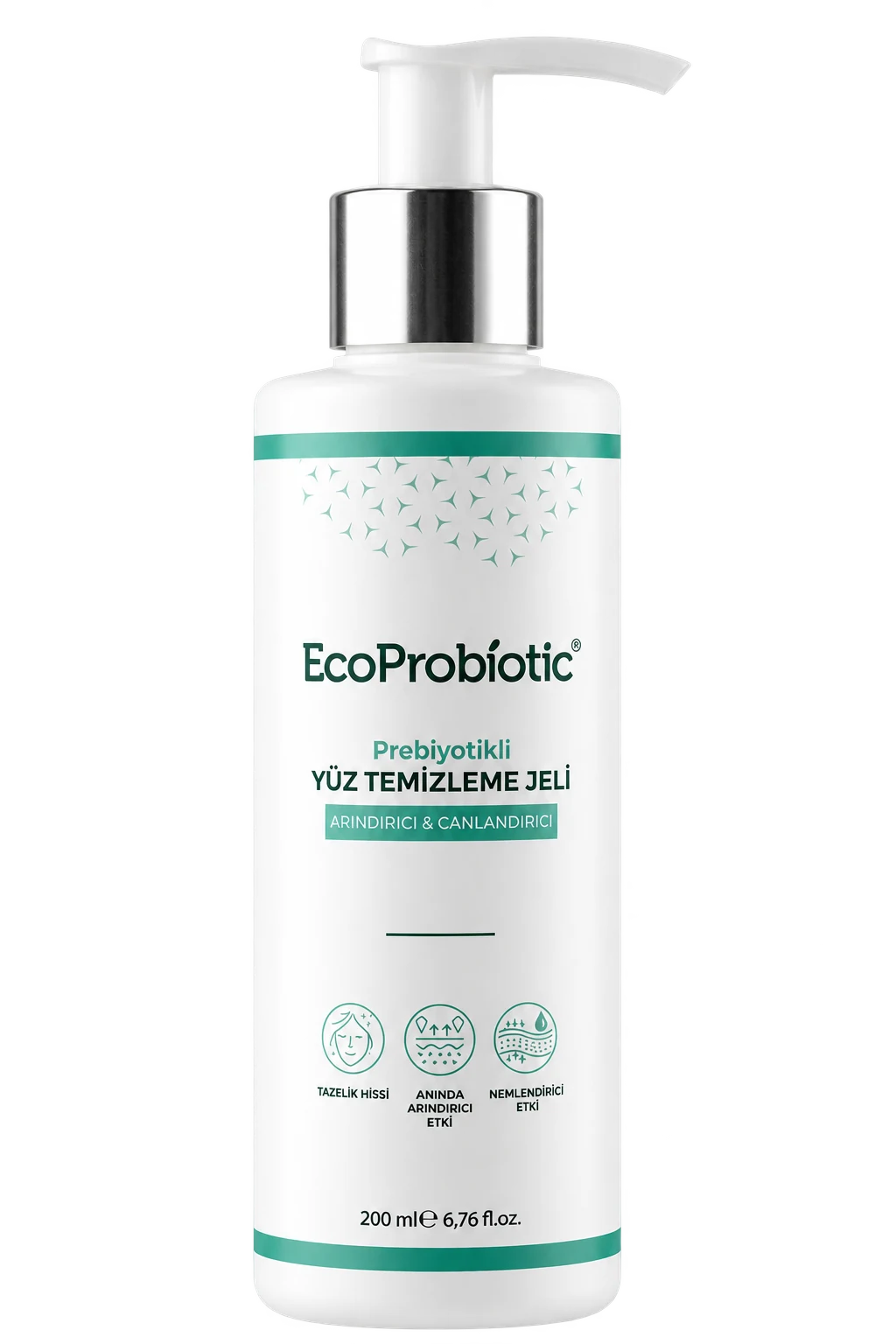 CleansingPrebiotic Face Cleansing GelRemoves make-up and the day’s grime with a gentle foam, supporting the skin barrier as it cleanses. Morning and evening.View ↗
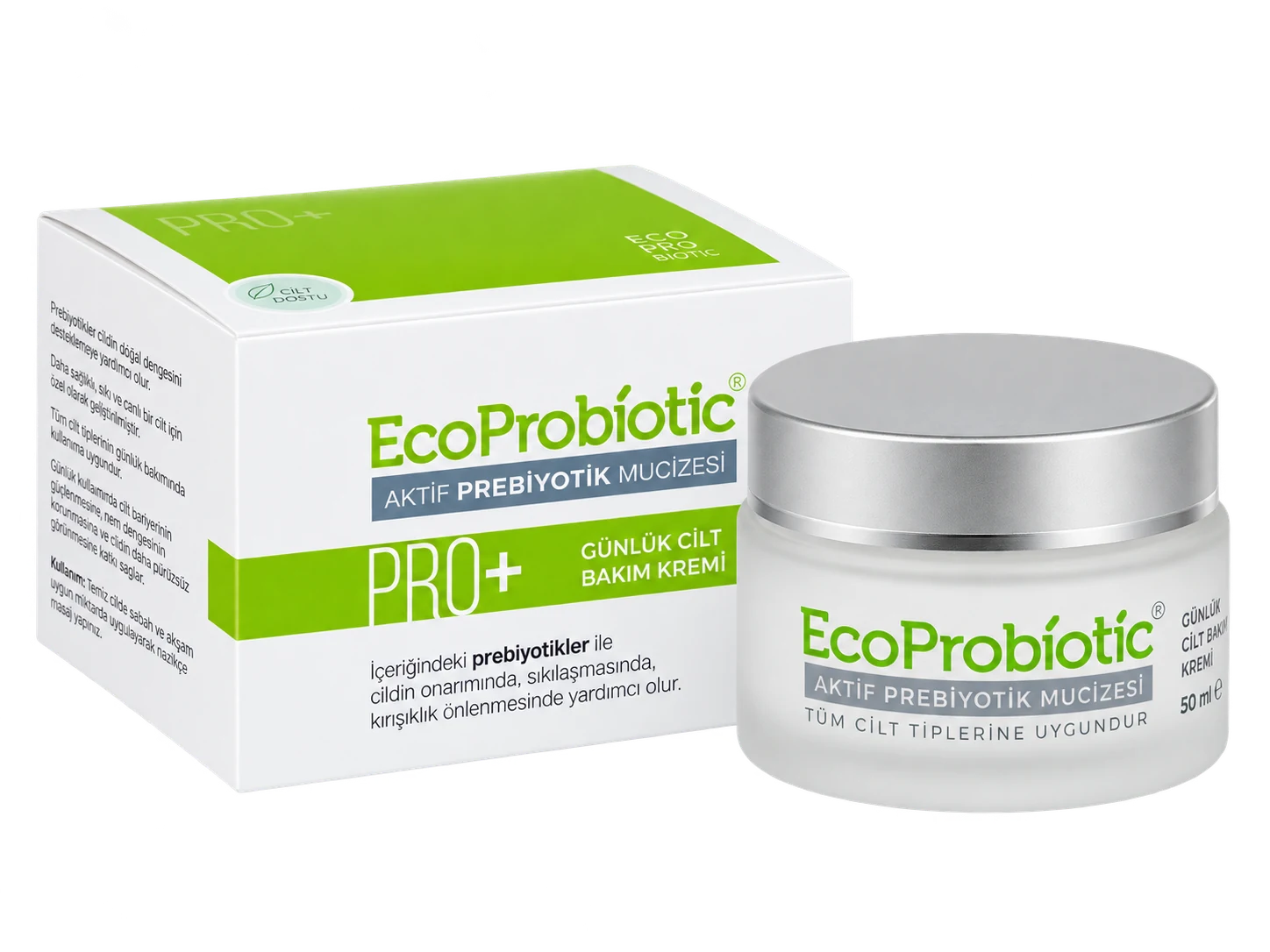 MoisturisingPrebiotic Skin CreamMoisturises the skin and helps repair the barrier. Available in three formulas: for all, dry and oily skin.View ↗
Sources
- 1.The human skin microbiome
Byrd AL, Belkaid Y, Segre JA · Nature Reviews Microbiology · 2018 · doi:10.1038/nrmicro.2017.157
Comprehensively reviewed the structure of the skin microbiome, its regional differences and its relationship with the immune system.
- 2.The skin microbiome
Grice EA, Segre JA · Nature Reviews Microbiology · 2011 · doi:10.1038/nrmicro2537
Showed that resident microbes can be harmless or problematic depending on conditions, and that balance is the deciding factor.
- 3.Biogeography and individuality shape function in the human skin metagenome
Oh J, Byrd AL, Deming C, Conlan S, Kong HH, Segre JA · Nature · 2014 · doi:10.1038/nature13786
Showed that oily, moist and dry areas host different communities and that a person's microbiome is stable over time.
- 4.Natural skin surface pH is on average below 5, which is beneficial for its resident flora
Lambers H, Piessens S, Bloem A, Pronk H, Finkel P · International Journal of Cosmetic Science · 2006 · doi:10.1111/j.1467-2494.2006.00344.x
Reported that natural skin surface pH is on average below 5 and that this acidic environment favors the resident flora.
- 5.Microbiome in healthy skin, update for dermatologists
Dréno B, Araviiskaia E, Berardesca E, Gontijo G, Sanchez Viera M, Xiang LF ve ark. · Journal of the European Academy of Dermatology and Venereology · 2016 · doi:10.1111/jdv.13965
Emphasized the importance of gentle cleansing and barrier-focused care in maintaining a healthy skin microbiome.