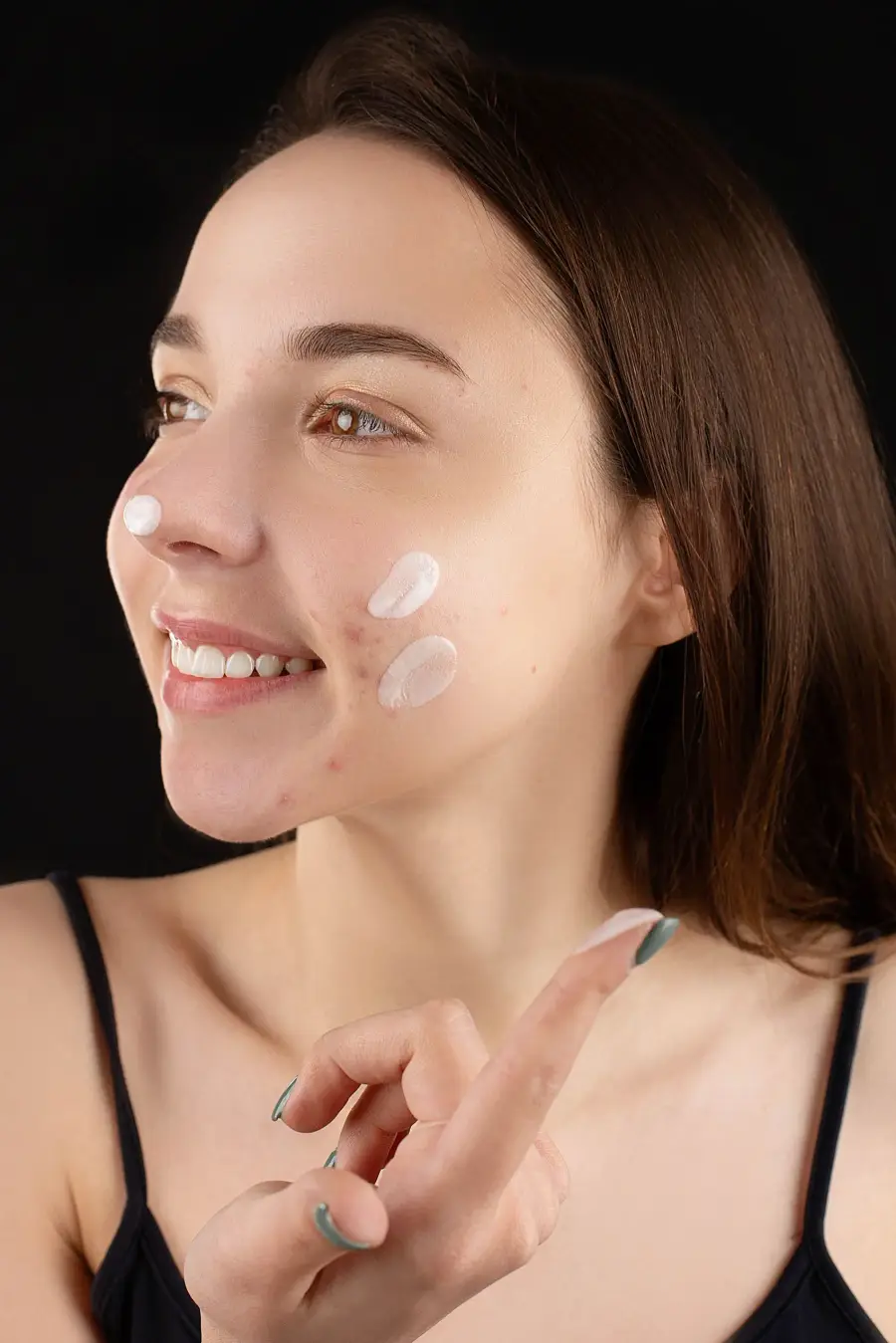
Does what you eat show up on your face? This question pops up everywhere, from our grandmothers' advice to social media trends. For a while, scientists were skeptical of this connection. But in recent years, research on the gut microbiome has revealed a real and complex communication network between the gut and the skin.
Why do the gut and skin talk to each other?
At first glance, the gut and the skin seem like two organs that are very far apart. But they have more in common than you might think: both form a boundary between the outside world and our inner world, both are equipped with a dense immune network and both are home to crowded microbial communities.
An article published in the journal BioEssays describes the gut-skin axis as an important concept in health and disease and explains that the gut microbiome can influence the skin's inflammatory responses through the immune system. A review published in Frontiers in Microbiology describes the gut microbiome as one of the main regulators of this axis.
The gut and the skin are the two great boundaries between us and the outside world. An imbalance that starts in one can show up in the other.
How is the connection made?
- The immune system: A large share of immune cells is found in the gut. These cells, trained in the gut, are thought to influence inflammatory responses that reach all the way to the skin.
- Microbial products: Substances such as short-chain fatty acids, which gut bacteria produce by breaking down fiber, are among the signals that regulate inflammation in the body.
- Gut wall permeability: It has been suggested that when the gut wall weakens, some substances that should normally stay in the gut may enter the circulation and increase systemic inflammation.
- The brain connection: Since stress affects both the gut and the skin, these three organs are thought to interact with one another.
Which skin problems is it linked to?
A recent review published in the journal Microorganisms brought together findings on the link between gut microbial imbalance and skin problems such as acne, atopic dermatitis, psoriasis and rosacea. Another comprehensive review in the journal Gut Microbes also examined the possible effects of the gut microbiome on skin health and approaches that target this axis.
These findings are exciting, but they come with an important caveat: observing a link doesn't mean establishing cause and effect. It's not yet fully known whether changes in the gut microbiome are a cause of skin problems, a result of them, or a reflection of some other shared factor.
Diet and acne: strong evidence
Some of the most striking evidence on the link between diet and skin comes from a study on glycemic load and acne. In a randomized controlled trial published in the American Journal of Clinical Nutrition, young participants who followed a low-glycemic-load diet showed a more noticeable reduction in acne lesions than the control group.
Glycemic load shows how much and how quickly a food raises your blood sugar. Quickly digested carbohydrates like refined sugar and white flour have a high glycemic load. These foods are thought to affect oil gland activity through insulin and related hormones.
Diet isn't the only thing that determines how your skin looks, but it's the most accessible way to support your skin indirectly through the choices you make every day.
Are there foods that help with acne?
No single food will clear up acne on its own; but the overall pattern of your diet can make a difference. The strongest evidence available shows that a low-glycemic-load diet, instead of one heavy in refined sugar and white flour that spike blood sugar quickly, may reduce acne lesions. In practice, that means whole grains, legumes, plenty of vegetables and fruit, and enough protein. Changing your diet doesn't replace the treatment your dermatologist recommends; it supports it.
A plate that supports your skin: what should you eat?
- Fiber: Legumes, whole grains, vegetables and fruit are the most important food source for gut bacteria. Fiber can have a prebiotic effect and may support the growth of beneficial bacteria.
- Variety: Eating different types of foods over the week may help support microbial diversity.
- Fermented foods: Traditional fermented foods like yogurt, kefir and pickles can be a natural part of your diet.
- Healthy fats: Fats from sources like fish, walnuts and olive oil are part of a balanced diet.
- Cut back on refined sugar: Choose less processed options instead of sugary drinks, pastries and packaged snacks.
- Water: Drinking enough water is important for overall health, but on its own it isn't a magic way to hydrate your skin.
Probiotic and prebiotic supplements
Research on the gut-skin axis has also brought attention to the possible effects of oral probiotics and prebiotics on the skin. Some studies have observed positive results from these approaches on skin hydration, inflammatory markers and the severity of some skin conditions. However, results vary from study to study, and it's not yet clear who might benefit from which approach. If you're thinking about taking supplements, especially if you have a health condition or take medication regularly, it's best to talk to your doctor.
From the inside and the outside together
The gut-skin axis is a reminder of how important it is to support your skin from the inside as well as the outside; but it doesn't replace daily skincare. A balanced diet on one side, and gentle cleansing, barrier-supporting moisturizing, sunscreen every morning and regular sleep on the other, together build the foundation your skin needs. When one is missing, the other can't fill the gap on its own.
A small one-week starter plan
If overhauling your diet completely feels daunting, starting with small steps is more sustainable. Here are some simple changes you can try for a week:
- Add a serving of fruit and a handful of nuts to your breakfast.
- Invite legumes onto your plate at least two meals a week.
- Try whole-grain options instead of white bread.
- Make a bowl of yogurt or a glass of kefir a natural part of your daily diet.
- Swap sugary drinks for water, sparkling mineral water or unsweetened drinks.
- Make sure there are vegetables of at least two different colors on your plate every day.
It may take time for these changes to show on your skin. Although the gut microbiome adapts relatively quickly to changes in diet, skin renewal takes weeks. Being patient and turning small changes into habits works much better than short, strict diets.
It's also important not to turn dietary changes into guilt or a list of forbidden foods. An occasional dessert or pastry won't change your skin overnight. What matters is the overall pattern you keep up over weeks and months. Being flexible and kind to yourself also makes a more balanced diet possible in the long run.
Keep in mind
There's no single miracle food that will transform your skin. But a plate made up of fiber-rich, varied and less processed foods lays a good foundation for both your gut and your skin. Make changes patiently, in small steps, and watch for the effects on your skin over a few weeks.
Helpful as you build this routine
EcoProbiotic care range ↗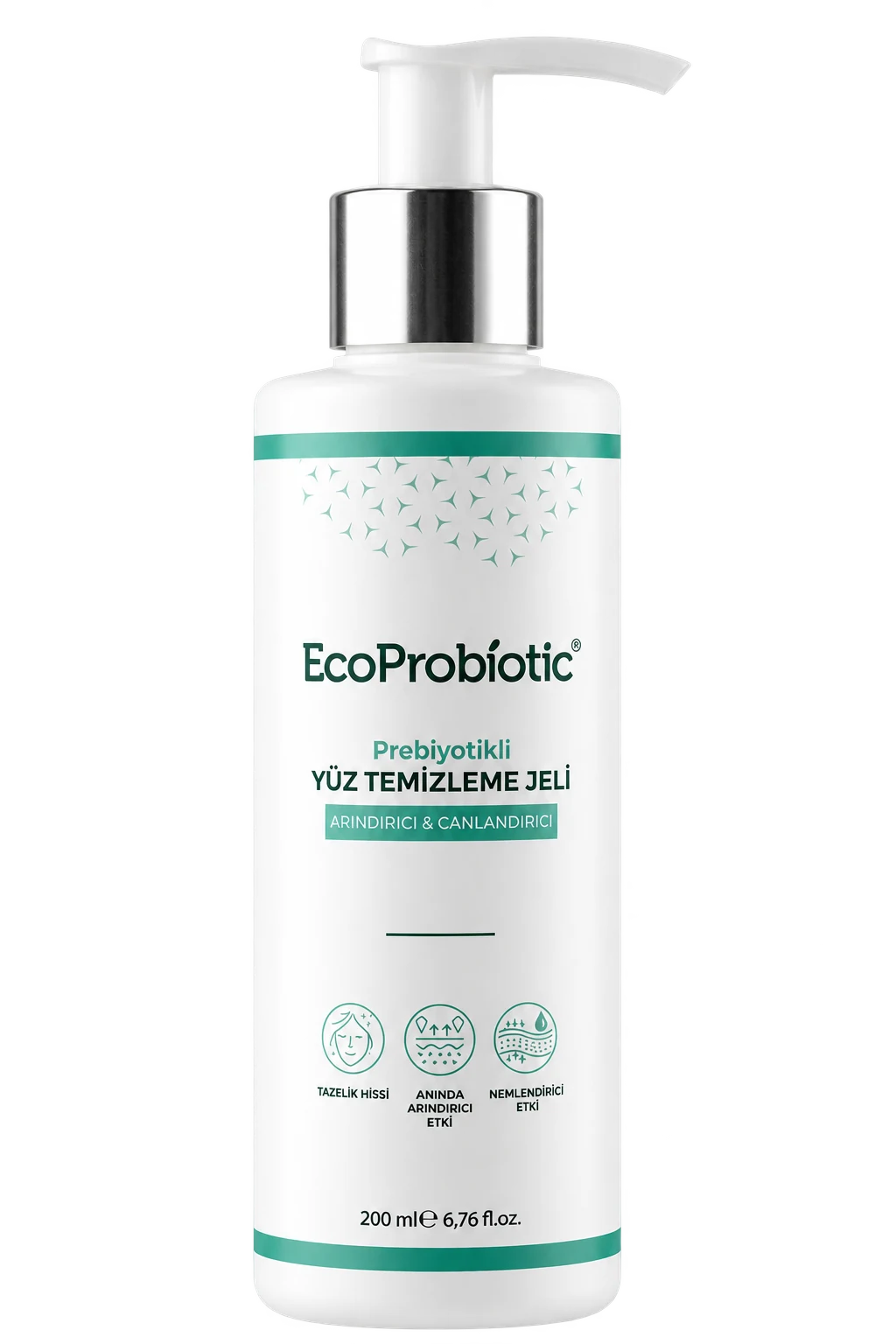 CleansingPrebiotic Face Cleansing GelRemoves make-up and the day’s grime with a gentle foam, supporting the skin barrier as it cleanses. Morning and evening.View ↗
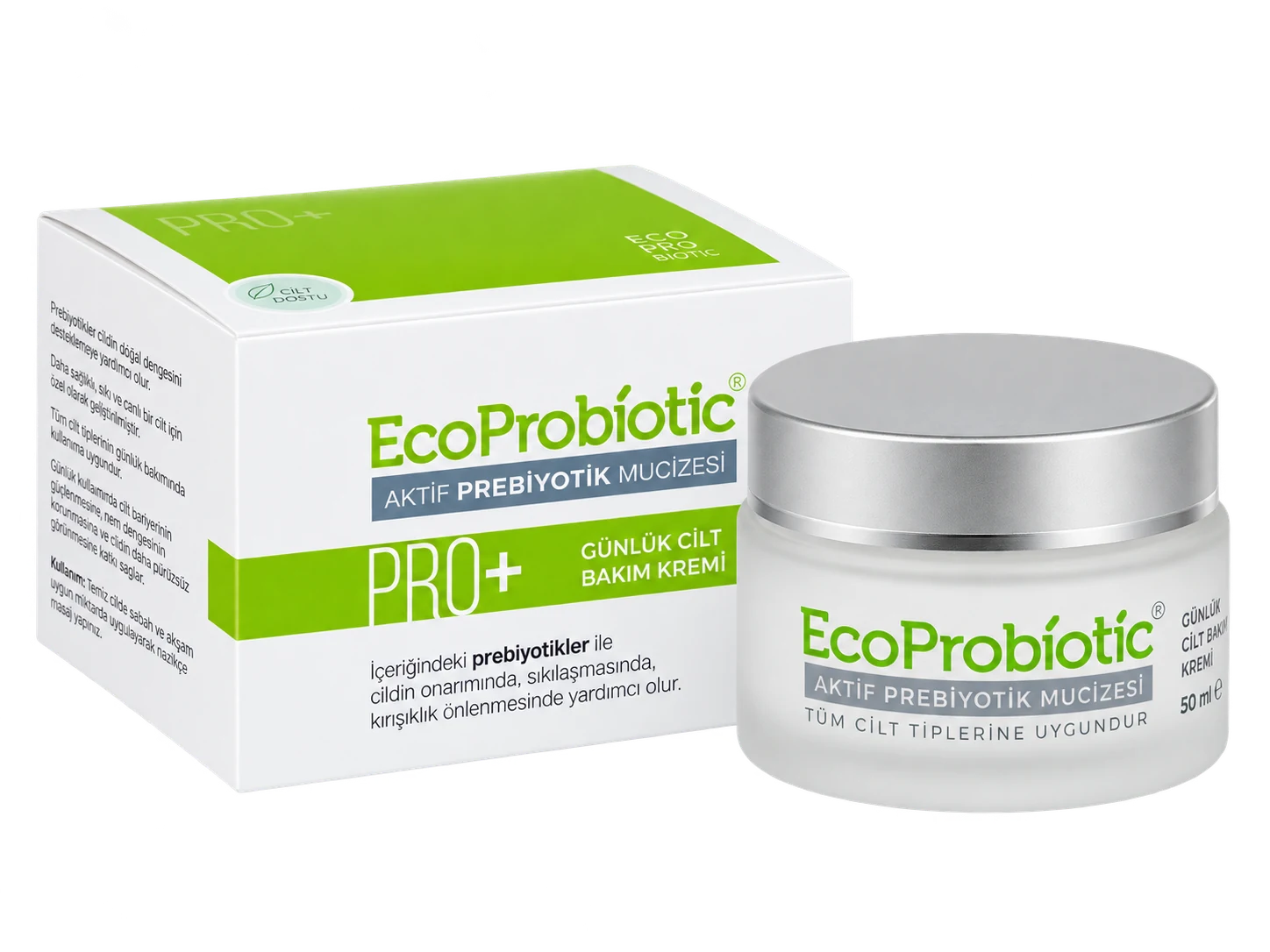 MoisturisingPrebiotic Skin CreamMoisturises the skin and helps repair the barrier. Available in three formulas: for all, dry and oily skin.View ↗
Sources
- 1.The gut-skin axis in health and disease: a paradigm with therapeutic implications
O'Neill CA, Monteleone G, McLaughlin JT, Paus R · BioEssays · 2016 · doi:10.1002/bies.201600008
Explained that the gut microbiome can influence the skin's inflammatory responses through the immune system.
- 2.The gut microbiome as a major regulator of the gut-skin axis
Salem I, Ramser A, Isham N, Ghannoum MA · Frontiers in Microbiology · 2018 · doi:10.3389/fmicb.2018.01459
Described the gut microbiome as one of the main regulators of the gut-skin axis.
- 3.Gut-skin axis: current knowledge of the interrelationship between microbial dysbiosis and skin conditions
De Pessemier B, Grine L, Debaere M, Maes A, Paetzold B, Callewaert C · Microorganisms · 2021 · doi:10.3390/microorganisms9020353
Reviewed findings on the link between gut microbial imbalance and acne, atopic dermatitis, psoriasis and rosacea.
- 4.Impact of gut microbiome on skin health: gut-skin axis observed through the lenses of therapeutics and skin diseases
Mahmud MR, Akter S, Tamanna SK, Mazumder L, Esti IZ, Banerjee S ve ark. · Gut Microbes · 2022 · doi:10.1080/19490976.2022.2096995
Examined the possible effects of the gut microbiome on skin health and approaches that target this axis.
- 5.A low-glycemic-load diet improves symptoms in acne vulgaris patients: a randomized controlled trial
Smith RN, Mann NJ, Braue A, Mäkeläinen H, Varigos GA · The American Journal of Clinical Nutrition · 2007 · doi:10.1093/ajcn/86.1.107
Participants who followed a low-glycemic-load diet showed a more noticeable reduction in acne lesions.