Self-test
Is this type yours?
- ◎When your hair air-dries, it forms defined curls (Type 3) or very tight, zigzag coils (Type 4).
- ◎Hair that's long when wet looks much shorter once dry; this is called shrinkage.
- ◎Your hair dries out easily and feels coarse or rough to the touch.
- ◎Even when your scalp is oily, your lengths and ends stay dry, because oil can't travel along the curls.
- ◎When you comb it dry, your hair puffs up and the curls fall apart completely.
- ◎Glass of water test: If a clean strand sinks to the bottom of the glass quickly, it has high porosity; it absorbs water and products fast but loses them just as fast.
- ◎Elasticity test: If a wet strand snaps right away when you gently pull it, it may need protein; if it stretches and doesn't spring back, it may need moisture.
In depth
The science of your hair
Curly hair grows from a distinctly curved hair follicle, and its cross-section is a flattened oval. The asymmetry in the strand's internal structure keeps bending it in one direction, forming the curl. This structure has two consequences. First, at every bend the cuticle scales are slightly lifted and the strand is thinner at those points; that's where breakage most often happens during combing and friction. Second, sebum from the scalp can't travel down through the curls, so the lengths are dry even when the scalp is normal or oily. Curly hair usually has high porosity, meaning it takes in water and products easily but loses them just as quickly. That is why curly hair dries out and frizzes so easily.
When it comes to the scalp, people with curly hair often wash less frequently and use heavy creams and oils. That may be right for the lengths, but sebum and product building up on the scalp can increase the tendency toward itching and dandruff. Non-lathering cleansing conditioners (co-wash) soften curly lengths but may fall short on an oily or flaky scalp. The right approach is to clean the scalp regularly and gently while giving the lengths plenty of moisture.
Priorities
What does it need?
01
Rich, layered moisture
Curly hair loses moisture quickly. A water-based cream followed by a layer of heavier cream or oil that seals in moisture helps curls stay hydrated all day.
02
Reducing friction
Every curl is a potential breaking point. Detangling while hair is wet and full of conditioner, and using a satin pillowcase and microfiber towel, reduce breakage.
03
Moisture and protein balance
Hair that only gets moisture can become overly soft and stretchy, while hair that only gets protein can become stiff and brittle. It's best to alternate the two based on how your hair responds.
04
Don't forget your scalp
Don't assume your scalp is dry just because your lengths are. When the scalp isn't cleaned regularly, buildup and itching set in.
05
Keeping heat to a minimum
Curly strands are more sensitive to heat. Flat irons and high-heat blow-drying can permanently loosen your curl pattern.
06
Protective styles
Braids, buns and loose updos protect the ends from friction; but very tight styles put stress on the roots.
Curly and coily hair (Type 3–4)
Rich, layered moisture
Step by step
Your hair routine
- 1
Pre-wash oil
Applying a little oil to your lengths and ends 30 minutes before washing reduces how much shampoo dries out the strands. Research shows some oils reduce protein loss from inside the strand during washing.
- 2
Gentle shampoo on your scalp
Once or twice a week, apply a gentle shampoo only to your scalp and massage with your fingertips.
- 3
Co-wash between washes
Between shampoo days, you can use a non-lathering cleansing conditioner to refresh your lengths. If your scalp is oily or flaky, don't rely on this method alone.
- 4
Wash in sections
If your hair is very thick, washing it in 4–6 sections both cleans your scalp better and reduces tangling.
What you can add to your routine
Infrequent washing, buildup and the microbiome
People with curly hair tend to wash less often. The sebum and products that build up during that time can create favorable conditions for the yeast naturally present on the scalp to multiply. Itching and flaking can be signs of this imbalance.
Your scalp and lengths have different needs
Your lengths want heavy moisture, while your scalp wants to be clean and balanced. Keeping rich creams and oils away from the scalp is a simple way to maintain microbiome balance.
Reading labels
Ingredient guide
✓What helps
- Mild surfactants (sodium cocoyl glutamate, cocamidopropyl betaine, sodium cocoyl isethionate): clean the scalp without over-drying the lengths.
- Humectants like glycerin and propanediol: draw water into the strand; in very dry weather it's best to pair them with a richer cream.
- Panthenol: softens strands, helps hold moisture and adds elasticity.
- Fatty alcohols like cetyl and stearyl alcohol: not drying at all; they give creams slip and softness.
- Coconut oil: research has shown it can penetrate the strand and reduce protein loss during washing.
- Hydrolyzed keratin and other small proteins: can add strength to brittle, damaged curls.
- Conditioning agents like behentrimonium chloride: make detangling easier and reduce friction.
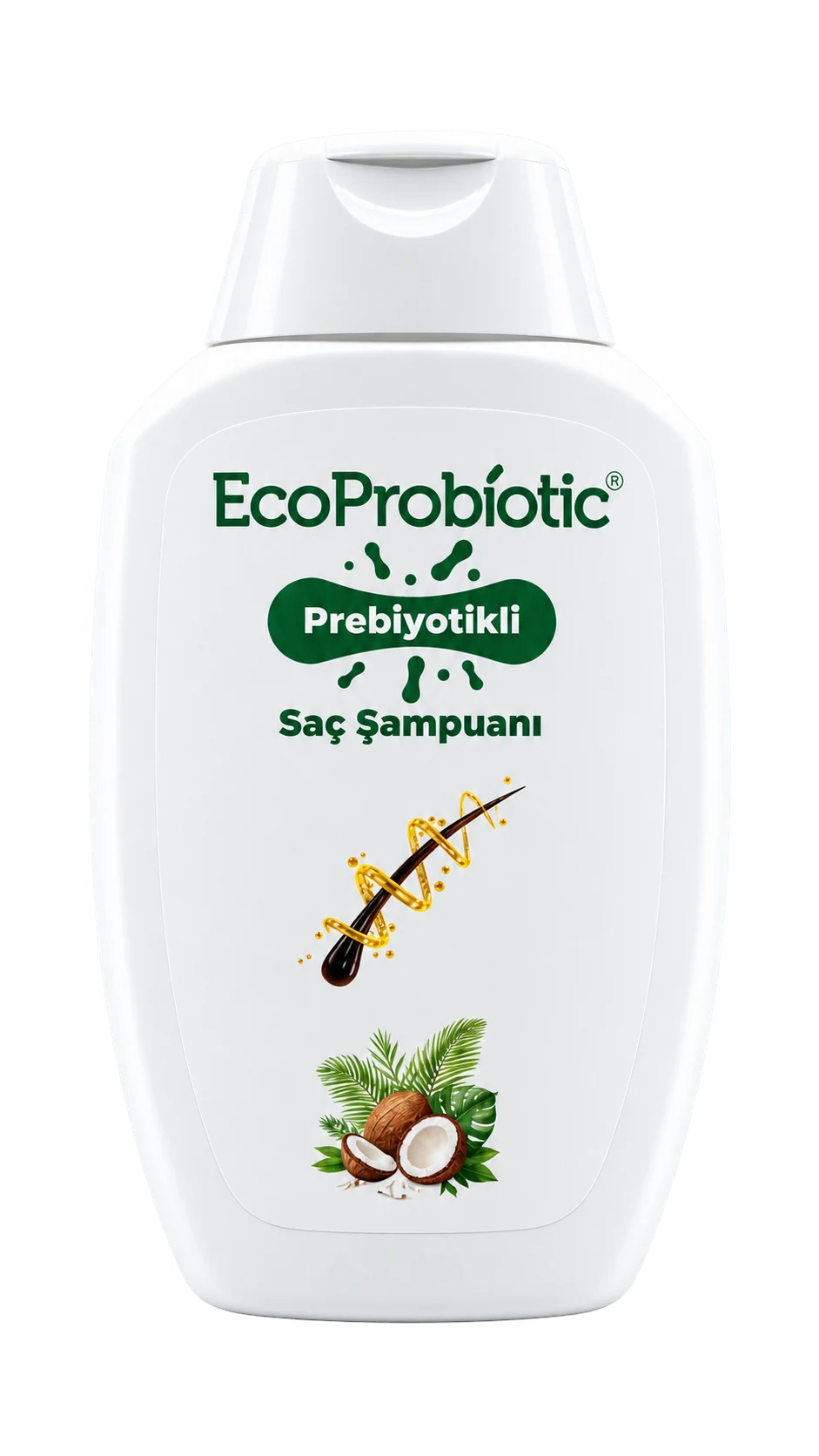
- Prebiotic ingredients: can help support microbiome balance by feeding the beneficial microorganisms on your scalp.
!Be careful with
- Strong sulfates (sodium lauryl sulfate): strip away the already scarce natural oils of curly strands and can increase dryness and frizz.
- Drying alcohols (alcohol denat., isopropyl alcohol) near the top of the ingredient list: can dry out strands; don't confuse them with fatty alcohols.
- Heavy non-water-soluble silicones: can build up on infrequently washed hair and make it harder for moisture to get in.
- Rich oils and butters on the scalp: can build up and increase the tendency toward itching and dandruff; keep them on your lengths.
- Too much protein: if your hair starts to feel stiff, dry and brittle, take a break from protein.
Caution
Common mistakes
- ✕Brushing curly hair while it's dry or combing it with a fine-tooth comb.
- ✕Washing only with co-wash and not truly cleaning your scalp for weeks.
- ✕Putting heavy oils and butters on your scalp.
- ✕Skipping moisture and using only oil; oil doesn't add moisture, it only holds in what's already there.
- ✕Constantly using protein-heavy treatments and making your hair stiff.
- ✕Frequently straightening your curls with a flat iron; high heat can permanently loosen your curl pattern.
- ✕Wearing your hair in the same tight style every day.
Popular searches
Most asked about Curly and coily hair (Type 3–4)
Your questions
Frequently asked questions
How often should I wash my curly hair?+
For most curly hair, shampooing once or twice a week is enough. But if your scalp is oily, itchy or flaky, you'll need to wash more often. The measure isn't the calendar; it's how comfortable your scalp feels.
Can co-washing replace shampoo?+
Not completely. Non-lathering cleansing conditioners soften the lengths, but they may not clean oil and product buildup from the scalp well enough. Research stresses that this method may fall short on oily and flaky scalps. Alternating it with shampoo is the most balanced approach.
How can I tell if my hair needs moisture or protein?+
Gently pull a wet strand. If it stretches a lot, then snaps and feels gummy, it needs protein; if it snaps right away without stretching and feels stiff, it needs moisture. If your hair is healthy, it stretches a little and springs back.
Why do my curls fall apart by the end of the day?+
Losing moisture, touching your hair while it dries and friction at night are the most common reasons. Applying enough moisture and a definer to wet hair, drying hands-off and using a satin pillowcase help your curls last longer.
Why does curly hair break more easily?+
At every bend the strand gets thinner and the cuticle scales are lifted. During combing and friction, force concentrates at these points. Detangling while hair is wet and full of conditioner markedly reduces breakage.
Why does curly hair get frizzy?+
In curly strands, the cuticle scales are lifted at the bends and the strand loses moisture quickly. A dehydrated strand absorbs humidity from the air unevenly, friction breaks up the curls and hair frizzes. Applying layered moisture to wet hair, using a microfiber towel, not touching it while it dries and using a satin pillowcase at night markedly reduce frizz.
How should you dry curly hair?+
Don't rub out the water with a towel; squeeze it out with a microfiber towel or a cotton T-shirt. Then diffuse on low heat or let it air-dry, and don't touch your curls until your hair is completely dry. Frequent use of high-heat blow-drying and flat irons can loosen your curl pattern over time.
What helps with dry curly hair?+
The most effective way to fight dryness is to apply moisture in layers: plenty of conditioner, a leave-in cream on soaking-wet hair, then a little oil or rich cream to hold in the moisture. A weekly deep moisture mask and coconut oil on your ends before washing can also help; research shows this oil reduces protein loss during washing.
Does curly hair shed a lot?+
In curly hair, naturally shed strands get caught between the curls, so they often show up all at once on wash and detangling day; that's why shedding can look heavier than it really is. If you see short broken pieces at the ends, the issue is breakage more than shedding, and gentle detangling reduces it. If your scalp is becoming noticeably more visible or shedding has been increasing for weeks, see a dermatologist.
Scientific basis
Sources
- 1.Worldwide diversity of hair curliness: a new method of assessment
Loussouarn G, Garcel AL, Lozano I, et al. · International Journal of Dermatology 46(s1):2-6 · 2007 · doi:10.1111/j.1365-4632.2007.03453.x
Introduced a method that classifies hair curl using measures such as curve diameter and number of waves, and showed a wide worldwide range from straight to very tightly coiled hair.
- 2.Characterization of curved hair of Japanese women with reference to internal structures and amino acid composition
Nagase S, Tsuchiya M, Matsui T, et al. · Journal of Cosmetic Science 59(4):317-332 · 2008
Showed that the internal structure and amino acid distribution of curly hair strands differ from straight strands and are asymmetrical.
- 3.Pro and contra of cleansing conditioners
Gavazzoni Dias MFR · Skin Appendage Disorders 5(3):131-134 · 2019 · doi:10.1159/000493588
Discusses how non-lathering cleansing conditioners (co-wash) give softness to curly and dry hair but may fall short for an oily scalp and a tendency toward dandruff.
- 4.Effect of mineral oil, sunflower oil, and coconut oil on prevention of hair damage
Rele AS, Mohile RB · Journal of Cosmetic Science 54(2):175-192 · 2003
Showed that coconut oil applied before and after washing markedly reduced protein loss from the hair shaft compared with mineral oil and sunflower oil.
- 5.Investigation of penetration abilities of various oils into human hair fibers
Keis K, Persaud D, Kamath YK, Rele AS · Journal of Cosmetic Science 56(5):283-295 · 2005
Showed that coconut oil can penetrate the hair shaft, while mineral oil stays on the surface without getting in.
- 6.Penetration of different molecular weight hydrolysed keratins into hair fibres and their effects on the physical properties of textured hair
Malinauskyte E, Shrestha R, Cornwell PA, et al. · International Journal of Cosmetic Science 43(1):26-37 · 2021 · doi:10.1111/ics.12663
Showed that low-molecular-weight hydrolyzed keratin can penetrate curly hair strands and improve some of the strand's physical properties.
- 7.Dandruff is associated with disequilibrium in the proportion of the major bacterial and fungal populations colonizing the scalp
Clavaud C, Jourdain R, Bar-Hen A, et al. · PLoS ONE 8(3):e58203 · 2013 · doi:10.1371/journal.pone.0058203
Showed that on a scalp with dandruff, the ratio between bacterial and yeast communities is disrupted compared with a healthy scalp, meaning dandruff is linked to a loss of balance.