Self-test
Is this type yours?
- ◎When you roll a single strand between your fingers, you can clearly feel it; or the strand looks thicker than a sewing thread.
- ◎When you put your hair in a ponytail, you can only wrap the hair tie once or twice.
- ◎Your hair takes hours to air-dry, and even blow-drying takes a long time.
- ◎Your scalp barely shows, even at your part.
- ◎In humid weather your hair frizzes noticeably and gains volume.
- ◎Glass of water test: If a clean strand stays on the surface for a long time, it may have low porosity; if you feel products don't absorb into your hair and just sit on the surface, that's the same sign.
In depth
The science of your hair
Thick (coarse) hair means the diameter of a single strand is large; dense hair means there are many strands on your scalp. Thick strands have a wider cortex layer and usually a medulla at the center. This structure gives the strand strength and resilience; thick hair tolerates heat and treatments better than fine hair. But that same strength makes it harder for water and products to get into low-porosity hair, where the cuticle scales are tightly closed. That's why thick hair can sometimes feel both dry and resistant to products. A thick strand that lacks moisture also frizzes easily, because it reacts unevenly to water in humid air.
With dense hair, the real challenge is reaching the scalp. The sheer number of strands keeps shampoo and water from reaching the scalp; if rinsing isn't thorough, product and sebum can build up there. And because dense hair dries slowly, the scalp stays damp for a long time. A constantly damp, warm environment can create favorable conditions for the yeast naturally present on the scalp to multiply. Care for thick, dense hair rests on two pillars: getting moisture deep into the strand and thoroughly cleaning and drying the scalp.
Priorities
What does it need?
01
Deep moisture
Thick strands carry rich creams and oils much better than fine hair. To work moisture into the strand, apply creams to wet hair and leave them on for a bit.
02
Controlling frizz
When moisture on the strand's surface is in balance, humidity in the air frizzes hair less. A moisture-holding cream plus a light layer of oil is the most effective duo.
03
Reaching the scalp
With dense hair, washing in sections is the best way to make sure shampoo actually reaches your scalp.
04
Drying thoroughly
A scalp that stays damp for hours can become uncomfortable. Drying the roots with warm air keeps your scalp more comfortable.
05
Managing the weight
Thick, long hair is heavy. Very tight, heavy buns can strain the roots; loose styles and wide hair ties are a better choice.
Thick and dense hair
Deep moisture
Step by step
Your hair routine
- 1
Wash in sections
Divide your hair into four sections and apply shampoo to the scalp of each section separately. That way, the cleansing actually reaches your scalp.
- 2
Wash 2–3 times a week
For most thick, dense hair, two or three washes a week is enough; if your scalp gets oily, you can wash more often.
- 3
Long rinse
With dense hair, rinsing should take longer than you think. Rinse until no lather or slipperiness is left on your scalp.
- 4
Lukewarm water
Lukewarm water helps the cuticle open just enough to take in conditioner; avoid very hot water.
What you can add to your routine
A scalp that stays damp for a long time
Dense hair dries slowly. A scalp that stays damp and warm for hours can create favorable conditions for the yeast naturally present on the scalp to multiply. Drying your roots helps maintain this balance.
Insufficient rinsing and buildup
Shampoo and conditioner residue can stick to the scalp under dense hair. This buildup can irritate the scalp's barrier and lead to itching.
Reading labels
Ingredient guide
✓What helps
- Gentle but effective surfactants: with dense hair, they need to clean the scalp well without drying out the lengths.
- Fatty alcohols (cetyl, cetearyl alcohol): give creams body and slip and soften thick strands.
- Coconut oil and similar oils that can penetrate the strand: research has shown they reduce protein loss from inside the strand.
- Rich emollients like shea and cocoa butter: hold moisture in thick, dry lengths.
- Glycerin and panthenol: draw water into the strand and add elasticity.
- Non-water-soluble silicones (in moderation): reduce frizz and friction; can be used along with regular clarifying.
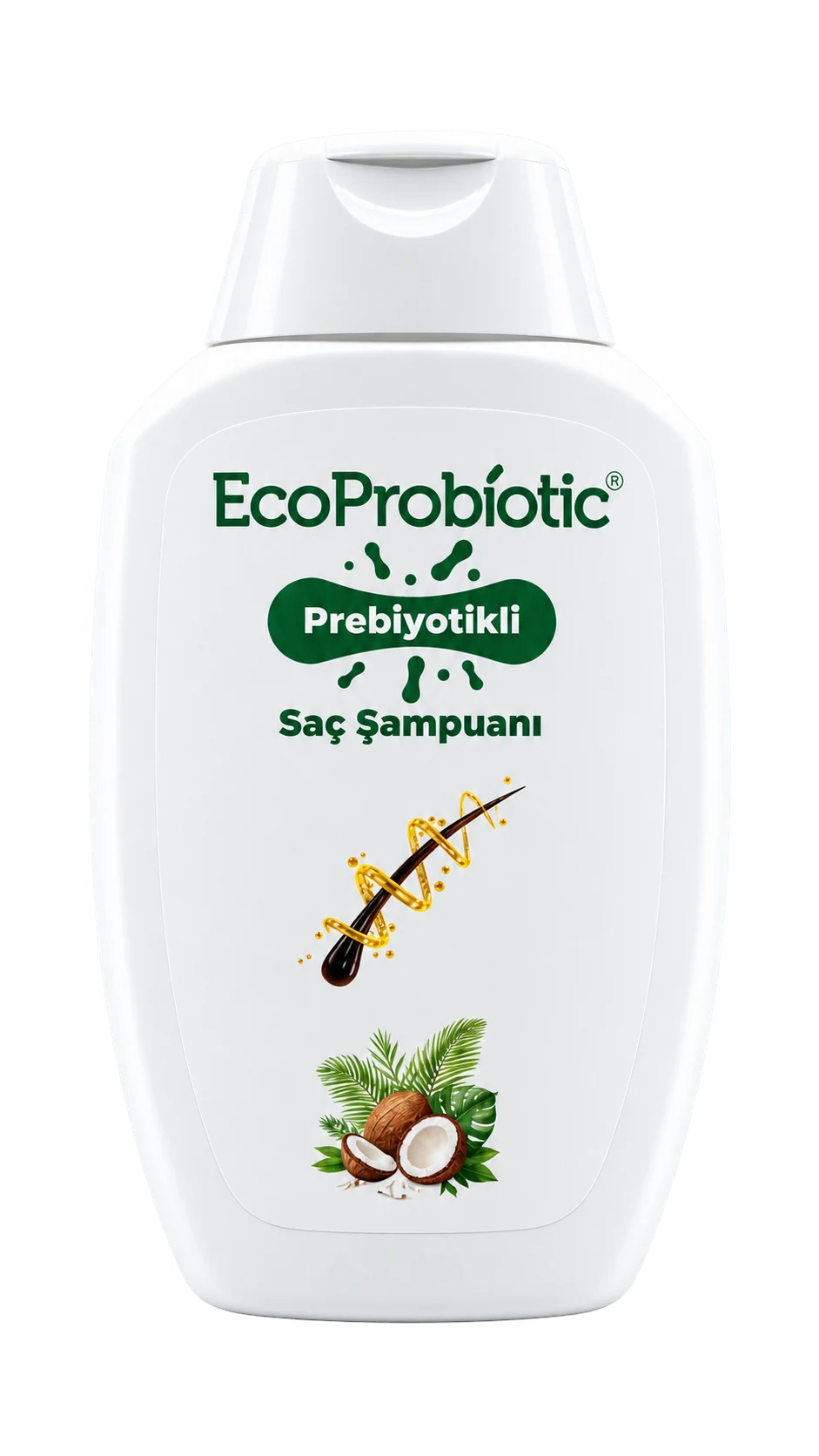
- Prebiotic ingredients: can help support microbiome balance by feeding the beneficial microorganisms on your scalp.
!Be careful with
- Strong sulfates: clean the scalp but can make thick, dry lengths stiff and frizzy.
- Protein-heavy products: thick strands are already strong; too much protein can cause stiffness and brittleness.
- Heavy oils applied to the scalp: can build up because they're hard to wash out of dense hair.
- Sprays with drying alcohols near the top of the ingredient list: can increase frizz.
- Straightening treatments that can release formaldehyde: often chosen by people with thick hair, but they call for caution because of the formaldehyde inhaled during application.
Caution
Common mistakes
- ✕Putting shampoo only on top of your hair and never getting it to your scalp.
- ✕Tying your hair up while it's wet or damp and leaving it that way for hours.
- ✕Cutting the rinse short and leaving product residue on your scalp.
- ✕Using the highest heat because thick hair is "tough."
- ✕Brushing dry hair and making it puff up.
- ✕Going to bed with wet hair; your scalp stays damp for a long time, and your hair gets crushed and breaks.
Popular searches
Most asked about Thick and dense hair
Your questions
Frequently asked questions
Why doesn't my thick hair absorb products?+
In thick, low-porosity hair the cuticle scales are tightly closed, so products sit on the surface. Applying products to hair dampened with lukewarm water, leaving masks on under a warm towel and using small amounts more often all help.
What happens if I go to bed with my dense hair wet?+
Your scalp stays damp and warm for hours. In some people, this can increase the tendency toward itching, odor and dandruff. Wet hair also breaks more easily as it rubs against the pillow. Drying at least your roots before bed is a good habit.
Is a keratin treatment safe for thick hair?+
Some professional straightening products can release formaldehyde when heated, and research has shown that levels in the room air during application can exceed occupational limits. If you're going to get this treatment, choose a well-ventilated salon and ask about the ingredients of the product being used.
What can be done to thin out thick hair?+
Strand thickness is genetically determined and can't be permanently changed. However, a layered cut and thinning out from the inside can noticeably reduce your hair's volume and weight.
Is oil enough to reduce frizz?+
Oil on its own doesn't add moisture; it only holds in the moisture that's already there. Hydrating the strand first with a water-based cream and then sealing in moisture with a little oil controls frizz much better.
How do you tame frizzy, puffy hair?+
The main causes of frizz are lack of moisture and friction. Don't skip conditioner, apply a moisture-holding cream and then a few drops of oil to wet hair, blot dry by squeezing instead of rubbing with a towel, and don't brush dry hair into a puff. If you blow-dry, use a heat protectant, medium heat and point the airflow down the hair shaft.
Why does hair get frizzy?+
When a strand loses moisture and its cuticle scales lift, it absorbs humidity from the air unevenly, strands separate from each other and hair frizzes. Dry air, harsh shampoos, rubbing with a towel, brushing when dry and high heat all increase frizz. Thick, wavy and curly hair is more prone to this.
Which shampoo and conditioner should I choose for thick hair?+
For dense hair, a gentle shampoo that cleans the scalp well without drying the lengths, paired with a rich conditioner containing fatty alcohols and emollients like shea, is a good duo. With thick, low-porosity hair, applying conditioner to wet hair and leaving it on for a few minutes boosts its effect. If you use rich products, add a clarifying shampoo now and then.
Scientific basis
Sources
- 1.Diversity of hair growth profiles
Loussouarn G, El Rawadi C, Genain G · International Journal of Dermatology 44(s1):6-9 · 2005 · doi:10.1111/j.1365-4632.2005.02800.x
Showed through measurements that hair density, growth rate and strand diameter vary markedly across different populations.
- 2.Effect of mineral oil, sunflower oil, and coconut oil on prevention of hair damage
Rele AS, Mohile RB · Journal of Cosmetic Science 54(2):175-192 · 2003
Showed that coconut oil applied before and after washing markedly reduced protein loss from the hair shaft compared with mineral oil and sunflower oil.
- 3.Investigation of penetration abilities of various oils into human hair fibers
Keis K, Persaud D, Kamath YK, Rele AS · Journal of Cosmetic Science 56(5):283-295 · 2005
Showed that coconut oil can penetrate the hair shaft, while mineral oil stays on the surface without getting in.
- 4.Characterization of formaldehyde exposure resulting from the use of four professional hair straightening products
Pierce JS, Abelmann A, Spicer LJ, et al. · Journal of Occupational and Environmental Hygiene 8(11):686-699 · 2011 · doi:10.1080/15459624.2011.626259
Measured that during the application of some professional keratin straightening products, formaldehyde levels in the room air can exceed occupational exposure limits.
- 5.Hair cosmetics: an overview
Gavazzoni Dias MF · International Journal of Trichology 7(1):2-15 · 2015 · doi:10.4103/0974-7753.153450
A comprehensive review that summarizes, from a dermatological perspective, the ingredients of hair cosmetics such as shampoo, conditioner, dyes and straighteners and their effects on the hair shaft.
- 6.Dandruff is associated with the conjoined interactions between host and microorganisms
Xu Z, Wang Z, Yuan C, et al. · Scientific Reports 6:24877 · 2016 · doi:10.1038/srep24877
Showed that dandruff arises not from microorganisms alone but together with sebum, moisture and the scalp's own characteristics.