Self-test
Is this type yours?
- ◎When you wash your hair and let it air-dry without any products, no noticeable curl or S-wave forms from root to tip.
- ◎A day or two after washing, your hair looks oily and flat at the roots; if your strands are fine, this happens even sooner.
- ◎Waves you create with a curling iron or rollers fall out and go straight within a few hours.
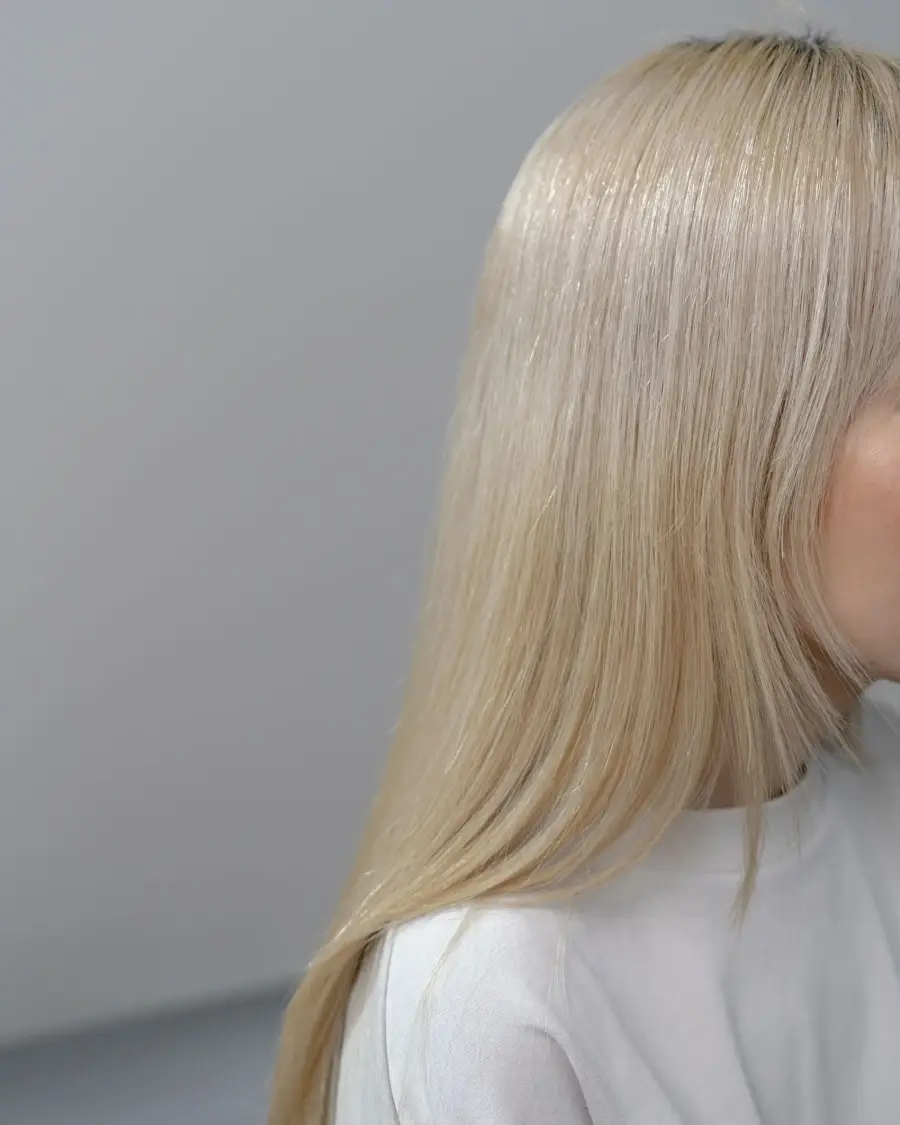
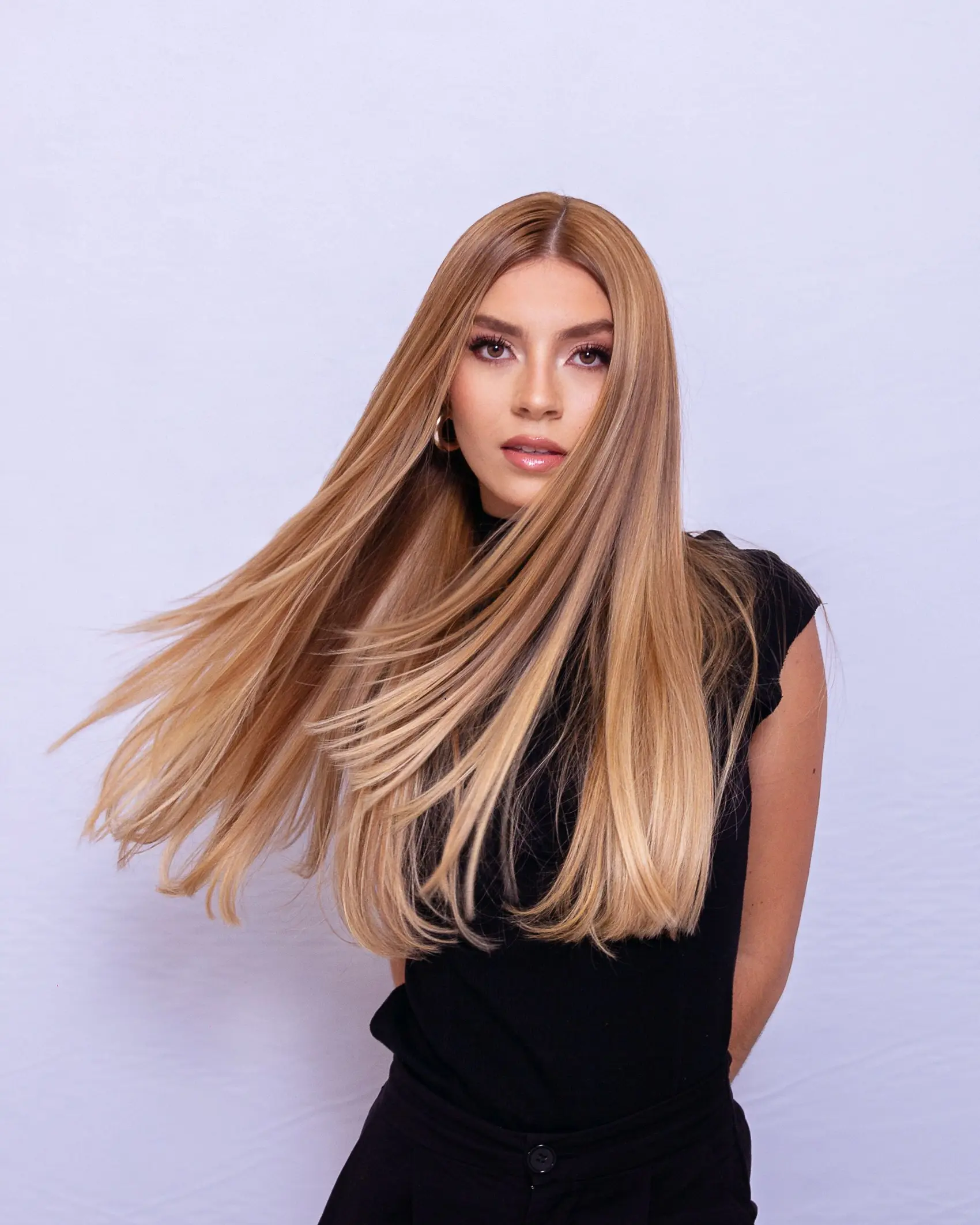
- ◎Your hair looks glossy under light, because the flat, smooth cuticle surface reflects light in a single direction.
- ◎Glass of water test: Drop a clean, product-free strand into a glass of lukewarm water. If it floats on the surface for several minutes, your hair has low porosity, meaning it has a hard time letting water and products in.
- ◎Heavy creams and oils build up on your hair right away and leave a sticky feeling.
In depth
The science of your hair
A hair strand has three layers: on the outside, cuticle scales that overlap like roof shingles; in the middle, the cortex, which gives hair its strength and color; and in some thick strands, the medulla at the very center. In straight hair, the hair follicle is straight and the cross-section is nearly round, so the cuticle scales line up neatly, light reflects in one direction and the hair looks shiny. That same smoothness also lets the sebum produced by the oil glands in your scalp travel quickly down the strand. While oil gets caught in the bends of curly hair, in straight hair it reaches the mid-lengths within a few hours; that is why straight hair looks oily so fast.
On the scalp side, the problem often swings back and forth between oiliness and dryness. The surface of a healthy scalp is mildly acidic (pH around 5). When people with straight hair wash very often with harsh shampoos because of oiliness, the scalp can become dry and itchy; an oily scalp that goes unwashed for a long time, on the other hand, is more prone to dandruff and itching. The balance between the yeast and bacteria naturally present on the scalp is also known to play a part in this picture. In short, the goal of straight hair care is to keep the strands light and to clean the scalp gently but regularly.
Priorities
What does it need?
01
Regular but gentle cleansing
Because sebum spreads quickly down the strand, straight hair often needs frequent washing. That's not a problem; what matters is choosing a shampoo with a pH close to that of the scalp and mild surfactants.
02
Lightweight moisture
Straight strands don't carry heavy oils and creams well. Light conditioners that rinse out easily and spray formulas soften hair without making it go flat.
03
Volume and root lift
Hair looks thinner when it lies flat at the roots. Drying from the roots and keeping conditioner off your scalp are the simplest ways to maintain volume.
04
Heat protection
Straight hair is often styled with blow-dryers and curling irons. A heat protectant and the right distance help keep the cuticle from roughening and the shine from fading.
05
A balanced scalp
The scalp microbiome feeds on sebum. Finding the balance between overly harsh cleansing and oil buildup helps reduce the tendency toward itching and dandruff.
Straight hair (Type 1)
Regular but gentle cleansing
Step by step
Your hair routine
- 1
Apply shampoo to your scalp
Lather a little shampoo in your palm and apply it only to your scalp with a massage. The ends get cleaned well enough by the lather that runs down as you rinse.
- 2
Wash as often as you need
If your hair gets oily within a day, washing every day or every other day won't harm your scalp, as long as your shampoo is gentle. Base your wash frequency on your scalp's condition, not the calendar.
- 3
Use lukewarm water
Very hot water can stimulate the oil glands even more and dry out your scalp. Wash with lukewarm water and make the final rinse a little cooler.
- 4
Rinse thoroughly
Leftover shampoo and conditioner on straight hair quickly comes back as an oily look. Rinse until all the lather is gone.
What you can add to your routine
Sebum is the microbiome's dinner table
The oil on your scalp is the main food source for the microorganisms living there. The excess oiliness common in straight hair can create favorable conditions for the yeast naturally present on the scalp to multiply, which is associated with dandruff and itching.
Harsh cleansing can upset the balance
Using a harsh shampoo every day to get rid of oil also strains the scalp's protective layer and its beneficial microorganisms. Gentle but regular cleansing is a smarter way to maintain balance.
Reading labels
Ingredient guide
✓What helps
- Mild surfactants (e.g. sodium cocoyl glutamate, sodium cocoyl isethionate, cocamidopropyl betaine): clean the scalp without putting too much strain on the barrier.
- Shampoos with a pH around 5–5.5: help keep the cuticle flat and preserve the scalp's natural acidity.
- Light humectants (glycerin, panthenol): hold water and add softness without weighing strands down.
- Hydrolyzed proteins (in small amounts): can give fine straight strands a feeling of body and strength.
- Water-soluble or volatile silicones: add shine and easy combing, then evaporate or rinse away without building up.
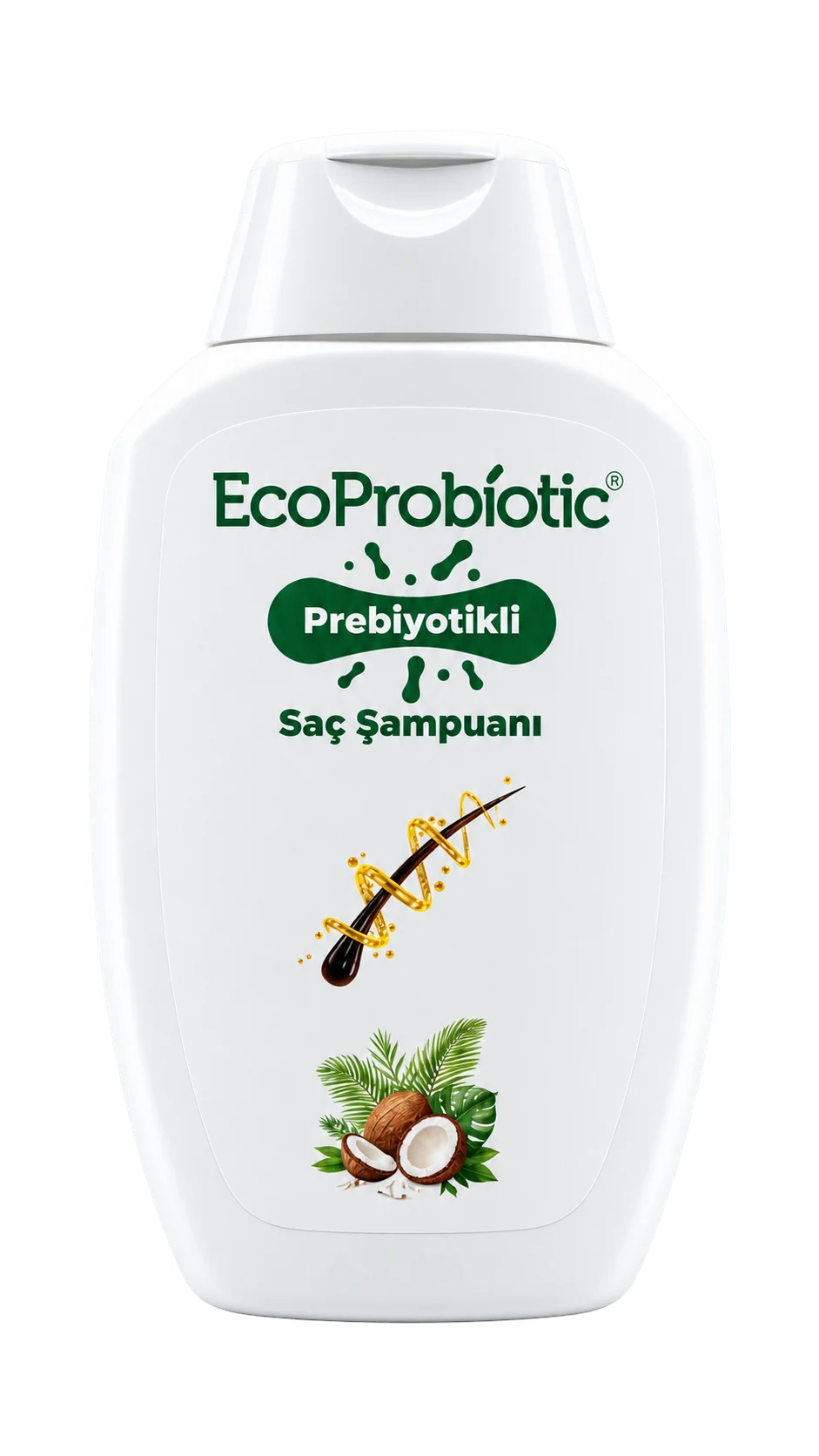
- Prebiotic ingredients: can help support microbiome balance by feeding the beneficial microorganisms on your scalp.
- Heat-protective polymers: form a thin protective layer on the strand's surface during blow-drying and flat ironing.
!Be careful with
- Strong sulfates (such as sodium lauryl sulfate): remove oil very effectively, but with frequent use they can dry out the scalp and leave you feeling even oilier in response.
- Heavy oils and butters: instantly flatten straight strands and speed up oiliness when used at the roots.
- Heavy non-water-soluble silicones: if you don't use a clarifying shampoo, they can build up and make hair look flat and dull.
- Heavy use of dry shampoo: handy now and then, but used every day it can build up on the scalp and increase itching.
- Sprays high in alcohol: add volume in the short term but can dry out strands with frequent use.
Caution
Common mistakes
- ✕Putting conditioner on your scalp and roots; hair both falls flat and gets oily faster.
- ✕Leaving hair dirty for days to "train" it to get oily less often; this can cause scalp itching and odor.
- ✕Getting by on dry shampoo every day and never actually washing your scalp.
- ✕Holding the blow-dryer close enough to touch your hair, on the hottest setting.
- ✕Putting heavy oils on your ends and weighing down all your hair.
- ✕Always parting in the same place; hair goes flat there and your scalp gets more light exposure.
Popular searches
Most asked about Straight hair (Type 1)
Your questions
Frequently asked questions
Is it bad to wash my straight hair every day?+
Not as long as you use a gentle shampoo. Research shows that the belief that frequent washing damages hair isn't backed by strong evidence. If your scalp gets oily within a day, keeping it clean can also help reduce the tendency toward itching and dandruff.
If I wash my hair less often, will it get used to producing less oil?+
Your scalp's oil production is largely determined by hormones and genetics; it doesn't permanently decrease from washing less often. You simply carry the built-up oil for longer. Switching to a gentler shampoo is a more effective way to reduce that oily feeling.
Why does my straight hair get static and frizzy?+
In dry air and with alkaline shampoos, the negative electrical charge on the strand's surface increases and strands repel each other. Not skipping conditioner, choosing a low-pH shampoo and using an anti-static comb instead of a plastic one reduce static.
Do silicone products damage straight hair?+
Silicones don't damage hair; in fact, they reduce friction and add shine. The issue is that heavy silicones can build up over time. If you do a clarifying wash once a week or every two weeks, you can enjoy silicones without worry.
How can I give straight hair lasting volume?+
Keeping conditioner off your roots, flipping your head over to dry, using light volumizing products and switching your part now and then are the most effective ways. A clean, balanced scalp also makes root lift easier.
Why does straight hair get oily so fast?+
Because straight strands have no bends, the oil (sebum) produced by your scalp flows quickly down the strand and reaches the mid-lengths within a few hours. Oil production itself is largely determined by hormones and genetics. Washing as needed with a gentle shampoo, keeping conditioner off the roots and not touching your hair often all delay the oily look.
What shampoo should I choose for straight hair?+
A shampoo with a pH around 5–5.5, mild surfactants (glutamate, isethionate, betaine derivatives) and no heavy oils is a good place to start. If your strands are fine, formulas designed as 'volumizing' or 'lightweight' work better; if your scalp is oily, balancing shampoos suitable for frequent use are a better fit. If you use heavy silicone products, add a clarifying shampoo now and then.
How do I care for straight hair at home?+
Apply shampoo only to your scalp, put conditioner on from ear level down and rinse well. Detangle wet hair with a wide-tooth comb starting from the ends, apply a heat protectant, then flip your head over and dry the roots first, holding the blow-dryer about 15 cm (6 inches) away. A clarifying wash once a week or every two weeks clears away buildup and keeps your hair light.
Scientific basis
Sources
- 1.Hair cosmetics: an overview
Gavazzoni Dias MF · International Journal of Trichology 7(1):2-15 · 2015 · doi:10.4103/0974-7753.153450
A comprehensive review that summarizes, from a dermatological perspective, the ingredients of hair cosmetics such as shampoo, conditioner, dyes and straighteners and their effects on the hair shaft.
- 2.The shampoo pH can affect the hair: myth or reality?
Gavazzoni Dias MF, de Almeida AM, Cecato PM, et al. · International Journal of Trichology 6(3):95-99 · 2014 · doi:10.4103/0974-7753.139078
Showed that shampoos with a pH above 5.5 can increase the negative electrical charge and friction on the hair shaft, setting the stage for cuticle damage and breakage.
- 3.The impact of shampoo wash frequency on scalp and hair conditions
Punyani S, Tosti A, Hordinsky M, et al. · Skin Appendage Disorders 7(3):183-193 · 2021 · doi:10.1159/000512786
Questioned the belief that frequent washing damages hair, and reported that adjusting wash frequency to the person's scalp condition can improve scalp comfort.
- 4.Hair shaft damage from heat and drying time of hair dryer
Lee Y, Kim YD, Hyun HJ, Pi LQ, Jin X, Lee WS · Annals of Dermatology 23(4):455-462 · 2011 · doi:10.5021/ad.2011.23.4.455
Showed that using a hair dryer too close to the hair and at high heat increases cuticle damage, while drying from about 15 cm (6 inches) away with constant motion markedly reduces damage.
- 5.Dandruff is associated with disequilibrium in the proportion of the major bacterial and fungal populations colonizing the scalp
Clavaud C, Jourdain R, Bar-Hen A, et al. · PLoS ONE 8(3):e58203 · 2013 · doi:10.1371/journal.pone.0058203
Showed that on a scalp with dandruff, the ratio between bacterial and yeast communities is disrupted compared with a healthy scalp, meaning dandruff is linked to a loss of balance.
- 6.Natural skin surface pH is on average below 5, which is beneficial for its resident flora
Lambers H, Piessens S, Bloem A, Pronk H, Finkel P · International Journal of Cosmetic Science 28(5):359-370 · 2006 · doi:10.1111/j.1467-2494.2006.00344.x
Showed that the natural pH of the skin surface is on average below 5 and that this mildly acidic environment is favorable for beneficial resident microorganisms.