Self-test
Is this type yours?
- ◎When you use a new shampoo or hair product, your scalp stings, burns or itches.
- ◎You feel tingling, tightness or tenderness on your scalp even though there's no visible problem.
- ◎Your hair roots hurt when you wear your hair pulled the same way for a long time or when you change your part.
- ◎You get redness and burning on your scalp after dye, bleach or fragranced products.
- ◎Itching gets worse during stressful times, in the heat or when you sweat.
- ◎Your face also tends to be sensitive; you react easily to some cosmetics.
In depth
The science of your hair
A sensitive scalp means that uncomfortable sensations such as stinging, burning, itching, tingling and pain appear with no visible signs or very few. An epidemiological study in France showed that a significant share of participants described these symptoms and that the condition was reported more often by women. The scalp has a dense network of nerves and a large number of hair follicles, which makes it especially sensitive to sensory stimuli. When the barrier weakens, irritants and allergens get in more easily and nerve endings are triggered more easily.
Itching is one of the most common scalp complaints, and many nerve-, immune- and barrier-related mechanisms play a role together. Dandruff and seborrheic dermatitis, contact dermatitis (e.g. a reaction to dye or fragrance), psoriasis and stress are among the common causes of itching. On a flaky, itchy scalp, the balance between the yeast and bacteria naturally present on the scalp is also known to shift. With a sensitive scalp, the basic strategy is to cut down on irritants, support the protective layer and clarify the cause of itching that lasts for weeks with a dermatologist.
Priorities
What does it need?
01
Simplicity
Products with short ingredient lists that are fragrance-free or low in fragrance are the most effective way to lower the risk of irritation.
02
Gentle cleansing
A mildly acidic shampoo with soft surfactants keeps your scalp calm.
03
Barrier support
A strong barrier reduces how much irritants get in and how much nerve endings are triggered.
04
Finding your triggers
Noting which products, environments or situations make your symptoms worse is the key to managing your sensitivity.
05
Mechanical gentleness
Tight updos, stiff brushes and scratching with your nails put stress on a sensitive scalp.
06
The right diagnosis
Behind the itch there may be dandruff, dermatitis, psoriasis or an allergy. With persistent or severe symptoms, it's important to see a dermatologist.
Sensitive and itchy scalp
Simplicity
Step by step
Your hair routine
- 1
A simple, fragrance-free shampoo
Choose a shampoo with a short ingredient list, no fragrance and mild surfactants.
- 2
Lukewarm or cool water
Hot water can increase itching and redness. Wash with lukewarm or cool water.
- 3
Regular washing
Sweat, sebum and product buildup can trigger itching. Wash regularly, as often as keeps your scalp comfortable.
- 4
Test new products
Before applying a new product to your whole scalp, try it on a small area behind your ear for a few days.
What you can add to your routine
Itching when the balance is off
Research shows that on an itchy, flaky scalp the balance between yeast and bacteria shifts. This imbalance is associated with an increase in certain by-products that irritate the scalp.
A weak barrier means stronger reactions
A weakened barrier both makes it easier for irritants to get in and affects microbiome balance. Supporting the barrier also means supporting the microbiome.
Reading labels
Ingredient guide
✓What helps
- Mild surfactants (sodium cocoyl glutamate, decyl glucoside, betaine derivatives): clean the scalp without irritating it.
- Panthenol: soothing and helps hold moisture.
- Niacinamide: can support barrier function and help reduce the tendency toward redness.
- Ceramides and glycerin: support the barrier and moisture.
- Bisabolol and allantoin: well-tolerated ingredients known for their soothing properties.
- Fragrance-free or low-fragrance formulas: lower the risk of irritation and allergy.
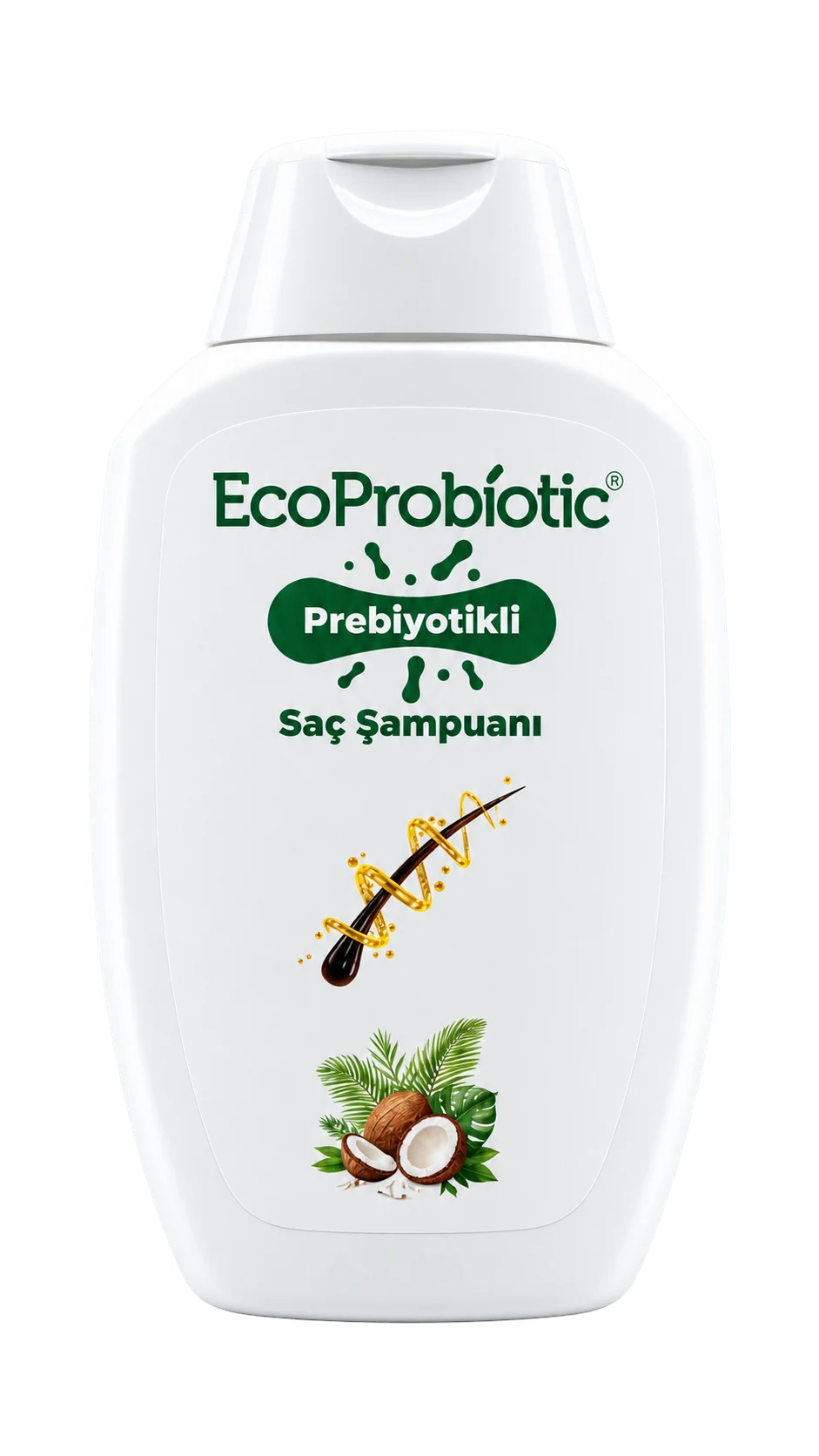
- Prebiotic ingredients: can help support microbiome balance by feeding the beneficial microorganisms on your scalp.
!Be careful with
- Fragrance and essential oil blends: among the most common causes of irritation and allergy on a sensitive scalp.
- Certain preservatives (e.g. methylisothiazolinone): can cause contact allergy in some people.
- Para-phenylenediamine (PPD) in hair dyes: found in permanent dark dyes and a major cause of allergy; an allergy patch test 48 hours before coloring is recommended.
- Strong sulfates: can weaken the barrier and increase stinging and burning.
- Menthol, camphor and high levels of alcohol: feel cooling at first but can increase irritation on a sensitive scalp.
- Harsh scrubs and scalp products with a high acid concentration: can strain the barrier.
Caution
Common mistakes
- ✕Starting more than one new product at the same time; if you react, finding the cause becomes impossible.
- ✕Scratching the itch with your nails and damaging the barrier even more.
- ✕Choosing heavily fragranced products for a fresh feeling.
- ✕Skipping the allergy patch test before coloring.
- ✕Switching products at home for weeks despite persistent itching, redness, oozing or sores.
- ✕Pulling your hair back tightly in the same spot every day.
- ✕Ignoring how stress and lack of sleep affect your scalp symptoms.
Popular searches
Most asked about Sensitive and itchy scalp
Your questions
Frequently asked questions
Is a sensitive scalp really a thing?+
Yes. Feeling stinging, burning, itching and tingling without any visible signs is a condition that has been described in research, and it's reported more often by women. These sensations are real and can usually be eased with the right care.
Why does my scalp itch all the time?+
Itching can have many causes: dandruff and seborrheic dermatitis, a dry scalp, irritation or allergy from products, psoriasis, lice and stress are some of them. If the itching has lasted for a few weeks, is keeping you up at night or comes with redness, flaking or sores, seeing a dermatologist is the right move.
How can I tell if I'm allergic to hair dye?+
It's recommended to do a patch test 48 hours before every coloring by applying a small amount of dye behind your ear or on your inner elbow. If you get itching, redness or swelling, don't use that dye. If you develop swelling on your face or scalp, intense itching or oozing after coloring, see a doctor right away.
Can stress affect my scalp?+
It can. Stress can increase the sensitivity of the nerve endings in your scalp and how strongly you perceive itching; it can also trigger flare-ups of conditions like dandruff and seborrheic dermatitis. Sleep, regular movement and relaxation habits are part of scalp care too.
Which shampoo should I choose for a sensitive scalp?+
A shampoo with a short ingredient list, no fragrance or low fragrance, mild surfactants and a mildly acidic pH is a good place to start. Try any new product on a small area first, and change only one product at a time.
What helps an itchy scalp?+
First, think about the likely cause: if there's flaking, it may be dandruff; if there's tightness, dryness; if it started after a new product, irritation or allergy. In general, a fragrance-free, gentle shampoo, lukewarm water, regular washing, not scratching with your nails and a soothing treatment with panthenol or niacinamide bring relief. If you have dandruff, anti-dandruff ingredients like zinc pyrithione are needed; for stubborn itching, treatment determined through a dermatologist's evaluation is needed.
Why does my scalp itch even when it's clean?+
A freshly washed scalp that itches is often reacting to fragrance, preservatives or strong surfactants in the shampoo, or the cause is insufficient rinsing or dryness. Very hot water can also increase itching. Simplifying your shampoo, rinsing thoroughly and using lukewarm water often make a difference.
Why do my hair roots hurt?+
Sore hair roots usually come from hair pulled tightly in the same direction for a long time straining the follicles, from a sensitive scalp or from a tension-type headache. Wearing your hair loosely, changing your part and using simple products usually help. If the pain comes with shedding, redness, sores or fever, see a doctor.
Scientific basis
Sources
- 1.Sensitive scalp: does this condition exist? An epidemiological study
Misery L, Sibaud V, Ambronati M, et al. · Contact Dermatitis 58(4):234-238 · 2008 · doi:10.1111/j.1600-0536.2007.01288.x
An epidemiological study in France found that a significant share of participants described sensitive scalp symptoms such as stinging, burning and itching, and that this was reported more often by women.
- 2.The itchy scalp - scratching for an explanation
Bin Saif GA, Ericson ME, Yosipovitch G · Experimental Dermatology 20(12):959-968 · 2011 · doi:10.1111/j.1600-0625.2011.01389.x
Reviews the nerve-, immune- and barrier-related mechanisms of scalp itch and its most common causes.
- 3.A practical guide to scalp disorders
Grimalt R · Journal of Investigative Dermatology Symposium Proceedings 12(2):10-14 · 2007 · doi:10.1038/sj.jidsymp.5650048
Summarizes, in practical terms, common scalp problems such as dandruff, seborrheic dermatitis, psoriasis and itching, and how to tell them apart.
- 4.Stratum corneum dysfunction in dandruff
Turner GA, Hoptroff M, Harding CR · International Journal of Cosmetic Science 34(4):298-306 · 2012 · doi:10.1111/j.1468-2494.2012.00723.x
Showed that on a scalp with dandruff the outermost protective layer (the barrier) is impaired, water loss increases and the lipid structure changes.
- 5.Dandruff is associated with disequilibrium in the proportion of the major bacterial and fungal populations colonizing the scalp
Clavaud C, Jourdain R, Bar-Hen A, et al. · PLoS ONE 8(3):e58203 · 2013 · doi:10.1371/journal.pone.0058203
Showed that on a scalp with dandruff, the ratio between bacterial and yeast communities is disrupted compared with a healthy scalp, meaning dandruff is linked to a loss of balance.
- 6.The role of the microbiome in scalp hair follicle biology and disease
Polak-Witka K, Rudnicka L, Blume-Peytavi U, Vogt A · Experimental Dermatology 29(3):286-294 · 2020 · doi:10.1111/exd.13935
A review examining how the scalp microbiome relates to hair follicle biology, dandruff, seborrheic dermatitis and some forms of hair loss.
- 7.Natural skin surface pH is on average below 5, which is beneficial for its resident flora
Lambers H, Piessens S, Bloem A, Pronk H, Finkel P · International Journal of Cosmetic Science 28(5):359-370 · 2006 · doi:10.1111/j.1467-2494.2006.00344.x
Showed that the natural pH of the skin surface is on average below 5 and that this mildly acidic environment is favorable for beneficial resident microorganisms.