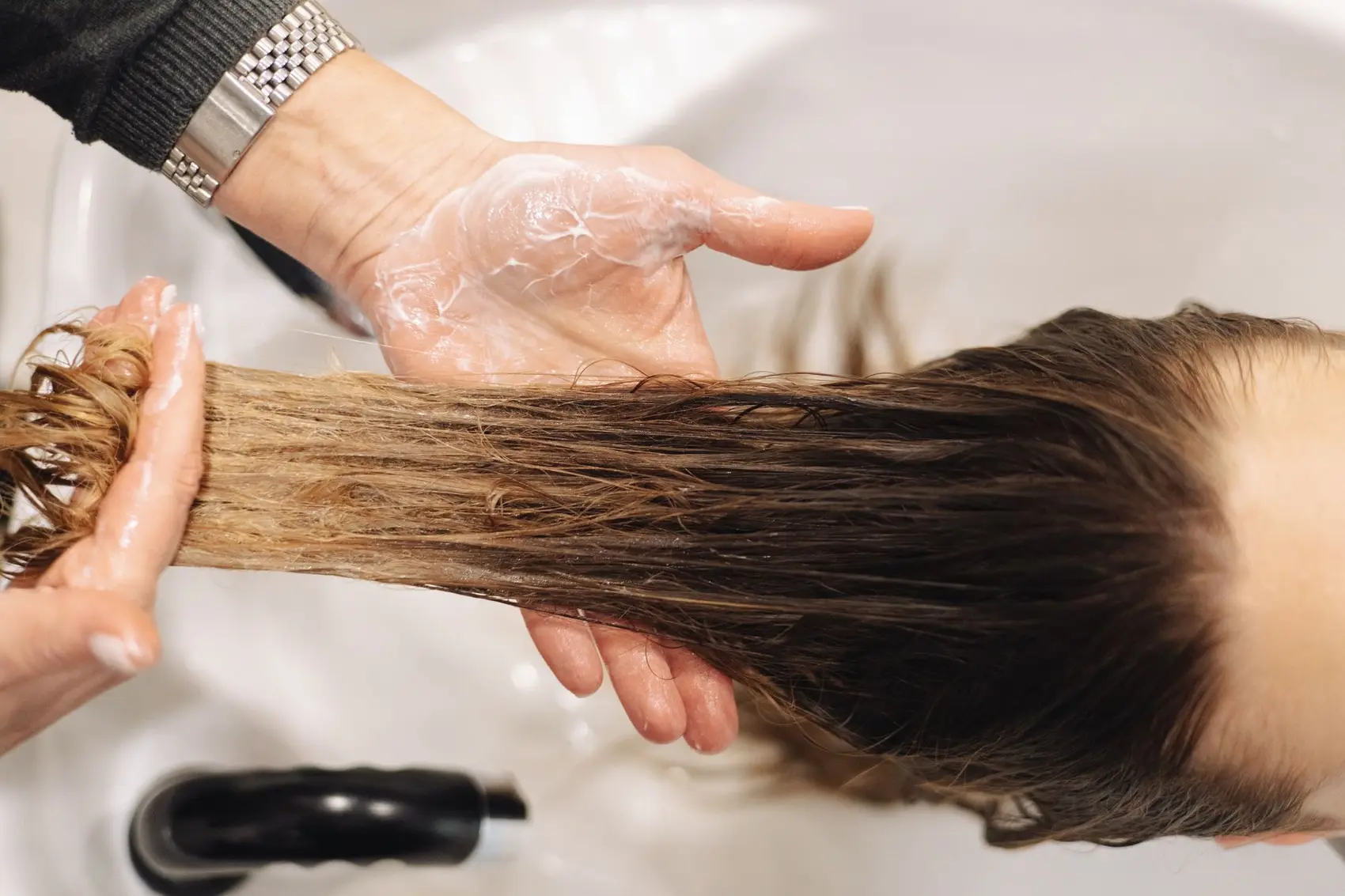
While applying serum, moisturizer and sunscreen to your skin, do you ever think about your scalp? For most of us, hair care is about how shiny and soft our strands are. But each hair grows from a follicle inside the scalp, and the environment that nourishes that follicle directly affects the quality of your hair. The scalp is skin too; skin with its own barrier, its own microbiome and its own unique needs.
What makes the scalp special?
The scalp has more hair follicles and oil glands per square centimeter than most other areas of the body. This density turns the scalp into a warm, moist, oil-rich environment. And this environment is home to its own distinctive microbial community. Because hair covers it, the scalp is less affected by sun and air, but at the same time it's exposed to intense mechanical and chemical stress during washing, drying and styling.
The story of each hair begins at the root, and the story of the root begins in the scalp. Healthy hair needs a healthy foundation first.
The scalp microbiome: who lives there?
The scalp microbiome is made up of a few main groups, chiefly oil-loving bacteria and yeasts. A study published in Frontiers in Cellular and Infection Microbiology compared the microbiomes of healthy scalps and scalps with dandruff. Certain resident bacteria were observed to be more dominant on healthy scalps, while the balance of the community shifted on scalps with dandruff. The researchers noted that these findings suggest resident bacteria may play a protective role in scalp health.
Another study, published in PLOS ONE in 2019, examined the diversity and abundance of fungi and bacteria on healthy and dandruff-affected scalps. The study showed that the structure of the microbial community on scalps with dandruff differed from that of healthy scalps. These findings suggest that scalp problems are accompanied not by a single microorganism but by a shift in the balance of the community as a whole.
What causes dandruff?
For a long time, dandruff was explained simply as a dry scalp or not washing enough. Yet a study published in the International Journal of Cosmetic Science showed that on scalps with dandruff, the structure of the skin's top layer is disrupted, barrier function is weakened and inflammatory markers are elevated. In other words, dandruff is a condition in which the scalp's barrier and microbiome balance are shaken together.
This perspective changes how you care for it, too. Trying to get rid of dandruff just by washing more often and more harshly can wear the barrier down even further. A more sensible approach is one that protects the scalp's barrier, supports balance and, if needed, includes active ingredients recommended by a dermatologist.
Dandruff isn't just the result of a dry scalp or not washing enough; it's also a sign that your scalp's protective layer is worn out.
Habits that throw your scalp off balance
- Washing with very hot water
- Scratching your scalp hard with your nails
- Shampoos that lather heavily and leave your scalp feeling tight
- Using dry shampoo for days in a row without washing your scalp
- Applying conditioner and masks directly to your scalp
- Leaving hair wet for a long time or tying wet hair up tightly
- Not rinsing out heavy styling product residue well
A scalp care guide
A comprehensive review of hair cosmetics explains that the main job of shampoo is to cleanse the scalp and hair, but that depending on the choice of surfactants the scalp can dry out; conditioners, meanwhile, help prevent breakage by reducing friction on the surface of the hair. Based on this, here's a practical guide:
- Focus shampoo on your scalp: Massage shampoo gently into your scalp with your fingertips; the ends get clean enough from the lather running down as you rinse.
- Apply conditioner to the ends: Conditioners and masks are for the hair itself; keep them away from your scalp.
- Use lukewarm water: Hot water can dry out your scalp and stimulate oil glands.
- Wash as often as you need: An oily scalp may need more frequent washing, a dry scalp less. What matters is that your scalp feels comfortable and itch-free.
- Choose a gentle formula: Pick a slightly acidic, balance-minded shampoo that doesn't leave your scalp tight. Scalp care products with prebiotics can be an option that may help support microbial balance.
- Dry well: Don't leave your scalp damp for a long time after washing; blow-drying on a warm setting is a good middle ground.
- Protect from the sun: Your part and areas with thinner hair can be affected by the sun; wear a hat if you're outside for a long time.
Hair loss and the scalp
Hair loss has many causes: genetic predisposition, hormonal changes, iron deficiency, thyroid problems, severe stress and the postpartum period are some of them. Scalp health alone doesn't explain every case of shedding, but an inflamed, itchy, worn-out scalp doesn't give hair follicles a comfortable environment to work in. That's why taking good care of your scalp is one of the cornerstones of hair health.
What helps an itchy scalp?
The most common causes of itching are dandruff, dryness, shampoo that isn't rinsed out well and irritation from products applied to the scalp. Washing with lukewarm water, applying shampoo only to your scalp and rinsing thoroughly, and cutting back on heavily fragranced products and frequent heat styling often bring relief. If itching comes with flaking, you can try a shampoo with an anti-dandruff active ingredient; red, crusty or oozing areas and unusual shedding call for a dermatologist's evaluation.
When should you see a specialist?
If you have noticeable, rapid hair loss, red and scaly patches on your scalp, intense itching, oozing or sores, it's important to see a dermatologist. Seborrheic dermatitis, psoriasis and some fungal infections can cause symptoms similar to dandruff and require an expert evaluation.
How do seasons and hormones affect the scalp?
Like the skin on your face, your scalp responds to seasons and hormones. In winter, air from central heating and hot showers can dry out your scalp and make it itchier; in summer, sweat, sun and frequent washing can strain its balance. A scalp that feels oilier in certain phases of the menstrual cycle, and a temporary increase in hair shedding after giving birth, are changes many women experience.
During these times, it helps to observe your scalp and adjust your care accordingly: a gentler shampoo and less frequent washing during dry spells, and cleansing that's still gentle but a little more frequent during oily spells.
Keep in mind
Give your scalp the same care you give your face. Gentle cleansing, conditioners kept away from the scalp, lukewarm water and balance-minded care help your hair grow on a healthier foundation, right from the roots. Healthy hair starts with a healthy scalp.
Helpful as you build this routine
EcoProbiotic care range ↗
Sources
- 1.Comparison of healthy and dandruff scalp microbiome reveals the role of commensals in scalp health
Saxena R, Mittal P, Clavaud C, Dhakan DB, Hegde P, Veeranagaiah MM ve ark. · Frontiers in Cellular and Infection Microbiology · 2018 · doi:10.3389/fcimb.2018.00346
Showed that the microbiomes of healthy and dandruff-affected scalps differ, and that resident bacteria may play a protective role in scalp health.
- 2.The diversity and abundance of fungi and bacteria on the healthy and dandruff affected human scalp
Grimshaw SG, Smith AM, Arnold DS, Xu E, Hoptroff M, Murphy B · PLOS ONE · 2019 · doi:10.1371/journal.pone.0225796
Showed that the structure of the fungal and bacterial community on dandruff-affected scalps differs from that of healthy scalps.
- 3.Stratum corneum dysfunction in dandruff
Turner GA, Hoptroff M, Harding CR · International Journal of Cosmetic Science · 2012 · doi:10.1111/j.1468-2494.2012.00723.x
Showed that barrier structure is disrupted and inflammatory markers are elevated on scalps with dandruff.
- 4.Hair cosmetics: an overview
Gavazzoni Dias MF · International Journal of Trichology · 2015 · doi:10.4103/0974-7753.153450
Reviewed the effects of shampoos and conditioners on the scalp and hair, and how to use them correctly.